AAMU Alumna Builds on Computer Science Foundation Through Second Army Research Fellowship
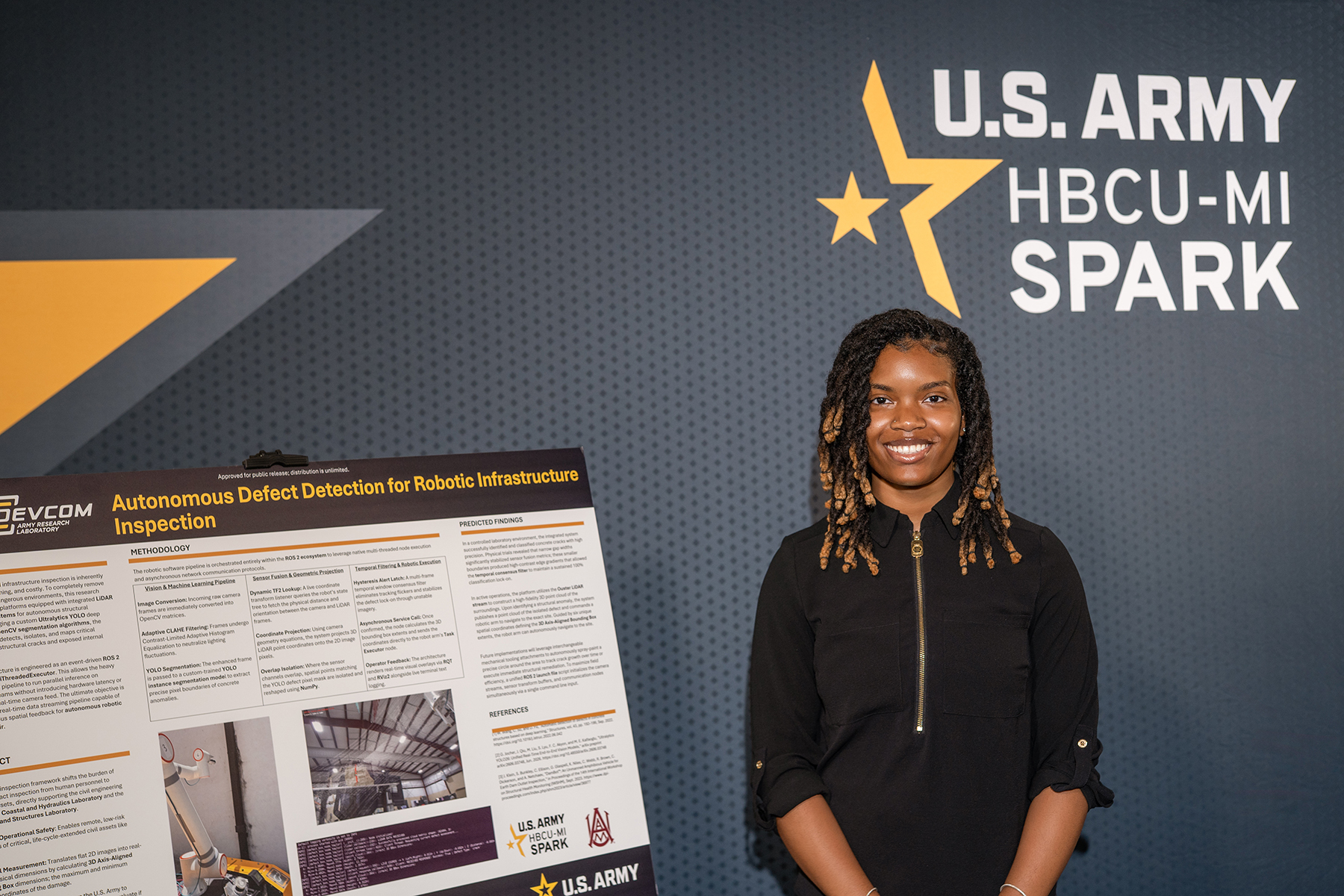
Pippins Returns to Army SPARK Program, Advances Robotics Research
Taylor Pippins arrived at Alabama A&M University with an interest in computer science and the opportunities surrounding Huntsville’s technology and defense industries. Four years later, the 2026 graduate is building on that foundation through advanced research, graduate study and a career in information technology.
Pippins, a McDonough, Georgia, native who graduated magna cum laude in May with a Bachelor of Science in computer science and a concentration in cybersecurity, recently completed her second summer in the Army HBCU-MI SPARK Program, a 10-week research fellowship that connects students from historically Black colleges and universities and other Minority-Serving Institutions with Department of Defense research mentors.
Pippins was first selected for Army SPARK’s inaugural cohort in 2024, when the experience became her first professional internship. She returned to the program this summer after being selected by her mentor in March.
“Selection into this program has been transformative for both my academic confidence and professional growth,” Pippins said. “When I first joined the inaugural cohort in 2024, it was my very first internship. Overcoming imposter syndrome gave me the confidence to compete in hackathons once I was back on campus. It also proved to me that I belonged in and could thrive and contribute in professional environments.”
Both of Pippins’ Army SPARK internships took her to the U.S. Army Engineer Research and Development Center’s Information Technology Laboratory in Vicksburg, Mississippi. This summer, she worked within the laboratory’s Sensor Integration Branch, expanding beyond traditional software development into robotics and hardware sensor integration.
Her research project, “Autonomous Defect Detection for Robotic Infrastructure Inspection,” focused on developing technology that could allow autonomous robots to identify and measure damage to concrete structures while reducing the need for personnel to conduct inspections in potentially hazardous environments.
Pippins engineered a real-time Robot Operating System 2, or ROS 2, pipeline that combines an Ultralytics YOLO instance segmentation model with 3D LiDAR technology and digital cameras mounted on an autonomous robot. The system is designed to detect concrete defects, including cracks and exposed reinforcing steel, and measure them in three-dimensional space.
The research could help advance the way civil infrastructure is inspected by using robotics and artificial intelligence to identify structural defects while reducing risks to personnel in the field.
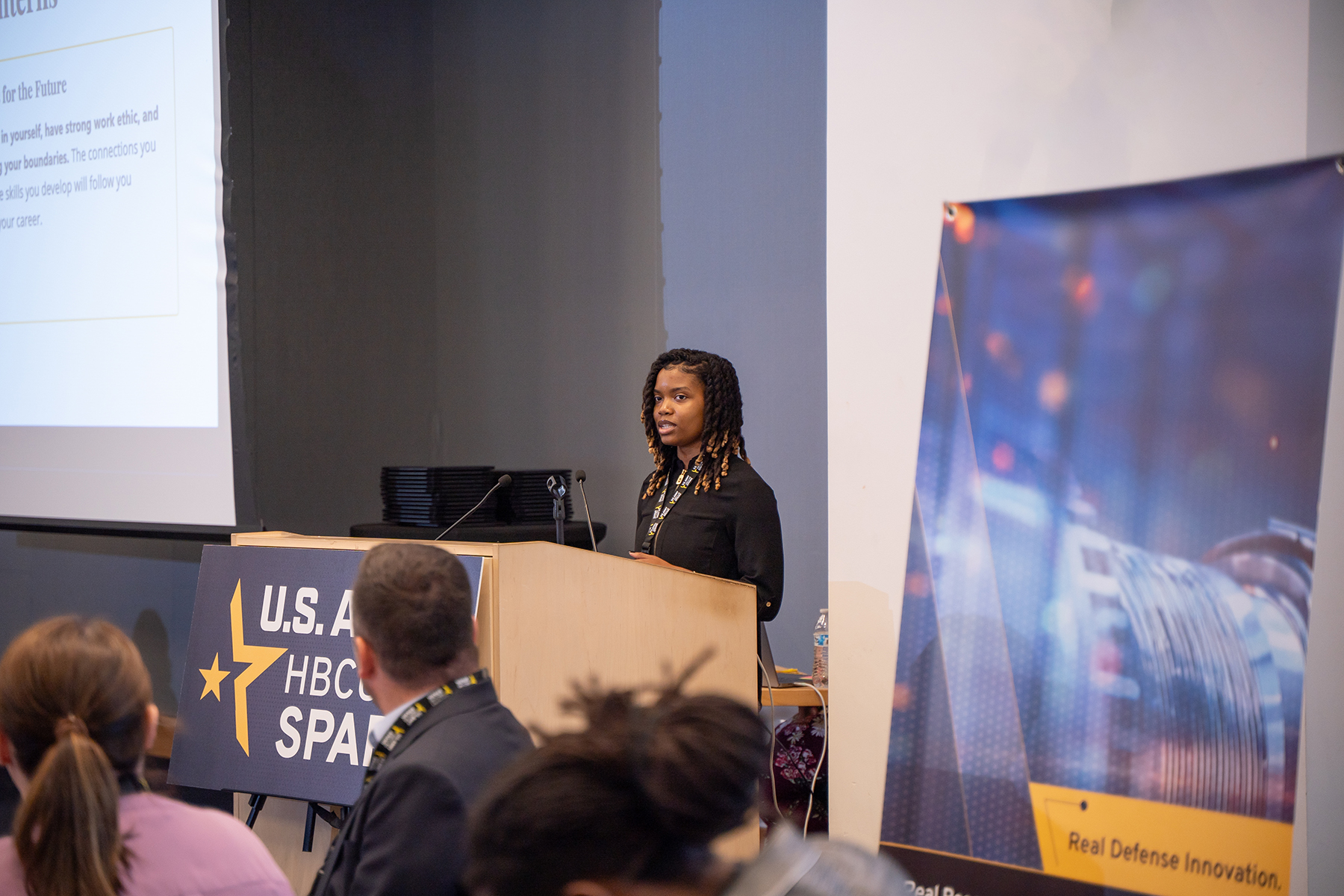
Pippins presented the research during the program’s end-of-summer symposium in Washington, D.C., where she also returned in another significant role. Selected as a featured guest speaker representing the inaugural 2024 SPARK cohort, Pippins shared her full-circle journey from first-time intern to returning researcher.
She discussed how the program influenced her academic path, contributed to her professional development and helped prepare her transition to graduate study.
“Being invited back for a second time in 2026 reinforced the value of building lasting mentorships and affirmed my capabilities in tackling complex technical problems,” Pippins said.
The fully funded Army SPARK fellowship provides participants with a stipend, travel to their internship locations, extended-stay lodging near their research facilities and funding to attend the research symposium.
Pippins’ growth has also been reflected through her accomplishments at Alabama A&M. She graduated with a 3.82 GPA and received the AAMU Presidential Medallion in 2024 and 2026. She earned first place in an American Association of Blacks in Energy hackathon in fall 2024 and received the Best Game Art award during the HBCU Game Jam in spring 2026.
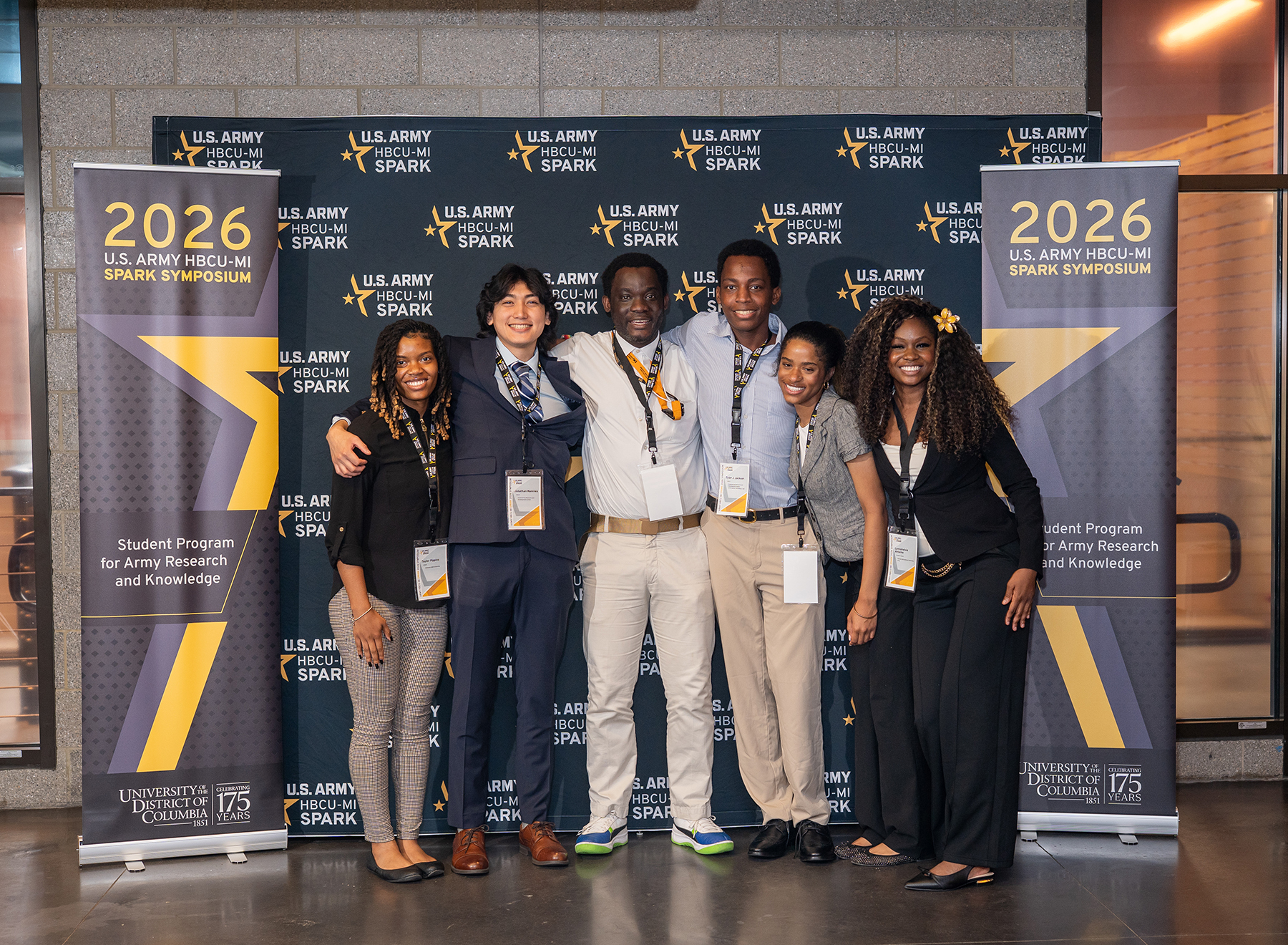
Pippins credits Alabama A&M with helping her develop the technical and professional skills needed to pursue those opportunities. She points in particular to Career Development Services and its resume workshops, career fairs and other programs designed to prepare students for competitive opportunities.
“I chose Alabama A&M University because of its computer science curriculum, reputation and its prime location in Huntsville, the ‘Rocket City,’ surrounded by aerospace, defense and tech industry leaders,” Pippins said. “I believe the University truly embodies the motto: ‘Start here, go anywhere.’”
For Pippins, “go anywhere” now includes both graduate school and a return to the University in a new capacity.
This fall, she will begin pursuing a Master of Science in cybersecurity at the Georgia Institute of Technology while transitioning into a full-time position as a technology support analyst with Alabama A&M’s Information Technology Services. She expects to complete her master’s degree in 2029 and ultimately hopes to become a senior cybersecurity analyst specializing in information security operations and enterprise defense.
Her path from AAMU computer science student to Army researcher, graduate student and technology professional began with an opportunity she first learned about through a campus email — and the willingness to pursue it. Two years after entering Army SPARK as a first-time intern, she returned with greater technical experience, a more ambitious research project and the opportunity to tell the next cohort what that first experience made possible.
“It also proved to me that I belonged in and could thrive and contribute in professional environments,” Pippins said.