AAMU Extension Specialist Takes Second Place for Rare Reproductive Case
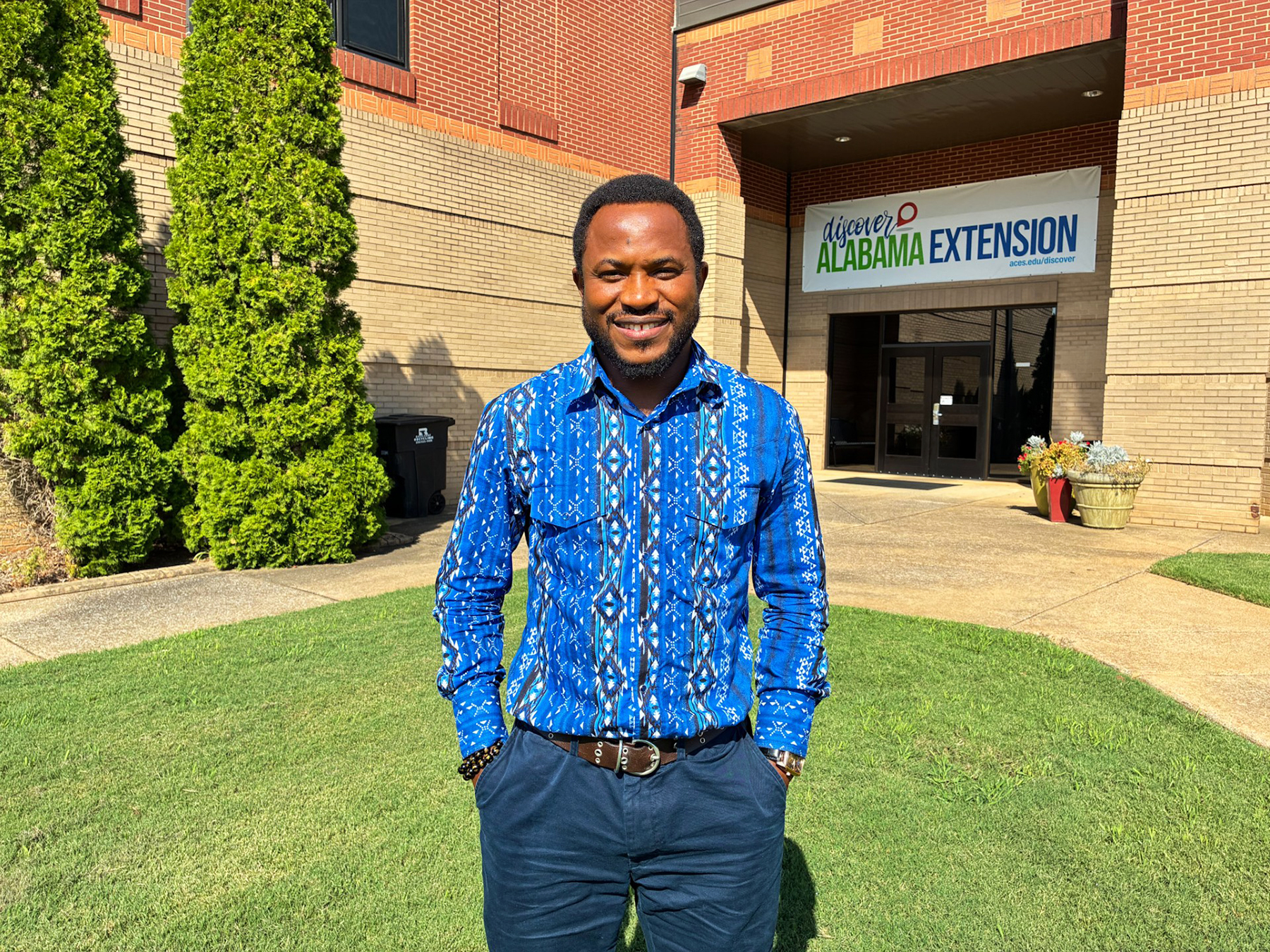
Samuel Earns National Recognition at Veterinary Reproduction Conference
Dr. Felix U. Samuel, Alabama A&M University’s state animal science and forage specialist with the Alabama Cooperative Extension System, recently earned second place in a national poster competition at the 2026 Therio Conference in Pittsburgh. The conference brought together veterinarians, researchers, educators, students, residents and specialists in animal reproduction from across the United States and internationally.
Samuel presented “Epididymectomy in a Braford Bull That Reattached and Sired Calves,” a case examining a highly unusual reproductive outcome following a procedure intended to prevent fertility. The case was submitted through the conference’s abstract and case presentation process, selected for presentation and later evaluated in the competition, where it received second place.
“This recognition increases the national visibility of Alabama A&M University and the Alabama Cooperative Extension System in animal reproduction, livestock health and applied animal science,” said Samuel. “It demonstrates that the University’s Extension and animal science programs are contributing knowledge to professional conversations beyond Alabama.”
The case involved a Braford bull that underwent an epididymectomy, a procedure designed to disrupt sperm transport and prevent fertility. Despite the procedure, the reproductive tract re-established continuity, allowing the bull to regain fertility and sire calves.
Samuel said the unusual outcome offers an important lesson for veterinarians and livestock producers: Completing a reproductive surgical procedure should not automatically be considered confirmation of permanent infertility.
The case underscores the importance of postoperative monitoring, breeding soundness evaluations, accurate reproductive records and follow-up diagnostic investigations when unexpected pregnancies occur.
For Samuel, the research also demonstrates how an observation made in a practical livestock setting can contribute to broader scientific understanding.
“Veterinary reproduction and theriogenology have been central to my academic and professional career,” said Samuel. “I am particularly interested in translating unusual clinical observations into knowledge that can improve reproductive management and decision-making on livestock operations.”
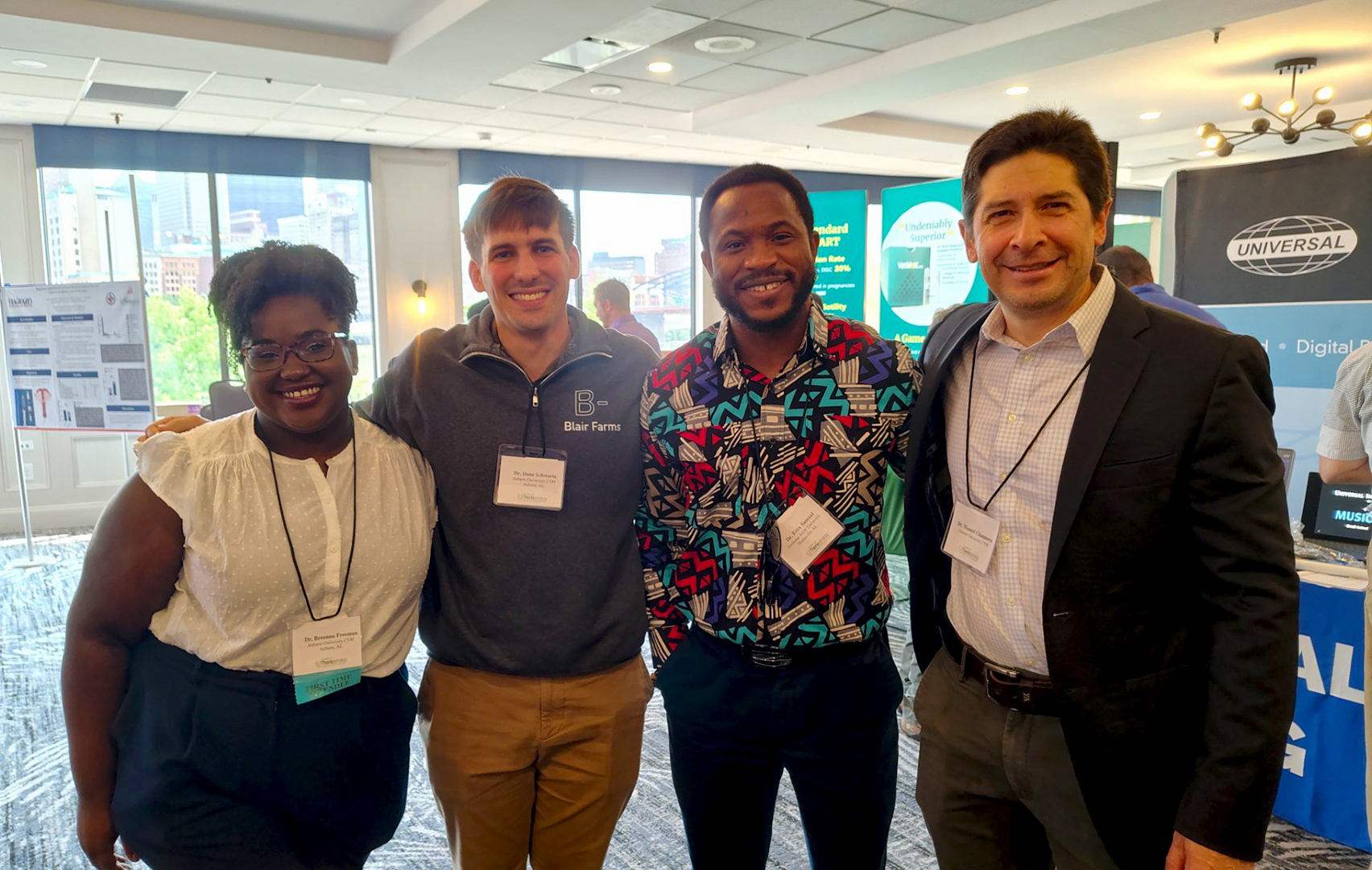
From left: Dr. Breonna Freeman, clinical fellow, Auburn University College of Veterinary Medicine; Dr. Dane Schwartz, resident, Auburn University College of Veterinary Medicine; Dr. Felix U. Samuel, Extension animal scientist and veterinarian, Alabama A&M University; and Dr. Manuel F. Chamorro, professor, Auburn University College of Veterinary Medicine, at the conference in Pittsburgh.
The recognition builds on Samuel’s growing work at Alabama A&M. He joined the University in January 2024 and integrates Extension education and applied research in livestock production and health, reproductive physiology and management, small-ruminant production, forage and grazing management, and sustainable livestock systems.
A veterinarian and theriogenology professional, Samuel earned a Doctor of Veterinary Medicine, Master of Science in Theriogenology and Ph.D. in Theriogenology from Ahmadu Bello University in Nigeria. He also earned a Master of Science with a concentration in animal health from Alabama A&M.
Last year, Samuel reached another professional milestone when he earned his veterinary license, strengthening his ability to connect veterinary expertise with Extension programming, applied research and student mentorship at AAMU.
The conference presentation was a collaborative effort involving Samuel; Dr. Jessica Klabnik, assistant professor in the Department of Clinical Sciences at Auburn University College of Veterinary Medicine; Dr. Miguel Saucedo, assistant professor in the Department of Veterinary Diagnostic and Production Animal Medicine at Iowa State University College of Veterinary Medicine; and Dr. Jessica Rush, assistant professor in the Department of Clinical Sciences at Auburn University College of Veterinary Medicine. Samuel said the recognition reflects the value of professional collaboration in documenting, interpreting and communicating unusual reproductive cases.
The achievement also supports AAMU’s land-grant mission by connecting research, education and Extension with practical solutions for livestock producers.
For students, Samuel said the case demonstrates the importance of careful clinical observation, critical thinking, accurate recordkeeping, scientific investigation and communicating findings to the broader professional community. Such cases can also become valuable teaching opportunities in animal reproduction, livestock management and veterinary science.
Samuel’s current research interests include breeding for sustainable gastrointestinal parasite resistance in meat goats. Gastrointestinal parasites are among the most significant health and economic challenges affecting small-ruminant production, particularly in the Southeast.
His broader research and Extension work includes small-ruminant health and production, sustainable parasite management, reproductive efficiency, genetics and selection, hoof health and lameness prevention, forage and grazing systems, precision livestock technologies, and producer education.
Samuel said his work ultimately centers on ensuring scientific knowledge reaches the farmers, producers, students and Extension professionals who can put it into practice.
“One aspect of my work that is particularly important to me is ensuring that science reaches the people who can use it,” said Samuel. “Whether I am working with a producer on a farm, training Extension professionals, mentoring students, conducting research, or presenting at a scientific conference, my goal is to translate scientific knowledge into practical strategies that improve animal health, productivity, sustainability, and farm profitability.”