African Agricultural Leaders Visit Campus to Explore Food Security and Innovation
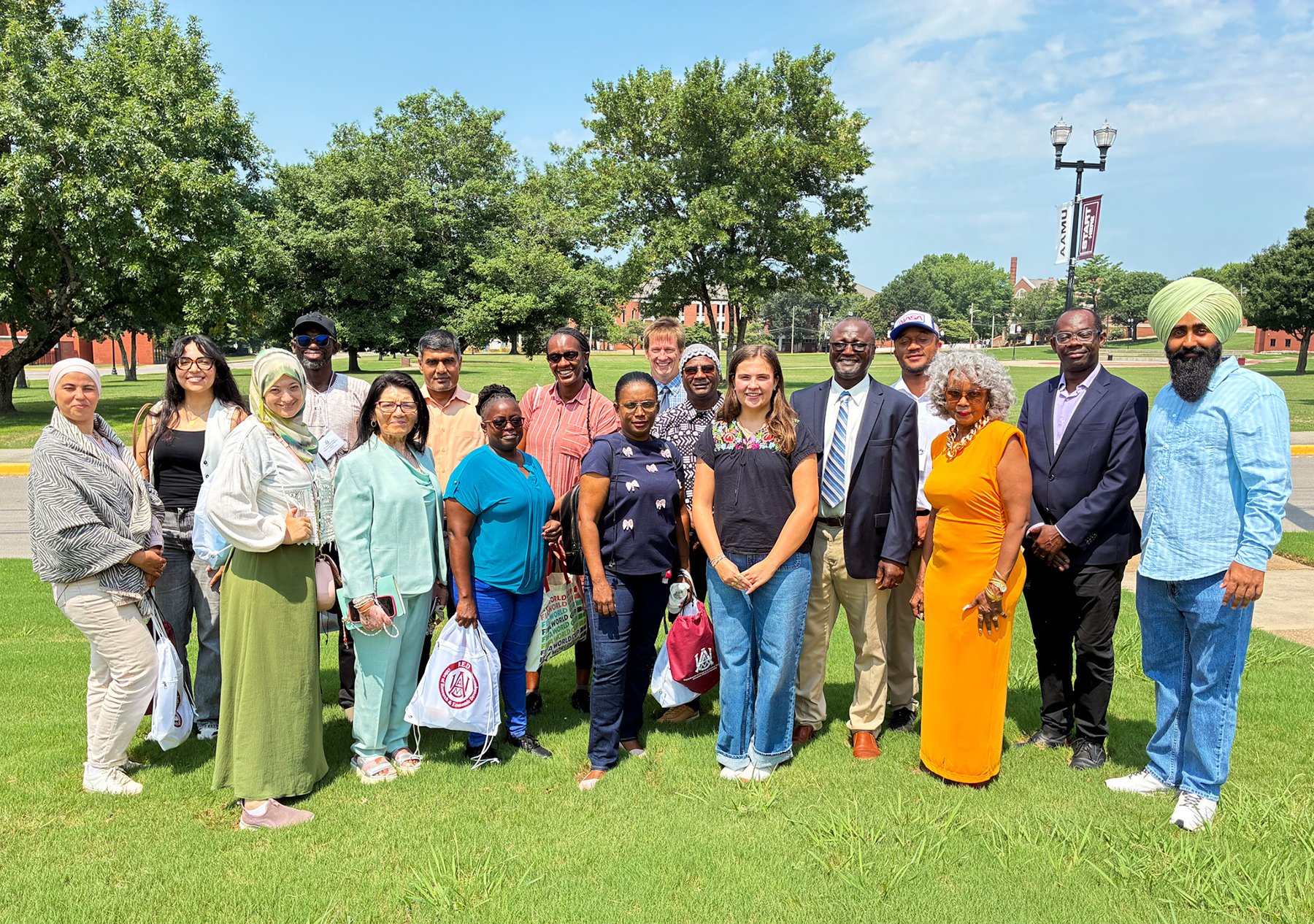
Alabama A&M Showcases Agricultural Innovation to U.S. State Department Delegation
Alabama A&M University recently welcomed agricultural leaders from 13 African nations to campus as part of the U.S. Department of State’s International Visitor Leadership Program (IVLP), highlighting the University’s leadership in agricultural innovation, food security, international collaboration and workforce development.
The visit, coordinated through Global Ties Alabama and administered by World Learning on behalf of the U.S. Department of State, focused on Agricultural Innovation and Food Security. The delegation included government officials, researchers, entrepreneurs and industry leaders representing Algeria, Angola, Cabo Verde, the Central African Republic, Côte d’Ivoire, Gabon, Kenya, Morocco, Nigeria, Senegal and Tanzania.
The International Visitor Leadership Program is the U.S. Department of State's premier professional exchange program. Through short-term visits to the United States, current and emerging international leaders engage with American counterparts to strengthen mutual understanding and build long-term partnerships.
Hosted by Alabama A&M’s College of Agricultural, Life and Natural Sciences (CALNS), the program showcased the University’s research, academic programs and global partnerships that are advancing sustainable agriculture and strengthening food systems.
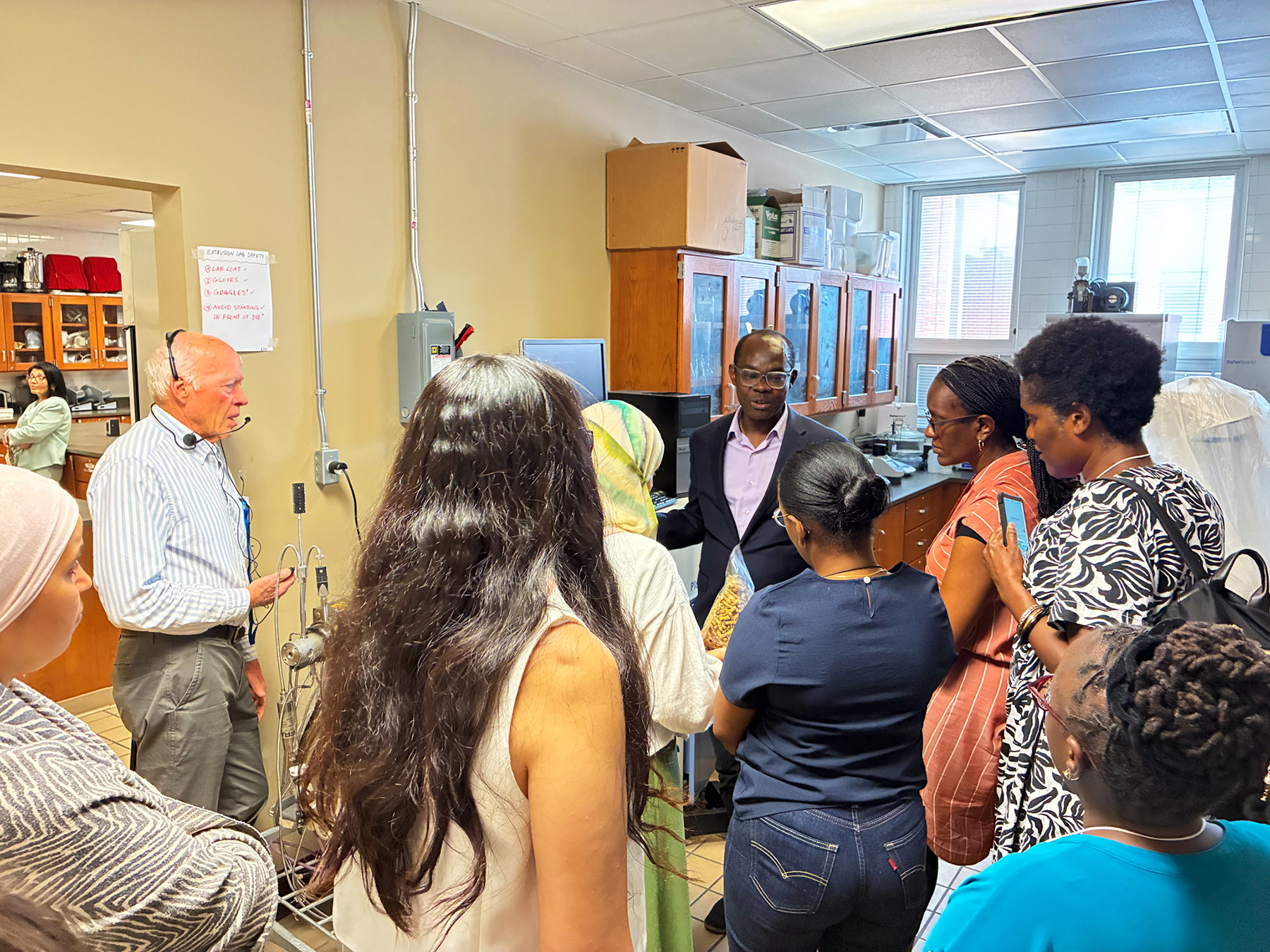
Dr. Martha Verghese, chair of the Department of Food and Animal Sciences, welcomed the visitors and provided an overview of the department and its international collaborations led by Dr. Lamin S. Kassama, professor of food engineering and processing. Dr. Josh Herring, professor of food biochemistry and coordinator of the Bachelor of Science in food science program, and Dr. Elvis Baidoo, research associate, highlighted the Food Product Innovation Center and its work in food product development. Participants learned about food product development, entrepreneurship and technology-driven innovation. The delegation also toured the facility, led by Baidoo, and discussed opportunities for future research, education and agricultural partnerships.
“This visit demonstrates Alabama A&M University’s commitment to addressing global food security challenges through research, innovation and international collaboration,” said Kassama. “By sharing our expertise and learning from agricultural leaders across Africa, we strengthen partnerships that benefit our students, faculty and communities while contributing to sustainable food systems around the world.”
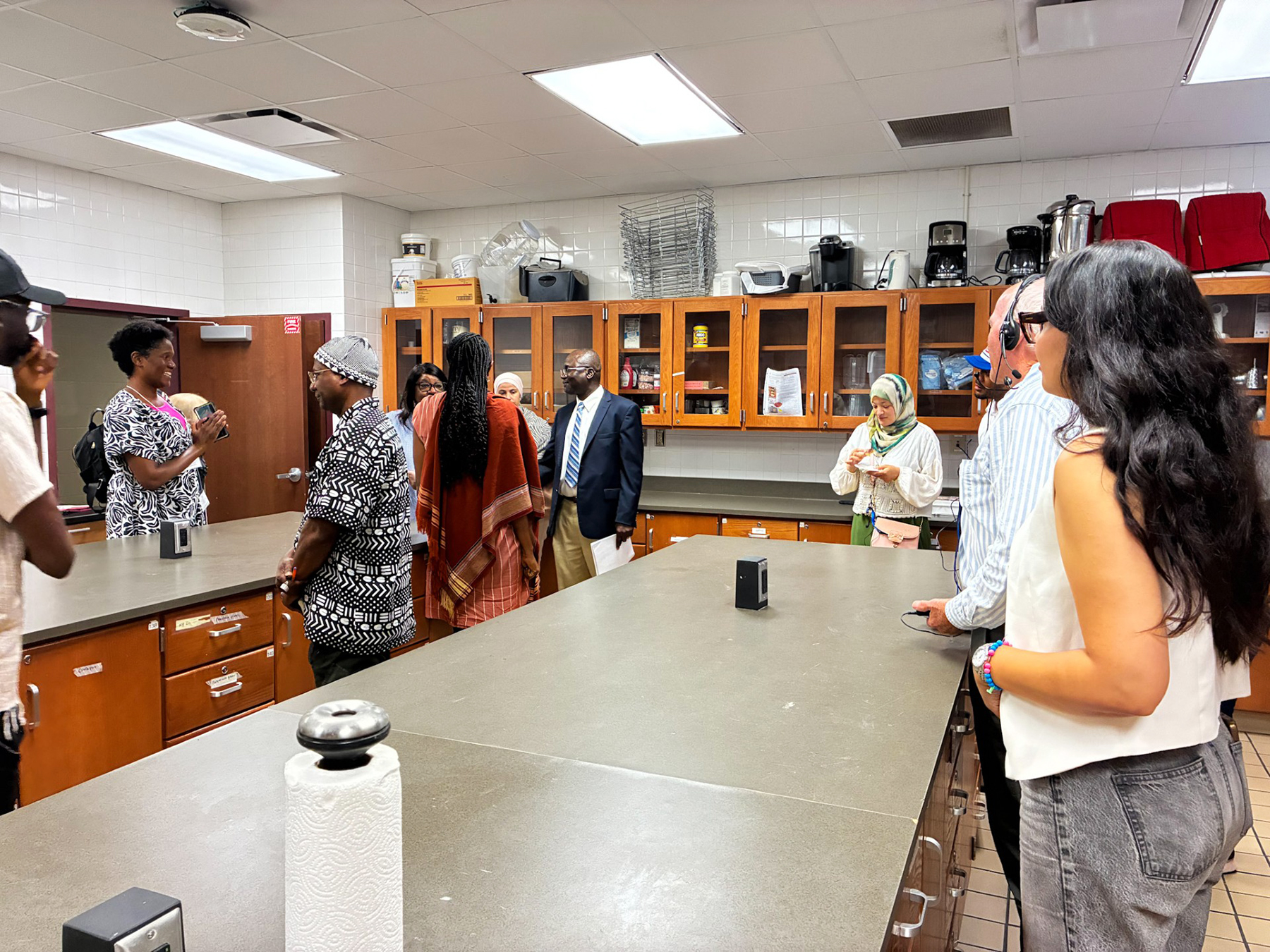
Dr. Lamin Kassama speaks with visitors in the Food Product Development Laboratory and introduces Dr. Ethel Jones, chair of the Department of Family and Consumer Sciences.
Kassama also highlighted Alabama A&M’s international engagement, including collaborative agreements with institutions such as Peleforo Gon Coulibaly University in Côte d'Ivoire. He discussed how these partnerships create opportunities for student and faculty exchanges, joint research initiatives and workforce development in agriculture and food sciences.
“This exchange reflects the important role land-grant universities play in solving global challenges,” said Kassama. “We look forward to building lasting relationships that encourage innovation, expand agricultural knowledge and create opportunities for collaboration well beyond this visit.”
This marked Alabama A&M’s third consecutive year hosting an IVLP delegation. While last year’s program centered on strengthening University partnerships, this year’s visit emphasized agricultural innovation, resilient food systems and strategies to improve food security through research, technology and international cooperation. Participants also explored how Alabama A&M's expertise can help strengthen agricultural policies, education and regulatory frameworks in participating countries.
The visit underscores Alabama A&M’s growing international presence and its role as a leader in agricultural research, innovation and workforce development while advancing solutions to some of the world’s most pressing food security challenges.