Award Expands Graduate Research and Data Science Training
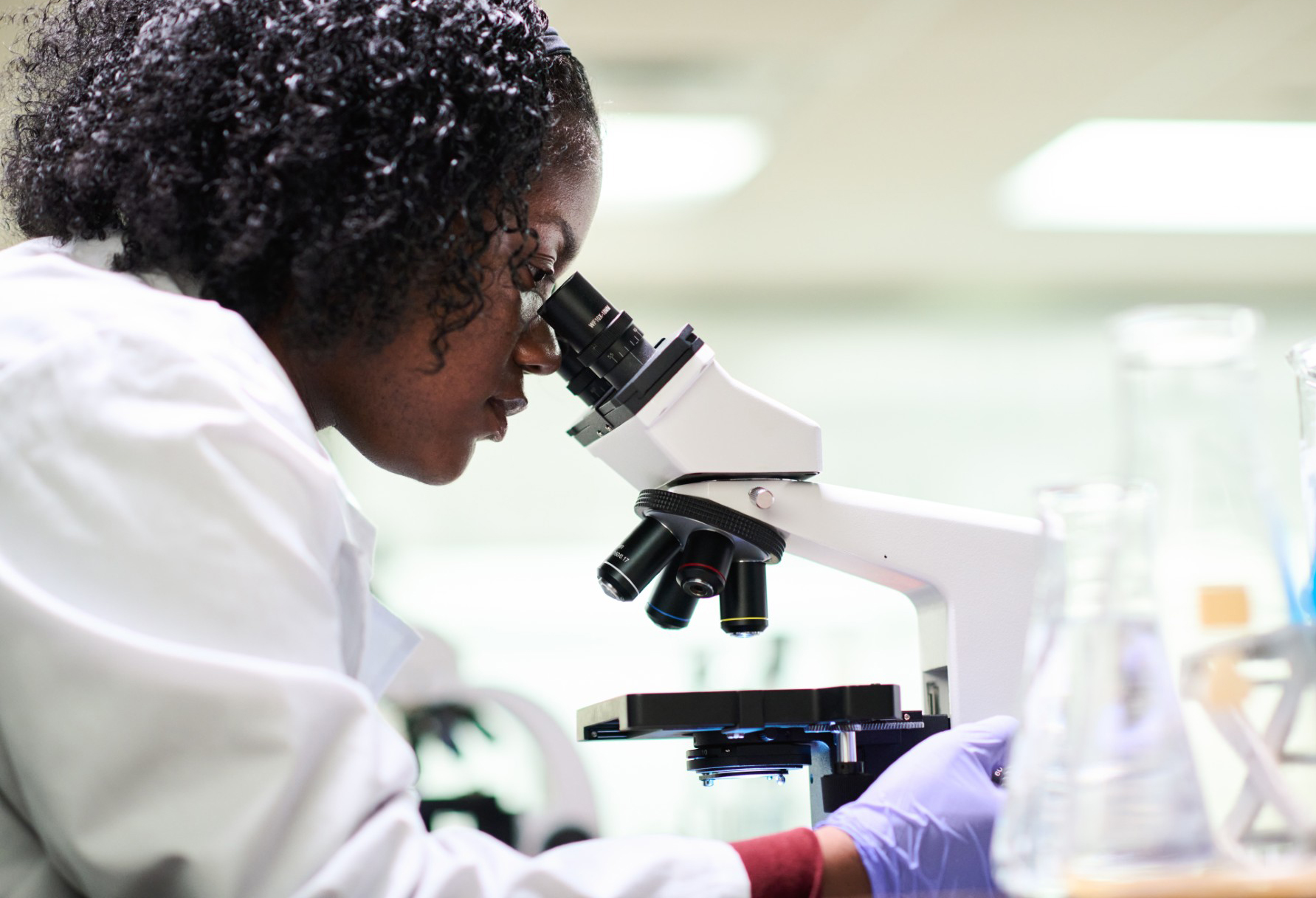
AAMU Receives $600,000 USDA Grant to Launch Agricultural Data Science Specialization
Alabama A&M University has received a $600,000 grant from the U.S. Department of Agriculture's National Institute of Food and Agriculture to establish a new data science specialization within existing graduate programs in agricultural and bio-environmental sciences that will prepare students for careers at the intersection of agriculture, environmental sciences, data science and emerging technologies.
The three-year award, funded through USDA NIFA's 1890 Institution Capacity Building Grants Program, will support the Integrated Data Science in Agricultural and Bio-environmental Sciences project, known as IDSAB. The initiative will create a data science specialization within existing master's and doctoral programs while expanding research opportunities for graduate and undergraduate students.
Led by principal investigator Dr. Yong Wang, professor in the Department of Natural Resources and Environmental Sciences, the project brings together faculty expertise from agriculture, environmental sciences, computer science and mathematics to develop an interdisciplinary curriculum focused on modern data-driven approaches to solving complex challenges.
“Data science is transforming agriculture and environmental management,” said Wang. “This project will provide our students with the advanced analytical skills needed to address some of the most important challenges facing food systems, natural resources and environmental sustainability.”
The specialization will integrate biostatistics, bioinformatics, geographic information systems, remote sensing, artificial intelligence and advanced analytics into agricultural and environmental sciences education. Students will gain hands-on experience applying these tools to real-world issues involving climate resilience, biodiversity conservation, natural resource management and environmental monitoring.
The grant will support curriculum development, graduate student assistantships, undergraduate research experiences, workshops, seminars, software resources, field equipment and opportunities for students to present research at professional conferences.
The project is expected to support graduate student assistantships and undergraduate research experiences while creating new pathways for students pursuing careers in agriculture, environmental sciences, biotechnology, data analytics, artificial intelligence, and related STEM fields.
According to project leaders, the initiative addresses a growing demand for professionals who can analyze large datasets and apply advanced technologies to agricultural and environmental challenges. Students participating in the program will receive training in data science, bioinformatics, geospatial analytics, artificial intelligence and agricultural data management while building skills sought by employers across government, industry and research sectors.
“The IDSAB project represents an important step toward building a nationally recognized graduate program that combines traditional agricultural and environmental sciences with modern data science and artificial intelligence tools,” said Wang.
The project also strengthens collaboration across multiple academic disciplines. Joining Wang on the research team are co-principal investigators Dr. Venkateswara R. Sripathi, associate professor of plant molecular biology and bioinformatics; Dr. Ranjani Kulawardhana, associate professor of remote sensing; Dr. Ed Pearson III, assistant professor and program coordinator of computer science; and Dr. Yinshu Wu, associate professor and program coordinator of mathematics. Together, they will guide curriculum development, student mentoring and interdisciplinary research initiatives.
Project leaders say the grant will expand research capacity, enhance student training and create new opportunities for external partnerships and future funding. The project builds on existing collaborations with organizations including the USDA Forest Service, NASA-supported initiatives, Department of Energy programs and the HudsonAlpha Institute for Biotechnology, providing students access to advanced technologies, research sites and professional networks.
While Alabama A&M has secured numerous USDA grants over the years, project leaders say this is the first initiative within the College of Agricultural, Life and Natural Sciences dedicated to integrating data science, artificial intelligence, bioinformatics, geographic information systems (GIS) and remote sensing into graduate education and research in agricultural and bio-environmental sciences.
The project aligns with Alabama A&M University's 1890 land-grant mission by expanding educational opportunities, strengthening research capacity, and preparing students to address emerging challenges in agriculture, natural resources, and environmental sustainability.
“This investment from USDA NIFA will help prepare the next generation of scientists and professionals who can use data-driven approaches to solve complex challenges in agriculture, natural resource management and environmental stewardship,” said Wang.