CALNS Introduces Students to Hands-On Learning and Career Pathways
Alabama A&M Welcomes Mississippi Students for Immersive Agriculture and Science Summer Program
Forty high school students from Jackson, Mississippi, spent four days exploring the future of agriculture, science and innovation during an immersive residential summer program at Alabama A&M University. Hosted by the College of Agricultural, Life and Natural Sciences (CALNS), the program gave students an inside look at college life while introducing them to hands-on learning experiences and career opportunities across the college’s five academic departments: Biological Sciences, Community and Regional Planning, Family and Consumer Sciences, Food and Animal Sciences, and Natural Resources and Environmental Sciences.
From the moment students arrived on The Hill, they experienced life as Bulldogs through residence hall living, recreational activities and interactive, faculty-led sessions showcasing the many ways agriculture intersects with science, technology, health, business and community development.
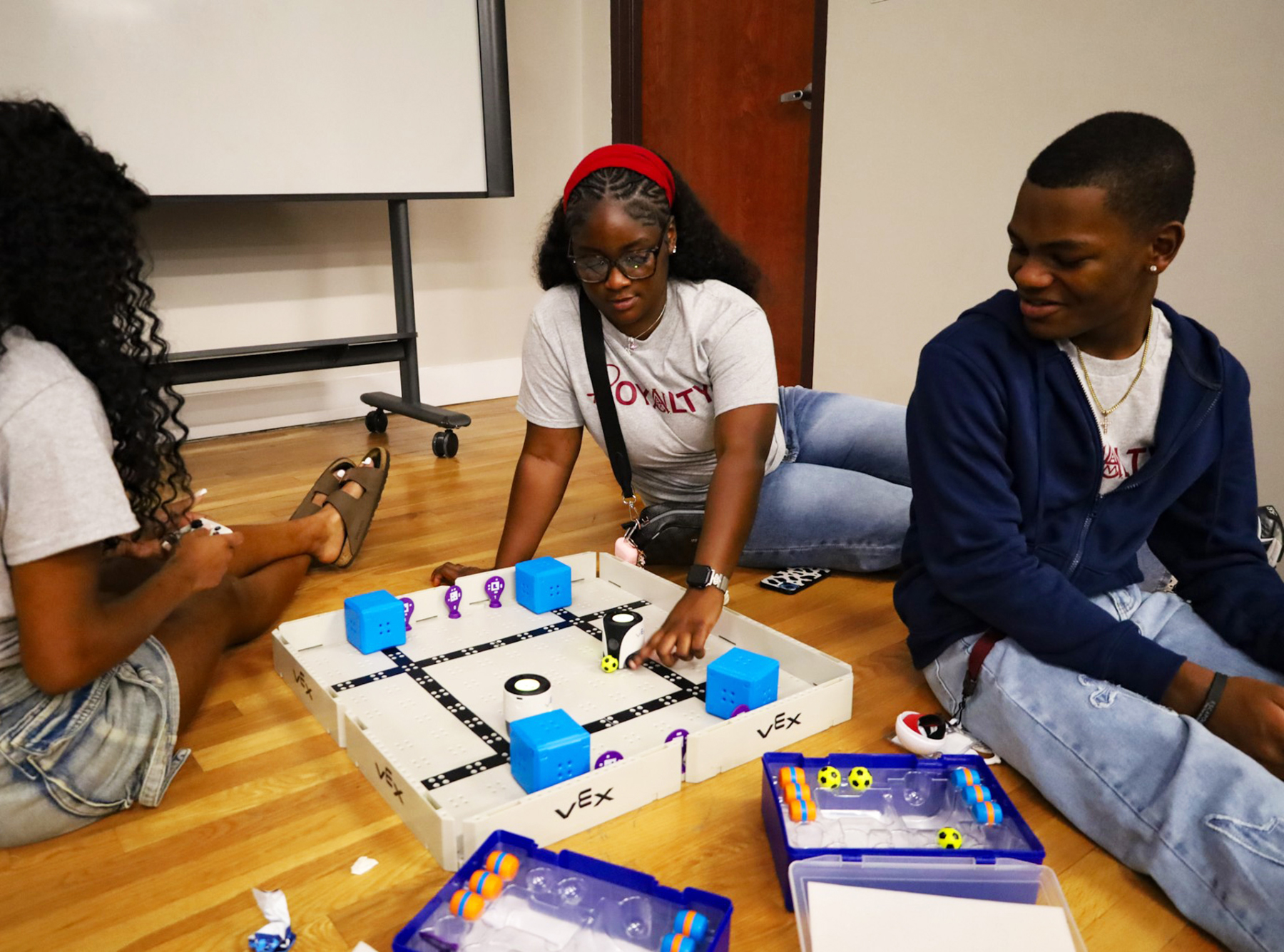
Students participate in a robotics activity with the U.S. Space & Rocket Center, exploring engineering, programming and problem-solving.
Throughout the program, students explored nutrition and hospitality management, financial literacy, apparel merchandising and design, geographic information systems, genetics, robotics, artificial intelligence, food science and animal sciences through hands-on lessons led by Alabama A&M faculty and staff.
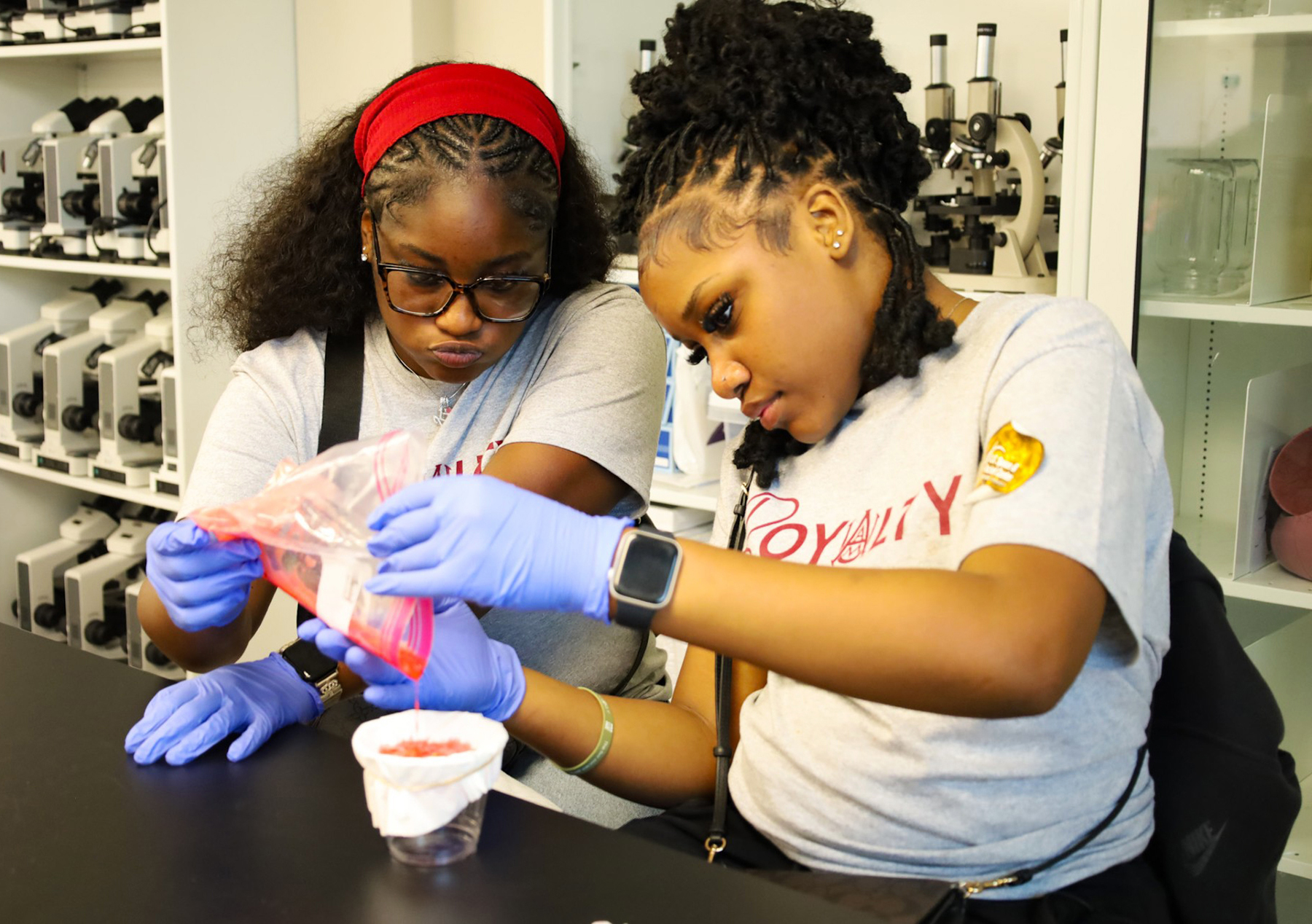
Students extracted DNA from strawberries, designed footwear, learned GIS mapping techniques and participated in robotics activities with the U.S. Space & Rocket Center. They also visited Alabama A&M’s Winfred Thomas Agricultural Research Station, where they interacted with livestock and learned about agricultural research and Extension.
The program highlighted the University’s land-grant mission while demonstrating how classroom learning can translate into careers addressing challenges in food production, environmental sustainability, human health and emerging technologies.
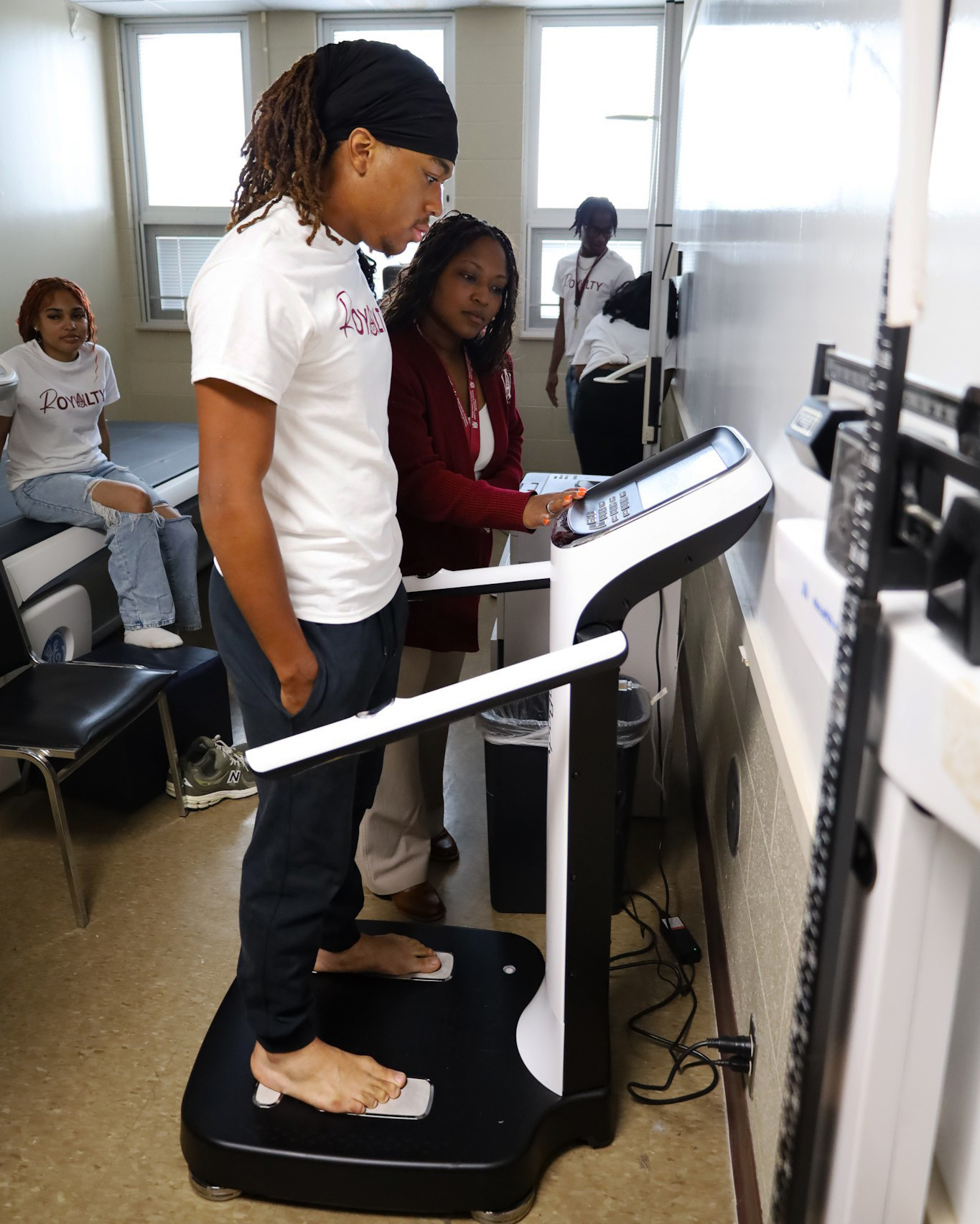
Dr. Brittannie Chester, associate professor and coordinator of Nutrition and Hospitality Management, demonstrates an InBody scan and explains how body composition measurements can support nutrition planning.
“Our responsibility is not simply to educate students for today’s jobs, but to prepare the next generation of leaders, innovators and problem-solvers who will strengthen agriculture and human sciences for generations to come,” said Dr. Ethel Jones, chair of the Department of Family and Consumer Sciences.
Students also explored the growing role of technology in agriculture through a robotics and artificial intelligence workshop presented in collaboration with the U.S. Space & Rocket Center.
“I believe the work done by institutions like Alabama A&M University and the U.S. Space & Rocket Center to expose students to the many possibilities STEAM careers can offer is crucial to developing a future workforce that is scientifically literate and capable of the kind of growth and innovation our society needs,” said Charles Austin, education engagement manager at the U.S. Space & Rocket Center. “The work we do today to show students the wonder of science and curiosity will build the scientists who make breakthroughs in the future.”
Faculty also emphasized the broad range of career opportunities available through biological sciences and agriculture.
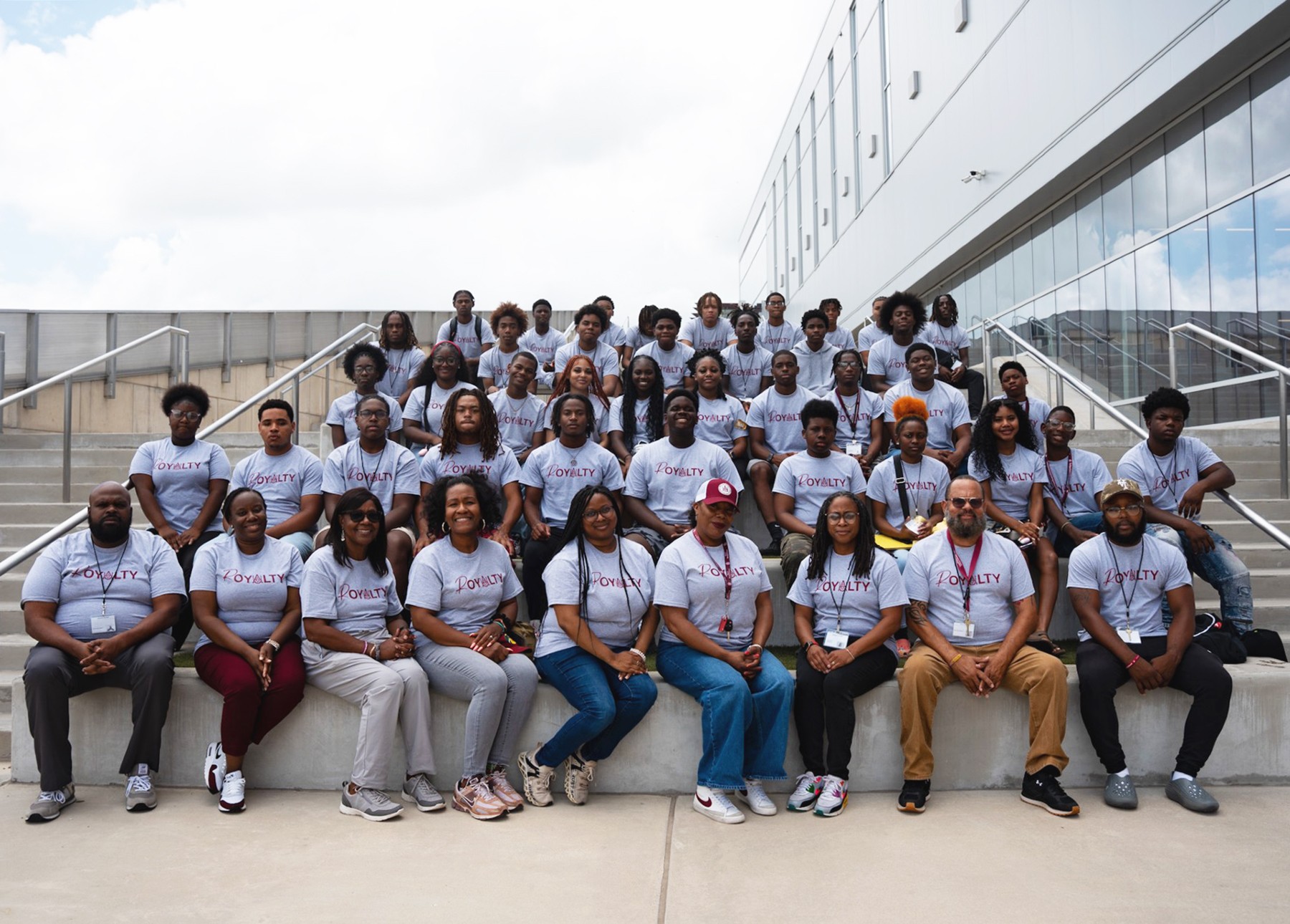
High school students from Jackson, Mississippi, gather with Alabama A&M University faculty and staff outside the AAMU Event Center.
“Biology serves as a foundation for countless career pathways that impact human health, food systems, agriculture and the environment,” said Dr. Lisa Dalrymple-McKitt, a biology professor at Alabama A&M. “Through this experience, we wanted students to recognize that a degree in biology can lead to a wide range of possibilities in agriculture and that their curiosity, combined with their talents, can lead to meaningful careers and contributions to science and beyond.”
The program concluded with immersive experiences in food and animal sciences, where students learned how research, animal care and food innovation contribute to feeding a growing global population and improving quality of life.
By combining laboratory activities, field experiences and direct engagement with Alabama A&M faculty and staff, the summer program gave students a deeper understanding of agriculture’s evolving role in society while introducing them to potential careers in science, research and agriculture. The experience also demonstrated how Alabama A&M’s land-grant mission extends beyond the classroom by exposing young people to educational and career pathways that can help shape the future of agriculture and the sciences.