Distinguished Alumni Share Career Journeys, Law School Advice and Lessons in Advocacy
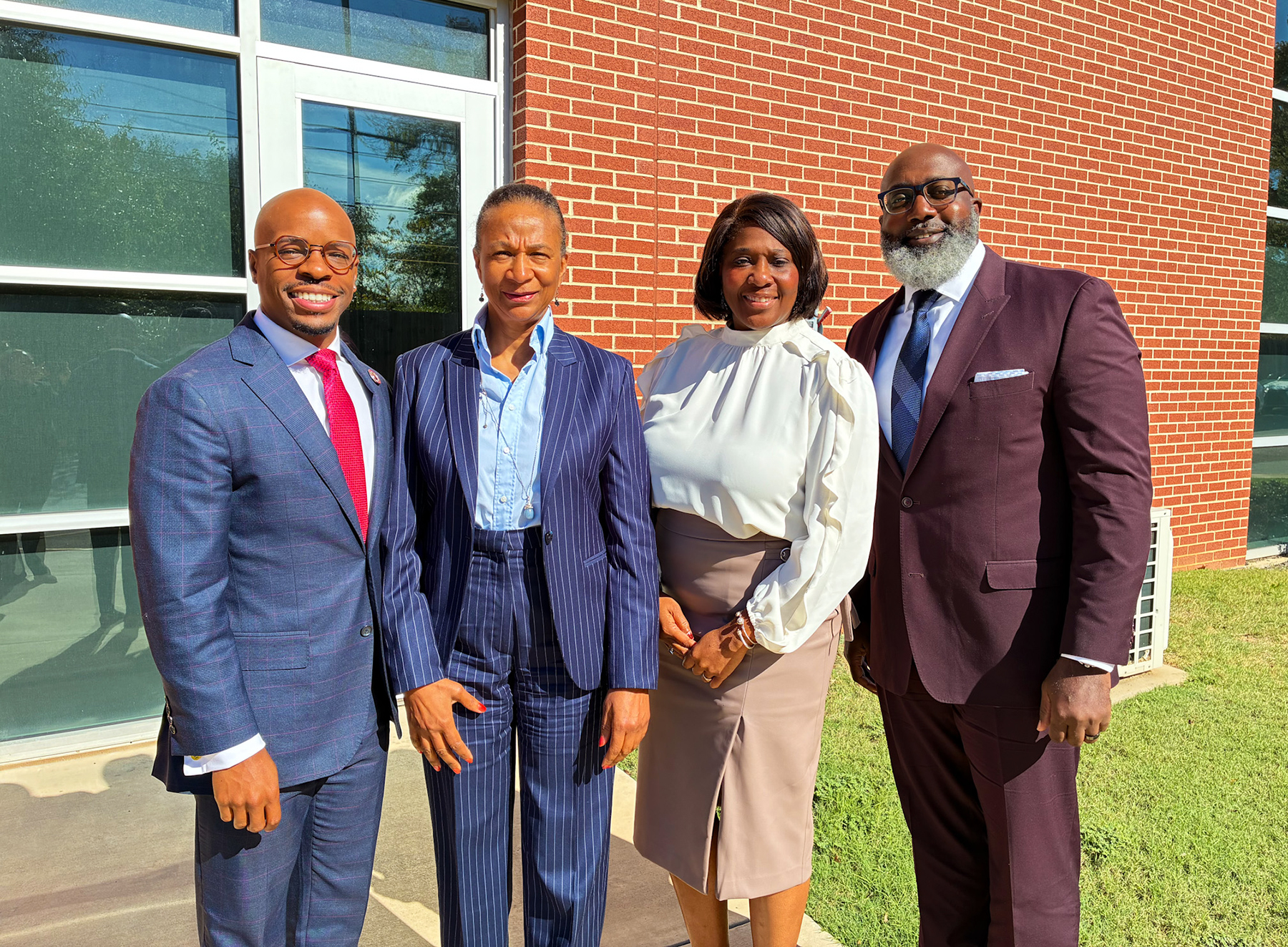
From The Hill to the Courtroom: AAMU Alumni Attorneys Inspire Future Legal Leaders
One moment in a courtroom changed the course of Ontario Tillman’s life. Watching his younger brother face a manslaughter case, Tillman grew frustrated as a judge questioned his brother’s abilities, even suggesting he could not read, while his attorney failed to speak up. The experience sparked a determination to become the kind of advocate his brother needed.
“My mama always told me that your brother was your first client,” Tillman recalled.
On Thursday, Nov. 5, Tillman returned to Alabama A&M University as an accomplished attorney and state legislator, joining three fellow alumni attorneys to share the experiences, challenges and lessons that shaped their careers.
The “AAMU to the Courtroom” alumni attorney speaker series, hosted by the University’s Office of Career and Workforce Development at the AAMU Welcome Center, brought together four distinguished graduates whose careers span civil rights, criminal defense, business litigation, higher education law, estate planning, mediation and public service.
Joining Tillman were Eric Hewlett, a 2016 graduate and owner of Hewlett Law Firm, P.C.; Rochelle A. Conley, a 2000 graduate and Alabama A&M’s vice president and general counsel; and Lula Cole, a 1990 graduate and attorney-mediator with Cole Law Group PC. Tillman, who earned his bachelor’s degree in 2001 and master’s degree in 2004, is a partner at Maxwell Tillman + Coleman Law Firm and represents District 56 in the Alabama House of Representatives.
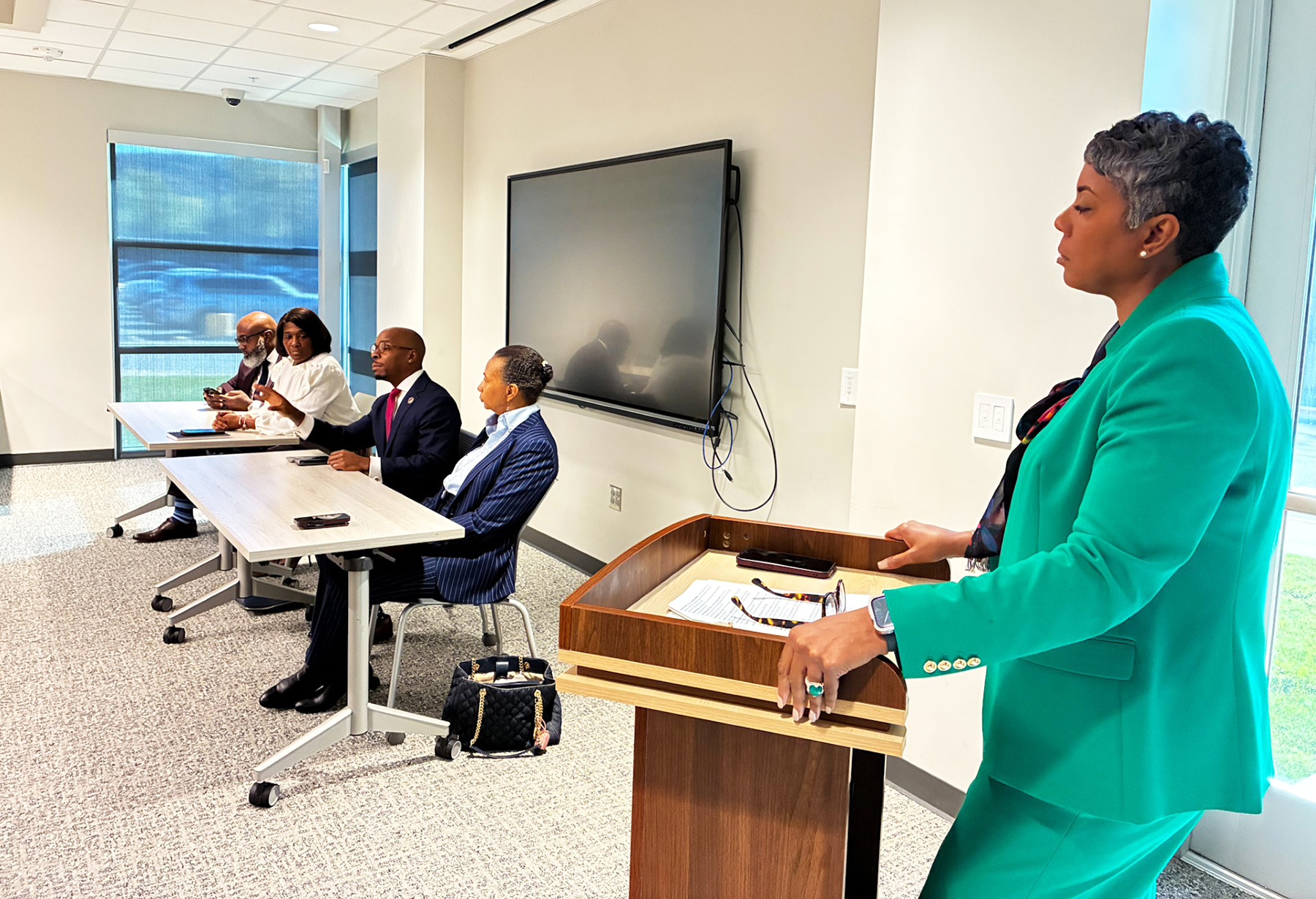
Karla Miller, director of Career and Workforce Development at Alabama A&M University, moderates the “AAMU to the Courtroom” alumni attorney speaker series at the AAMU Welcome Center. Panelists, from left, are state Rep. Ontario Tillman, Rochelle A. Conley, Eric Hewlett and Lula Cole.
Moderated by Karla Miller, director of Career and Workforce Development, the discussion offered students candid perspectives on the realities of law school, professional success, legal advocacy and opportunities beyond the courtroom.
Among those attending were students from Alabama A&M’s English Pre-Law Program, accompanied by Dr. Sheri Stanley, English pre-law coordinator in the Department of English and Foreign Languages. The program emphasizes writing, analytical and critical-thinking skills essential to legal studies, providing students with an academic foundation for pursuing law school.
For Tillman, whose practice includes criminal defense, civil rights and personal injury, the courtroom experience involving his brother reinforced his belief that every person deserves meaningful legal representation, regardless of the accusations against them.
“If you don’t have someone in court that’s willing to stand up with you, then who will?” Tillman asked.
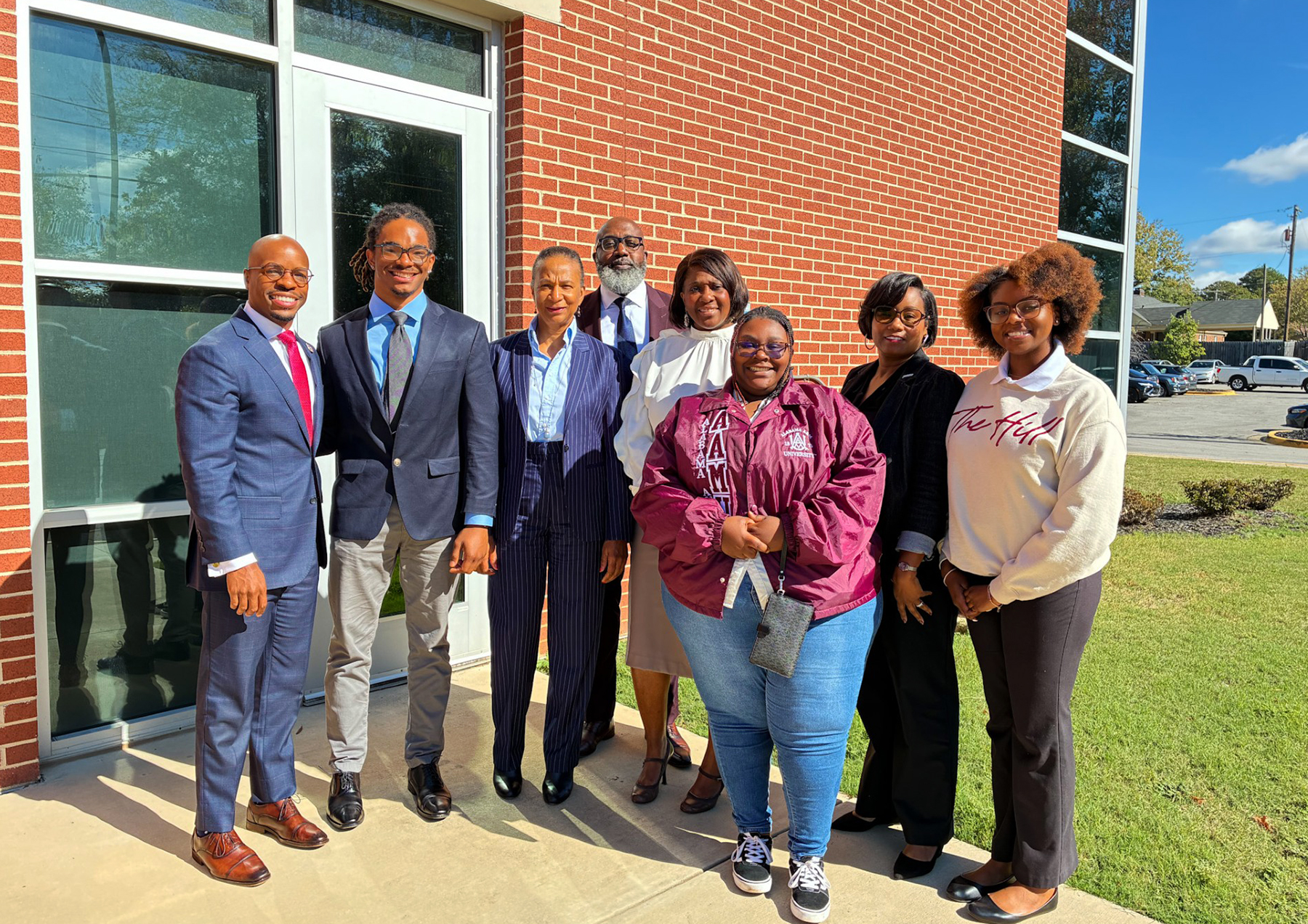
Dr. Sheri Stanley, English pre-law coordinator at Alabama A&M University, joins students and alumni attorneys following the “AAMU to the Courtroom” speaker series, which connected aspiring legal professionals with accomplished Bulldog graduates.
He also emphasized the importance of alumni returning to campus to provide guidance to current students.
“I wish we had this when I came through,” he said. “I would have been sitting right in the seat, going to law school early, starting my career early.”
Hewlett offered an equally candid account of the challenges he encountered after arriving at Indiana University for law school.
In a section of approximately 110 students, Hewlett recalled being one of only two Black students, surrounded by classmates from prestigious universities, including Ivy League institutions.
Despite his academic preparation, he initially struggled.
“I didn't have the confidence to respond, or articulate my point, or even just have the confidence to raise my hand,” Hewlett said.
He explained that law school introduced him to the Socratic method, a teaching approach in which professors challenge students to analyze cases, explain judicial decisions, defend their reasoning and respond to questions without advance notice.
Unlike traditional lectures, the method requires students to arrive prepared to discuss extensive reading assignments and think critically under pressure.
Hewlett encouraged students to begin developing those skills as undergraduates, suggesting that exposure to Socratic-style instruction in pre-law courses could help ease the transition to law school.
His professional journey eventually took him from judicial clerkships and prosecution to a major national law firm in Chicago, where he earned a substantial salary representing corporate clients. But professional success did not fully satisfy his desire to make legal representation more accessible.
“My purpose is bigger than that,” Hewlett said, explaining that he wanted to serve individuals who could not afford the rates charged by large corporate law firms.
Last year, he established his own practice, combining entrepreneurship with his commitment to client advocacy.
Reflecting on his journey from Alabama A&M to owning a law firm, Hewlett pointed to the University’s familiar message.
“The slogan here, ‘Start here, go anywhere,’ that is real,” he said. “I hope you all really take that in and really believe it.”
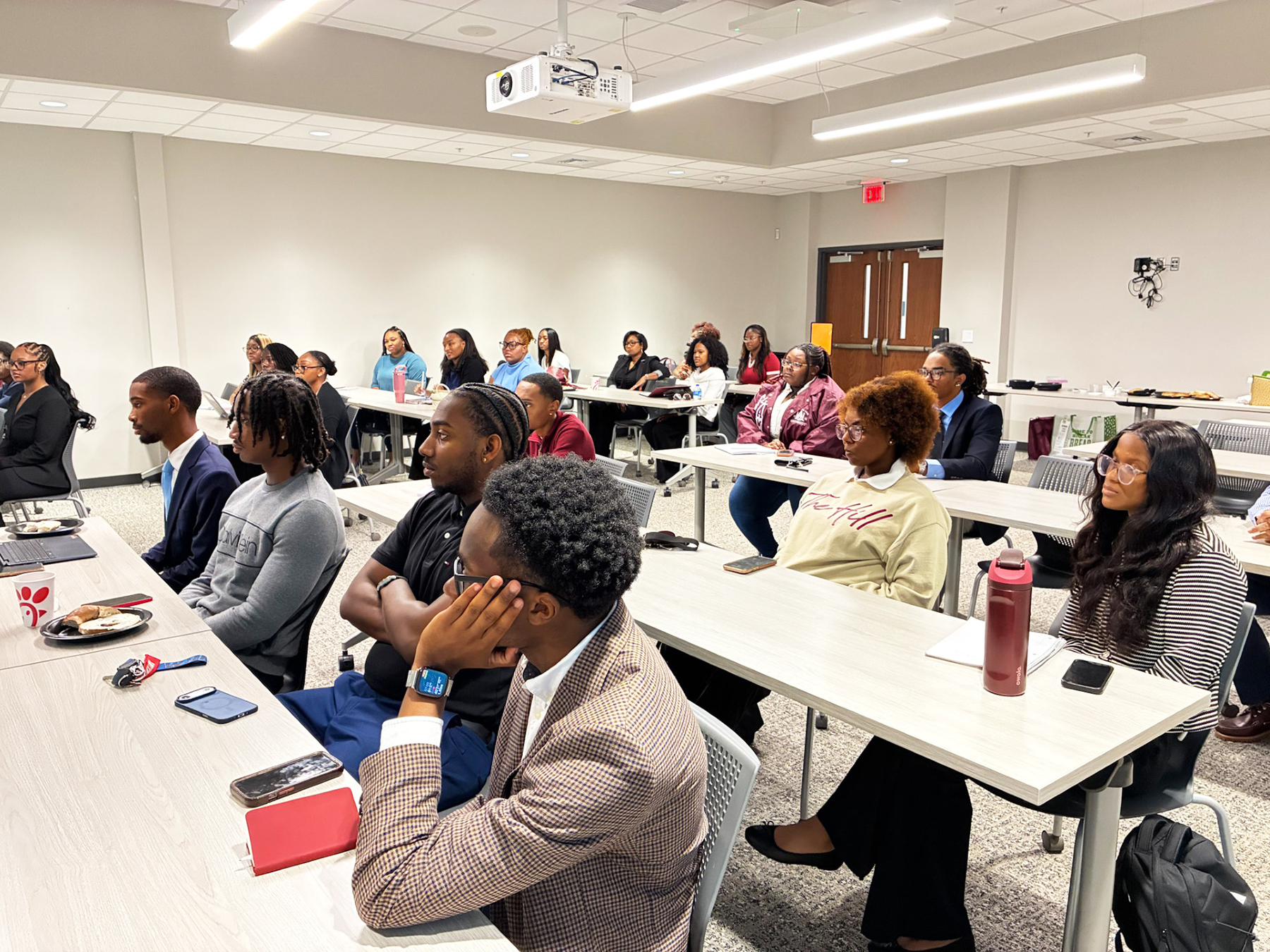
Alabama A&M students listen as alumni attorneys share insights on preparing for law school, building professional networks and pursuing careers in the legal profession during the “AAMU to the Courtroom” speaker series.
Conley helped students understand that a legal career does not necessarily mean spending every day arguing cases before a judge.
Now in her 20th year as an attorney, Conley spent 15 years practicing in courtrooms before transitioning to her current role as Alabama A&M’s chief legal adviser.
A former deputy attorney general for Alabama, she previously handled cases involving child welfare and the termination of parental rights.
Today, her responsibilities encompass the legal interests of an entire university.
“My job at Alabama A&M is to safeguard everything that happens,” Conley said, describing a role that extends across campus operations, University leadership, contracts, athletics, employment matters and regulatory compliance.
She explained that while courtroom attorneys typically advocate for individual clients, much of her work involves anticipating potential problems, advising University President Daniel K. Wims and helping protect the institution from legal risks.
Even major campus traditions such as the Magic City Classic require months of legal preparation, including contracts, transportation arrangements and compliance considerations.
Conley urged students to recognize that the analytical skills developed in law school can lead to leadership positions far beyond traditional legal practice.
“Don't abandon your unique self because everyone brings a unique perspective to law,” Conley said.
Students do not need a particular undergraduate major to pursue law school, she explained. Instead, they should strengthen their reading comprehension, develop disciplined study habits and learn to examine issues from multiple perspectives.
Cole brought another perspective to the discussion, highlighting the importance of estate planning, mediation and protecting generational wealth.
A first-generation college student, Cole described herself as a nontraditional student whose journey included balancing family responsibilities, full-time employment and her education.
Her path was anything but conventional. She began at Alabama A&M in engineering before transitioning to business administration and later pursuing law. She attended law school while continuing to work, building a career that included contract work, civil rights and employment matters before turning her attention to estate planning and mediation.
Cole encouraged students, particularly those who may not have family members familiar with the legal profession, to seek mentors and build relationships with attorneys willing to offer guidance.
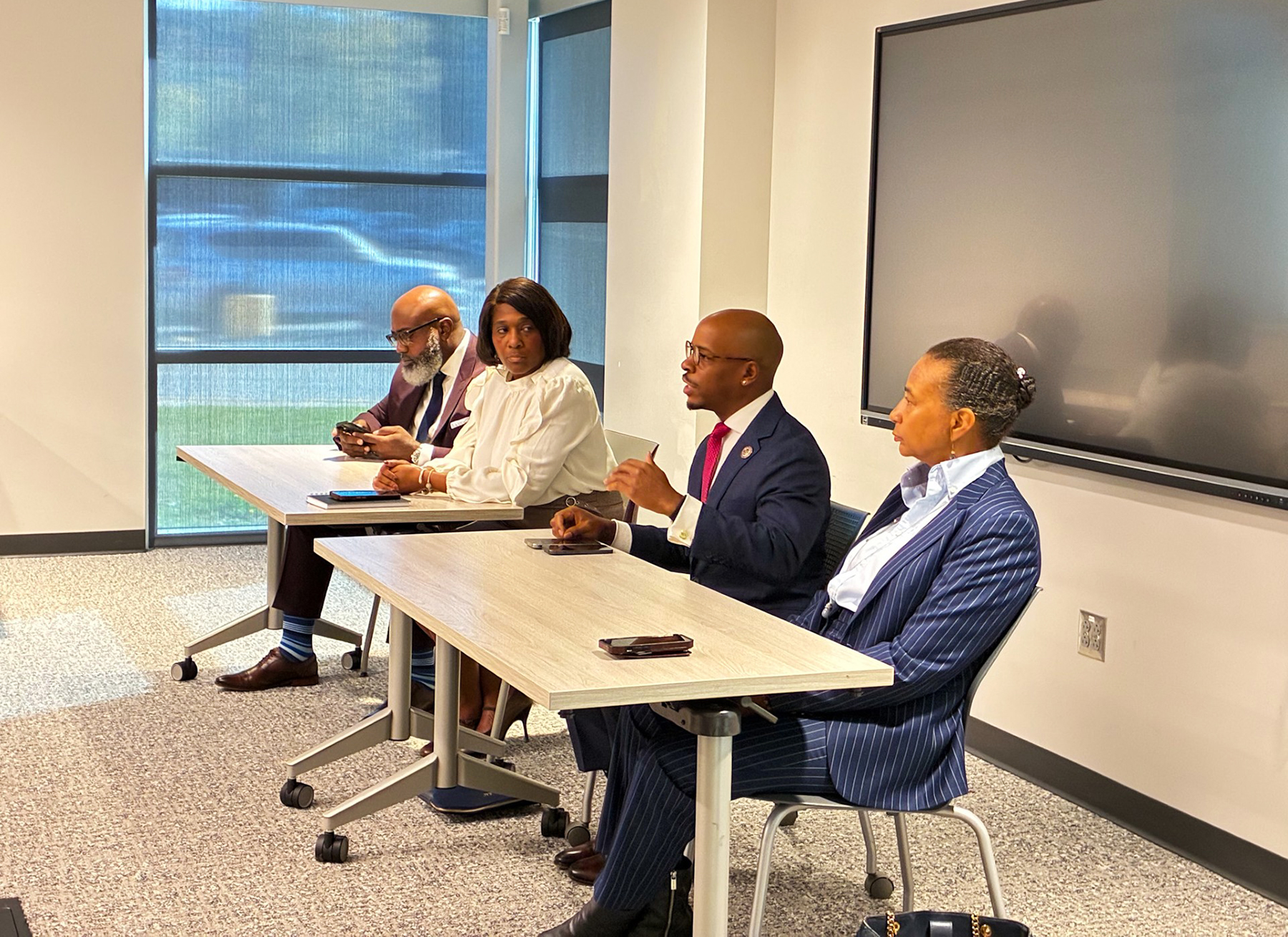
Alabama A&M University alumni attorneys share firsthand experiences from their legal careers and offer students insight into the challenges and opportunities of the profession during the “AAMU to the Courtroom” speaker series. From left are state Rep. Ontario Tillman, Rochelle A. Conley, Eric Hewlett and Lula Cole.
She explained that mediation allows individuals to resolve disputes outside the courtroom, often reducing the time and expense associated with litigation. Unlike a judge, a mediator remains neutral while helping the parties work toward an agreement.
But her discussion of heirs property and the potential loss of family-owned land was particularly significant.
Cole described how property passed down through generations without clear legal arrangements can become vulnerable to disputes among heirs and, in some circumstances, forced sales.
For Black families whose land represents decades of sacrifice, ownership and generational wealth, the consequences can be devastating.
“Land is unique. You can never get the same piece of property,” Cole said.
She described situations in which investors acquire an ownership interest from a distant heir who has often never seen the property, potentially placing an entire family’s property at risk.
Cole urged students to begin conversations with their families about wills, property ownership, powers of attorney and other legal arrangements that can protect loved ones and preserve family assets.
“It's important to sit down and have those family conversations,” she said.
The discussion also turned to one of the most immediate concerns for aspiring attorneys: what students should be doing now to prepare for law school.
Hewlett encouraged students to begin studying for the Law School Admission Test, or LSAT, well before their intended application dates. He recommended “The LSAT Trainer” by Mike Kim and described taking a full practice examination every weekend at the Huntsville library while preparing for his own legal education.
Conley cautioned students against taking the LSAT simply to see how they perform, emphasizing the importance of preparing thoroughly before attempting the official examination. She encouraged students to take advantage of test preparation resources, including Kaplan courses and library programs.
She also warned that the study habits students rely on as undergraduates may not work in law school, where an entire semester’s grade can depend on a single examination.
“So, you need to start now preparing for planning and budgeting time to study,” Conley said. “That skill just doesn't work for you in law school.”
The attorneys also encouraged students to pursue internships, clerkships and volunteer opportunities with law firms, prosecutors, public defenders and courts.
Tillman suggested visiting local courtrooms to observe attorneys at work, while Hewlett challenged students to identify two attorneys they admire and invite them to coffee or lunch before the end of the year.
Cole emphasized the importance of finding mentors and maintaining professional contacts.
Conley challenged students to make the most of their undergraduate years by becoming active in campus organizations, volunteering, seeking leadership opportunities and building relationships that could strengthen their law school applications and future careers.
“Don't sit up in your room,” Conley advised, emphasizing that experiences outside the classroom can be just as important to personal and professional development.
Students interested in legal careers can also build on those opportunities through Alabama A&M’s Pre-Law Society, which connects aspiring attorneys with LSAT preparation, law school visits, guest speakers and civic engagement activities.
Throughout the discussion, students asked thoughtful questions about navigating internships, identifying legal specialties, preparing for law school and the growing role of artificial intelligence in the legal profession.
The attorneys emphasized that early exposure to different legal settings can help students discover professional interests they may not have previously considered.
For Tillman, those interests should also include civic engagement and public service.
Drawing on his experience as both an attorney and state legislator, he explained how practicing law gives him a valuable perspective when considering legislation that could affect families, defendants and communities throughout Alabama.
He challenged students to become informed about public policy, to watch the news and participate in the political process and recognize their ability to influence decisions that shape their futures.
“I was so happy when I saw the video and you all marching to the polls on Instagram,” he said. “We need you to be involved.”
He encouraged students to recognize the collective influence of historically Black colleges and universities and to remain engaged beyond individual elections.
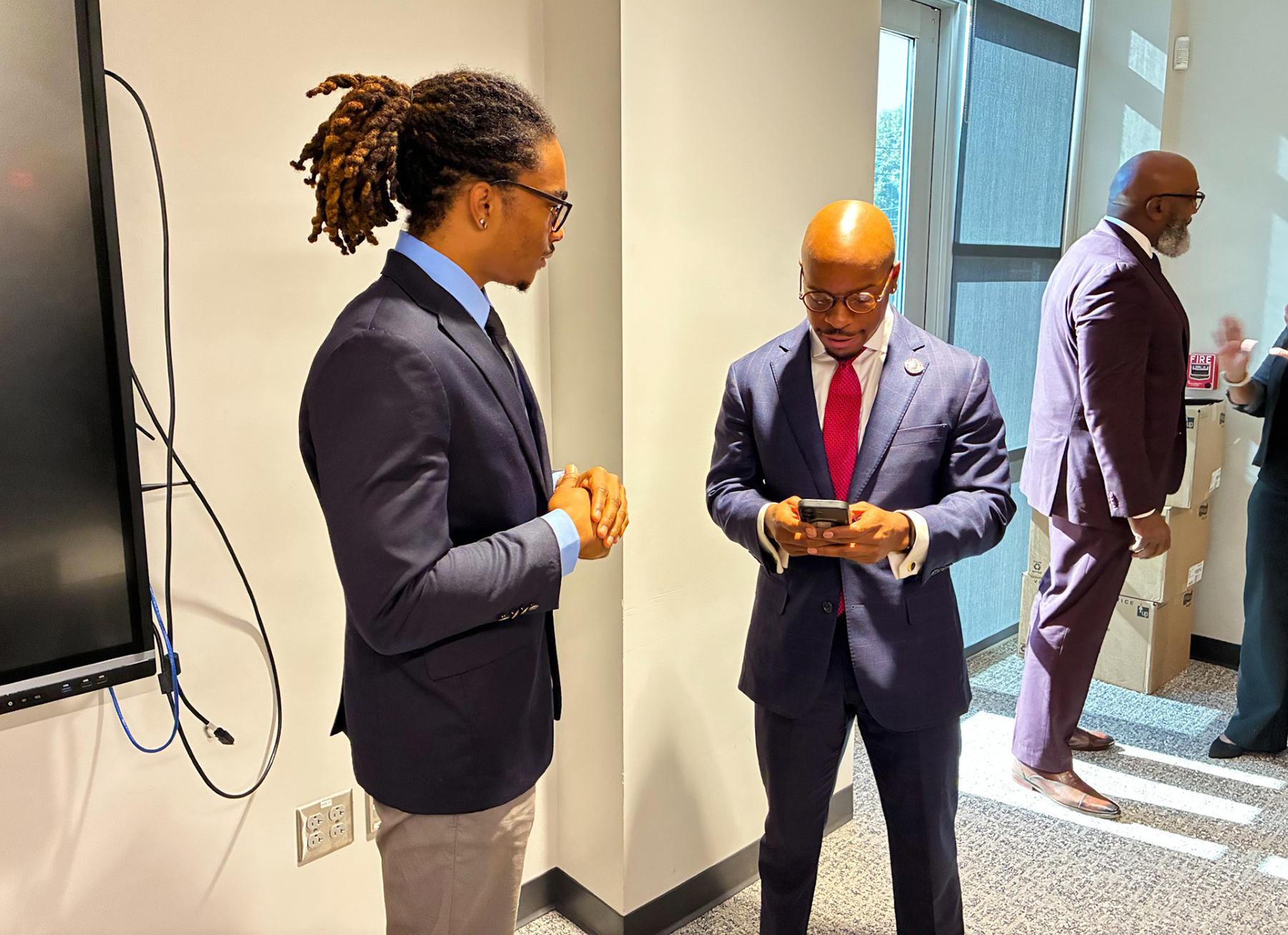
Alabama A&M alumnus and attorney Eric Hewlett exchanges contact information with a student following the “AAMU to the Courtroom” speaker series, reinforcing the importance of mentorship and professional networking.
“Why not mobilize and use this base that they are overlooking?” Tillman asked.
The event’s impact extended beyond the formal discussion. After the panel, students gathered around the alumni attorneys to continue conversations, ask additional questions and exchange contact information, turning the morning’s advice about networking and mentorship into immediate opportunities.
The willingness of four accomplished alumni to share their experiences and make themselves accessible underscored the purpose of the speaker series: connecting students with professionals who once walked the same campus and are now positioned to help guide the next generation.
Tillman made clear that those connections should not end when students leave the Welcome Center.
“Relationships really matter,” he said. “If we give you our number, say, ‘Hey, call me,’ somebody’s telling you to do that.”
And as he reflected on the future of the legal profession and the importance of preparing new advocates, Tillman left students with a message that captured the spirit of the gathering.
“It's not about me or us. It’s about the next generation. It’s about giving you guys the tools.”