Foster Created Pathways for Hundreds of African Americans at NASA
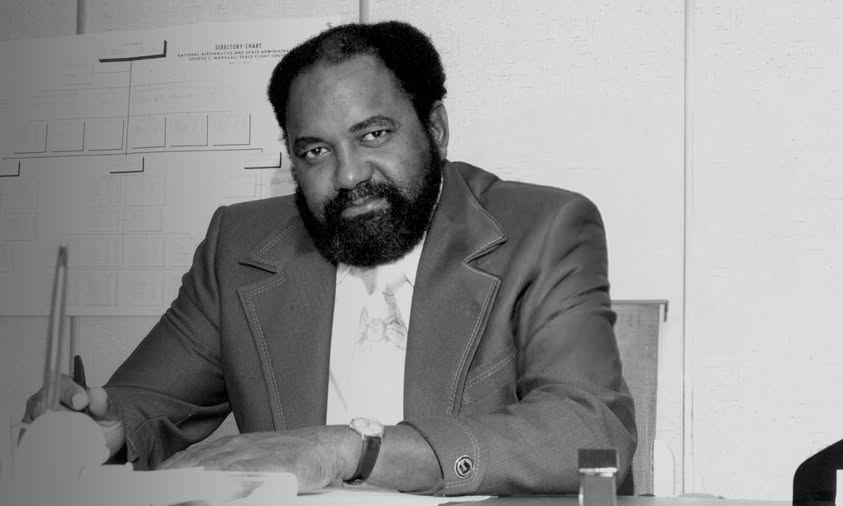
Alabama A&M Alumnus Clyde Foster Featured on PBS’s ‘American Experience’
Alabama A&M University alumnus Clyde Foster, a pioneering mathematician, educator and NASA leader, is being recognized nationally in a recent feature by PBS and The Undefeated that highlights his remarkable life and lasting impact on the U.S. space program.
The story, part of PBS’s long-running historical documentary series “American Experience,” titled “Another Hidden Figure: Clyde Foster Brought Color to NASA,” explores how Foster helped open doors for hundreds of African Americans in the nation’s space industry during a time when segregation and limited opportunity defined much of the Deep South.
Born in Birmingham, Alabama, Foster was the sixth of 12 children raised in a working-class family during the Jim Crow era. Determined to build a future through education rather than the physically demanding labor that defined many jobs available to African Americans at the time, he excelled academically and graduated from Parker High School in 1950.
He later enrolled at Alabama A&M College, now Alabama A&M University, where he studied mathematics and chemistry. Foster graduated in 1954, launching a career that would place him at the center of the emerging U.S. space program.
While still a student at Alabama A&M, Foster had an early encounter with Wernher von Braun, the German rocket scientist who later became a key leader in the U.S. space program in Huntsville. Von Braun visited the historically Black campus as part of an effort to promote science education and interest in space exploration. The meeting introduced Foster to the possibilities of the developing space industry and helped shape the path that would define his career.
During nearly three decades at NASA’s Marshall Space Flight Center in Huntsville, Foster played an important role in the agency’s early years. His mathematical expertise contributed to calculations that helped propel rockets into space. At the same time, he worked quietly but persistently to expand opportunities for African Americans seeking careers in science and engineering.
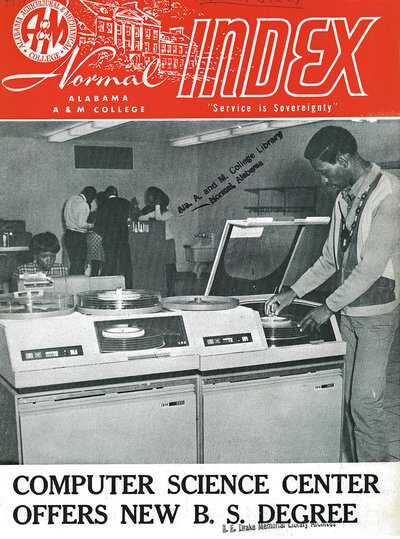
One of Foster’s most lasting contributions was strengthening the connection between NASA and his alma mater. In an effort to create a pipeline of Black professionals into the space program, Foster persuaded von Braun to support the creation of a computer science program at Alabama A&M. NASA provided grants to help launch the initiative, though Foster initially faced skepticism from administrators who questioned the value of such a new and unfamiliar field.
Foster ultimately helped establish the program in the late 1960s, making Alabama A&M the first public college in Alabama to offer a computer science major. The program opened new academic and career pathways for students and helped prepare graduates for opportunities in the rapidly growing aerospace and technology industries.
Foster also remained closely connected to students at Alabama A&M. Among those he mentored was James Jennings, then a mathematics major at A&M who later joined NASA. Jennings was one of many young scholars Foster encouraged and helped guide toward careers in the space industry.
Later in his career, Foster served in NASA’s Equal Employment Opportunity office, where he used his position to help broaden access to employment and advancement opportunities within the agency. Colleagues and historians credit him with helping hundreds of African Americans enter the space workforce.
Foster’s influence extended beyond NASA as well. In north Alabama, he became a civic leader and served for two decades as mayor of Triana, helping restore the town’s charter and secure improvements such as paved roads, streetlights and a municipal water system. His leadership also helped set a model for other small Black communities across the state seeking greater local control and development.
Foster died in 2017 at age 86, leaving behind a legacy defined by quiet determination, educational advocacy and a lifelong commitment to expanding opportunity for others.
Read more about Foster’s remarkable life here.