AAMU Student Developed EpiPen Case in Bulldog Makerspace Lab
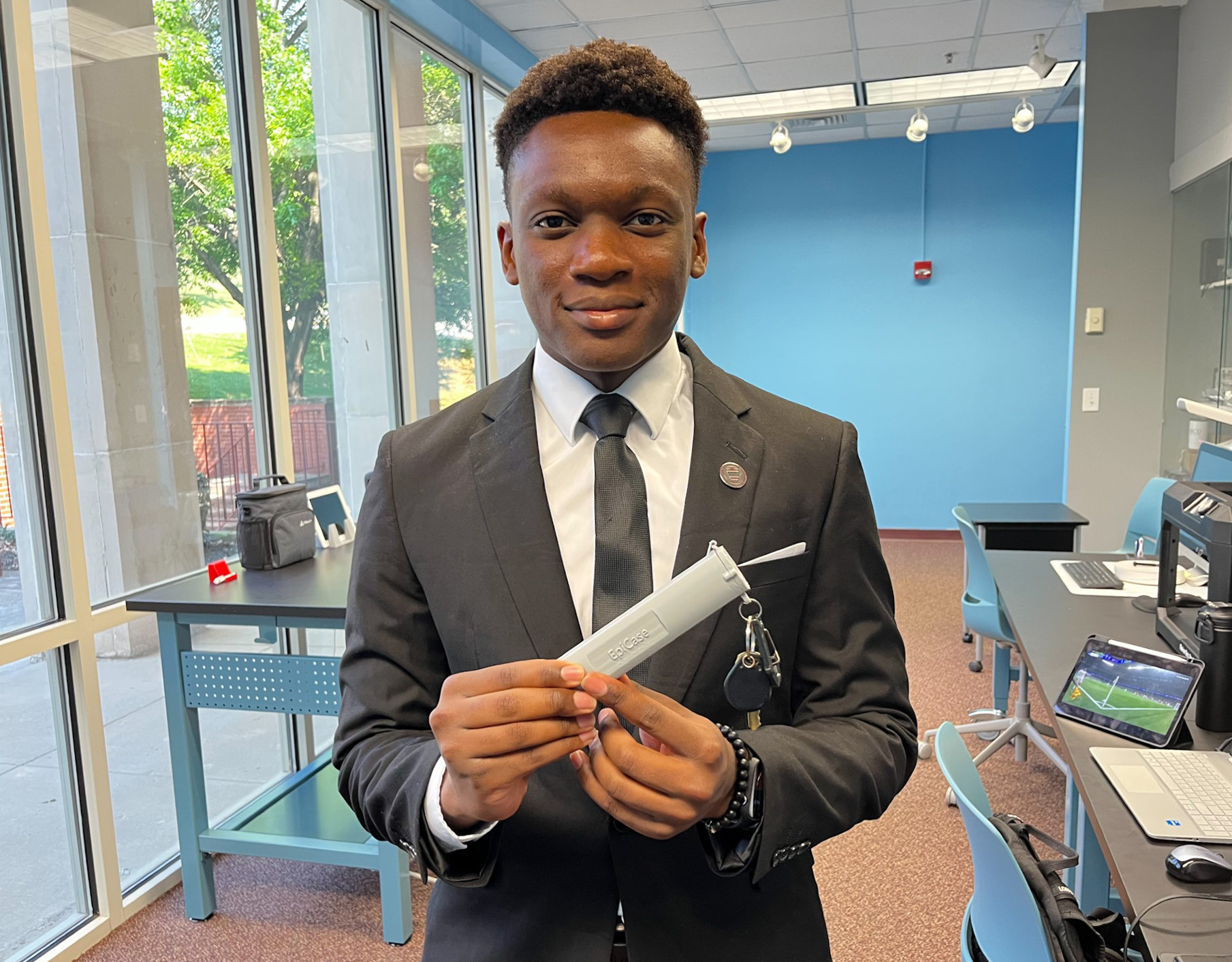
Mubanga Engineers 3D-Printed EpiPen Case for Faster Emergency Access
A mechanical engineering student at Alabama A&M University is using 3D printing technology to design and build a practical solution that improves how people carry lifesaving medication.
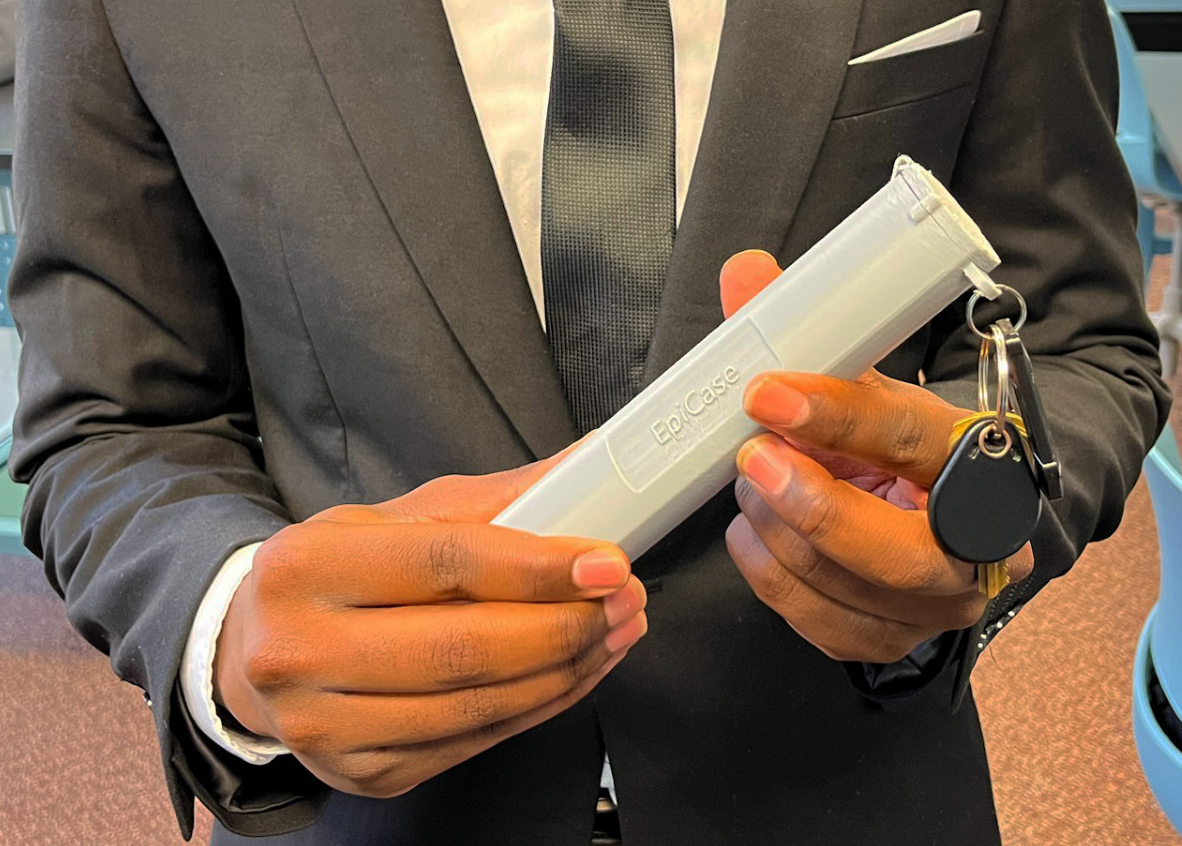
Bukata Mubanga, a junior from Lusaka, Zambia, created a compact, keychain-style EpiPen Case he designed and 3D printed using in the Bulldog Makerspace Lab, a campus lab where students and community members design and build projects using tools like the 3D printer. While similar cases exist on the market, Mubanga focused on engineering his own version to better understand product design and improve everyday accessibility.
“I wanted to solve a simple but important problem: people forgetting or not having quick access to their EpiPens during emergencies,” said Mubanga.
He began developing the idea during his spring internship with Innovation Portal, a Mobile, Alabama-based nonprofit that supports entrepreneurship and startup growth. Through the program and its student initiative, Unlock Alabama, Mubanga advanced the concept while gaining hands-on experience in innovation and product development. Unlock Alabama shared his creation on social media.
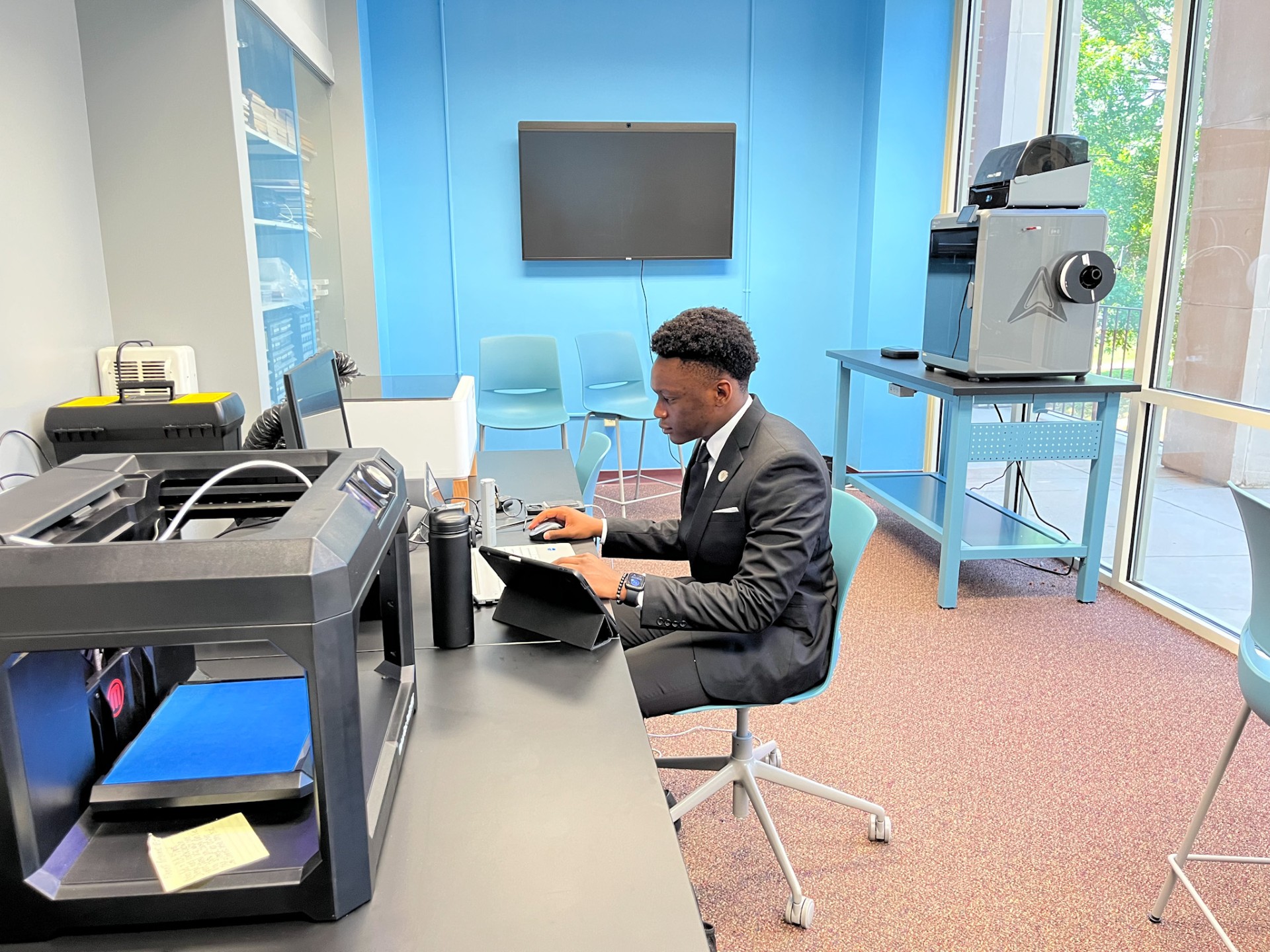
After researching how people store and carry EpiPens, Mubanga identified opportunities to improve portability and convenience. He used computer-aided design software to create the case and produced multiple 3D-printed versions as he refined the design. Most of his work took place in the Drake Learning Resources Center Makerspace Lab, where he worked primarily with PETG material to develop durable models.
“This project represents my passion for using engineering to solve real-world problems,” he said. “It also reflects my interest in product design and creating solutions that have a direct impact on people’s lives.”
Mubanga credits mentorship and campus resources for supporting his work, including guidance from Innovation Portal Internship Manager Paul Lockett and Makerspace supervisor Jaquatta Causey.
The EpiCase is designed to make EpiPens easier to carry and quicker to access, helping reduce the risk of leaving them behind and improving response time during allergic emergencies. Mubanga plans to continue refining the design through user testing while exploring options for future development.
His experience at AAMU has emphasized hands-on learning and collaboration. An Honors student on a Presidential Scholarship, Mubanga previously served as a manufacturing engineering intern at Amerex Corporation in Trussville, Alabama, and a research intern at the Stanford Linear Accelerator Center (SLAC) National Accelerator Laboratory in Menlo Park, California. He also works part-time in the Makerspace lab, assisting students with 3D printing and other fabrication tools—an environment he says has been central to his development.
“Some of my most rewarding experiences have been in the Makerspace Lab,” said Mubanga. “From collaborating on engineering projects to being part of a supportive community, it’s an environment that truly fosters innovation and growth.”
Set to graduate in May 2027, Mubanga plans to pursue a career in mechanical design or manufacturing engineering while continuing to develop products that address real-world challenges. He said AAMU has provided the environment and resources to turn ideas into tangible solutions.
“I chose AAMU because of its strong engineering program, supportive community, and the opportunities it provides for hands-on learning and innovation. I am grateful for the resources and support that have allowed me to explore and develop this idea, especially access to the Makerspace and mentorship opportunities.”