Nationally Recognized Physicist and Mentor Concludes Distinguished Career at AAMU
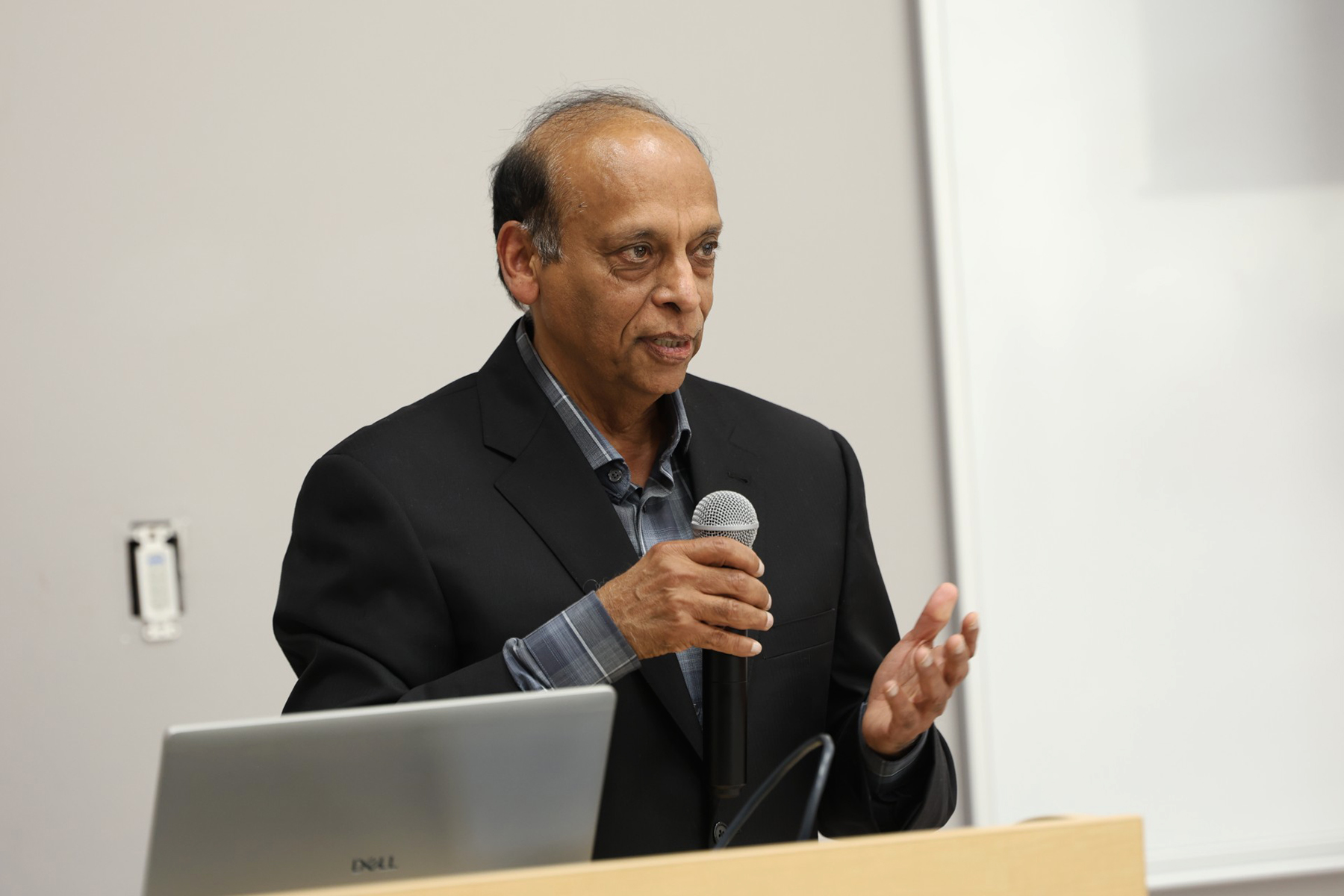
Longtime Professor Dr. Anup Sharma Retires After 34 Years at Alabama A&M
After more than three decades of shaping scientists, advancing groundbreaking research and elevating Alabama A&M University’s physics program on the national stage, Dr. Anup Sharma has retired following a distinguished 34-year career at the University.
Sharma joined Alabama A&M in 1992 as a visiting researcher before becoming a permanent faculty member. Over the next three decades, he helped build a culture of scientific inquiry and mentorship that influenced generations of students and colleagues alike.
Born and raised in Jhansi, India, Sharma earned his bachelor’s degree in physics from Mumbai University and a master’s degree from the Indian Institute of Technology Kanpur before coming to the United States in 1977 to pursue doctoral studies at Columbia University.
While at Columbia, Sharma studied particle physics under Nobel Laureate T.D. Lee, who was awarded the Nobel Prize for discovering the non-conservation of parity. He also studied classical mechanics under renowned physicist Herbert Goldstein, author of one of the field’s most influential textbooks. He did his Ph.D. research under a leading atomic physicist, Dr. William Happer. When his research advisor moved to Princeton University, Sharma continued his doctoral research there and completed his Ph.D. work at Princeton.
Following graduation, Sharma served as a postdoctoral fellow at the Max Planck Institute in Göttingen, Germany, a historic center for the development of quantum mechanics before World War II. He later returned to the United States as a visiting assistant professor at Texas A&M University before returning to India to work as a scientist at the Bhabha Atomic Research Centre in Mumbai.
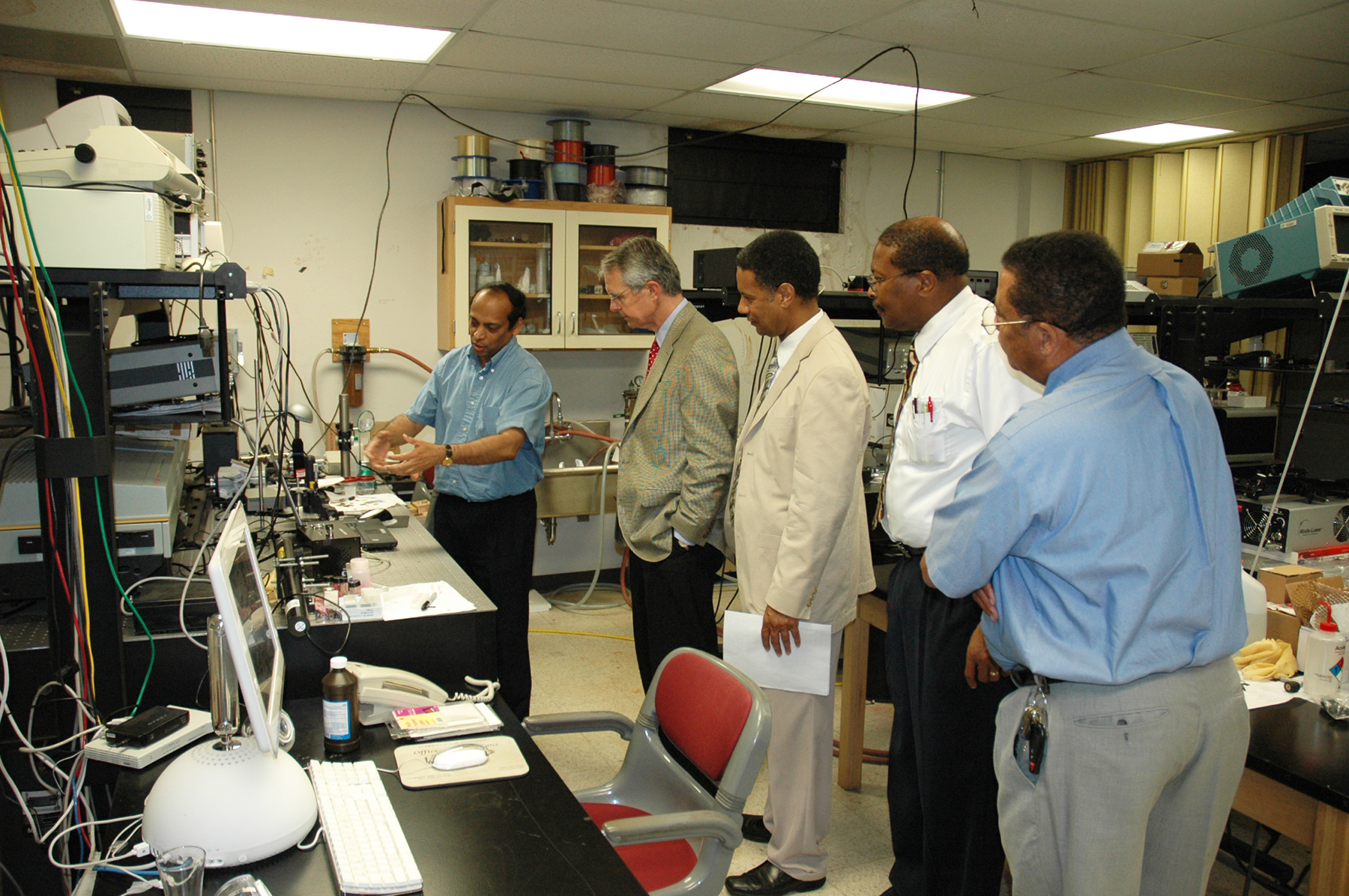
His path ultimately led to Alabama A&M, where his impact would become both far-reaching and enduring.
During his tenure, Sharma served as major research advisor to 12 doctoral students and 12 master’s students. Many of his former students now hold positions as tenured professors, scientists and managers in federal laboratories and private industry.
At Alabama A&M, Sharma taught 24 different courses, including 10 undergraduate and 14 graduate classes, and developed four new physics courses. For the past decade, he also coordinated the University’s annual memorial lecture series featuring Nobel Laureates and internationally recognized scientists.
He also served as principal investigator or co-principal investigator on approximately 30 research grants and contracts totaling several million dollars from agencies including the U.S. Department of Defense, Department of Homeland Security, National Science Foundation, Department of Energy and NASA.
In 1997, Sharma received the National Science Foundation CAREER Award for his research in fiber optics. His scholarly contributions include approximately 60 peer-reviewed research papers in laser physics, spectroscopy and chemical sensing. In recent years, his work expanded into theoretical biology, exploring one of science’s enduring mysteries: why amino acids in living organisms are exclusively left-handed despite existing naturally in both left- and right-handed forms.
Reflecting on his teaching career, Sharma said some of his most rewarding moments came from changing students’ perceptions of physics.
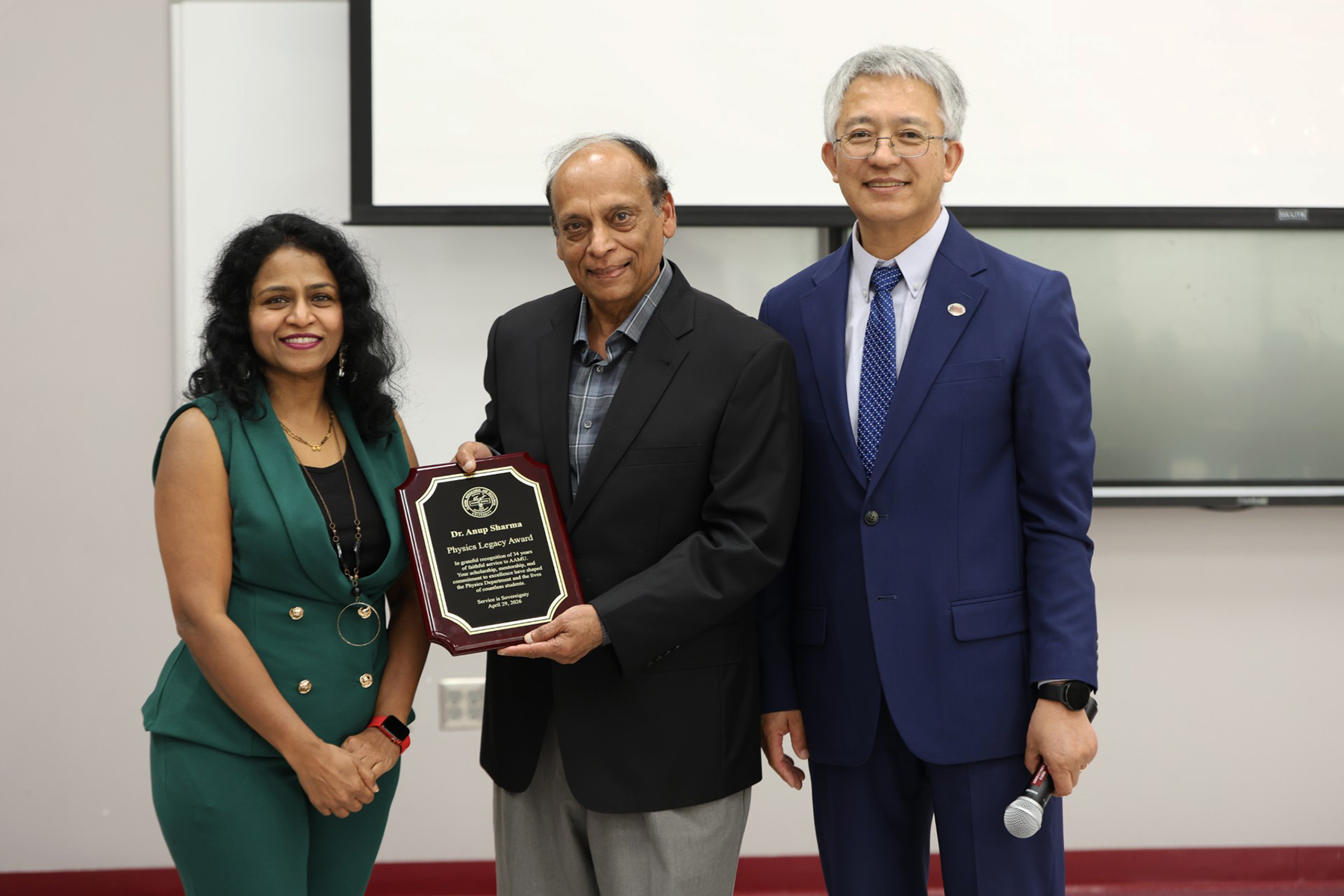
“The best part was hearing from students at the end of semesters that physics is more fun and less intimidating than they had imagined,” Sharma said. “It is very satisfying to see several of my MS and PhD students now occupy responsible positions as tenured professors, scientists and managers in federal laboratories and industries.”
In retirement, Sharma plans to pursue another passion — poetry.
“That is certainly the goal,” he said of becoming a published poet. “I already have one poem published and have a few pending submissions to various magazines. My interest in writing poems is relatively recent and started during the COVID period when we all needed some kind of escape from home confinement.”
Although retiring from full-time teaching, Sharma said he plans to remain connected to Alabama A&M and return for major University events and lectures whenever possible. He and his family plan to stay in Huntsville for the near future before eventually relocating to Atlanta.
Reflecting on his years at AAMU, Sharma said the relationships he built on campus were among the most rewarding parts of his career.
“I have enjoyed great camaraderie with fellow faculty members and friendships with graduate students in classrooms and the laboratory, which is what I will miss the most.”