New Charging Stations Advance University’s Clean Transit Goal
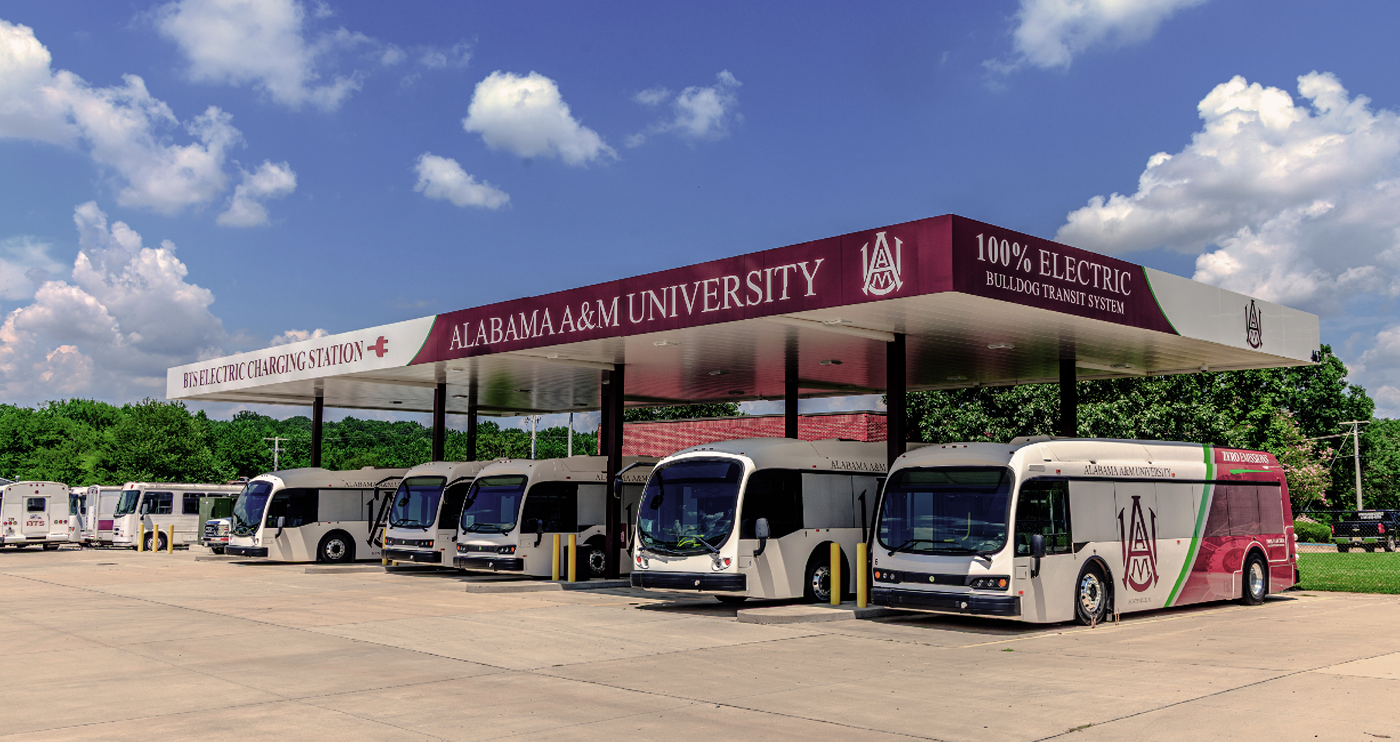
Alabama A&M Expands Electric Bus Infrastructure
Alabama A&M University is taking another major step toward a more sustainable campus with the expansion of its electric bus charging infrastructure, building on its distinction as the first historically Black college or university (HBCU) in the nation to put electric buses into service.
The University has selected Camber Charging, a provider of electric vehicle charging infrastructure and services, to install a new high-powered charging system for its growing Bulldog Transit System fleet. The project will add four charging positions at the University’s expanded transit depot, advancing AAMU’s goal of achieving a fully zero-emission transit fleet by 2031, with completion now anticipated as early as 2028.
The new system will expand charging capacity and support overnight charging, helping ensure buses are ready for their morning routes. It will complement the University’s existing solar-powered infrastructure and provide greater flexibility as the electric fleet grows.
Installation is expected to begin in November 2026, with the system scheduled to enter service by February 2027.
The expansion is supported in part by an $8.1 million Federal Transit Administration Low or No Emission grant, which is helping fund additional charging infrastructure, an expanded bus storage facility and a larger solar microgrid.
“Our riders count on every bus being ready for its first run of the day,” said Marshall Chimwedzi, director of AAMU’s Bulldog Transit System. “This expansion gives us more charging capacity, room to grow, and all with a partner who is accountable for keeping it running as we move toward a fully zero-emission fleet.”
AAMU made transportation history in 2019 when it introduced two 40-foot Proterra Catalyst electric buses, becoming the first HBCU to operate an electric bus fleet and pioneering the deployment of electric buses in Alabama.
Since then, the University has expanded its transportation system to include six electric buses, two 25-passenger shuttles, two coach buses and seven 15-passenger vans for off-campus routes. Two additional electric buses are on order, with a long-term goal of operating 10 electric buses. The University also operates four electric police cruisers.
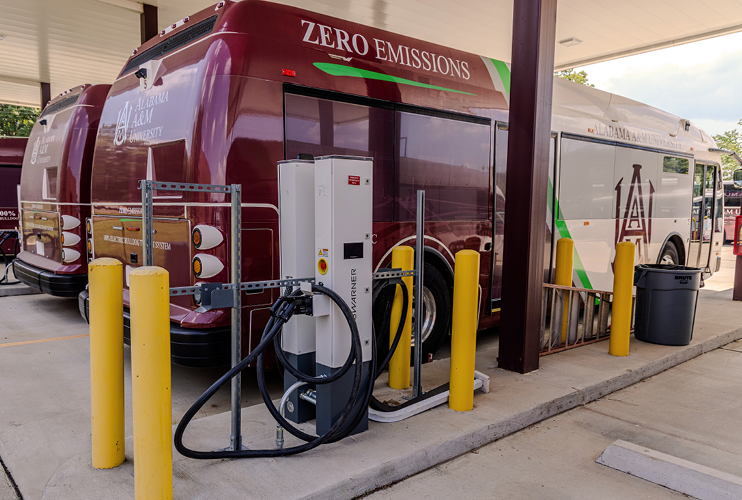
An Alabama A&M University electric bus connects to a charging station at the Bulldog Transit System depot. The University is expanding its charging infrastructure to support a growing electric fleet and its goal of achieving zero emissions by 2031.
According to University data, the transition to electric vehicles has generated approximately $35,000 in maintenance savings and $285,000 in fuel savings, while reducing emissions by an estimated 80 tons per bus.
The new charging system will feature two 360-kilowatt power cabinets, providing a combined 720 kilowatts of capacity across eight charging dispensers. The technology will distribute power based on vehicle charging levels and operational needs, allowing multiple buses to charge simultaneously while prioritizing those scheduled for service.
Camber Charging will oversee installation, monitoring software and ongoing maintenance. Its Camber Core platform will provide around-the-clock remote monitoring, automated equipment alerts and charging schedules designed to improve fleet reliability.
The project complements AAMU’s broader renewable energy initiatives, including a 1.3-megawatt solar farm with plans to expand to 3.5 megawatts. The solar infrastructure is being integrated into a renewable energy microgrid supported by battery storage, allowing excess energy to be saved for later use.
Plans for the expanded transit facility also include additional charging stations, battery storage, a driver’s lounge, an enclosed service bay and monitoring rooms equipped with real-time energy management technology.
“Alabama A&M has been a leader in campus transit electrification from the start, and we’re proud to support the next phase of its transition,” said Brendan Harney, CEO of Camber Charging. “Our job doesn't end when the chargers are installed. We’re responsible for the hardware, software, and ongoing service that keep the system running. Ultimately, success means every bus is charged and ready to serve its riders each morning.”
The investment strengthens AAMU’s commitment to sustainable transportation while preparing its transit system to serve a growing campus and surrounding community.