State-of-the-Art Technology Strengthens University’s Growing Leadership in Education and Innovation
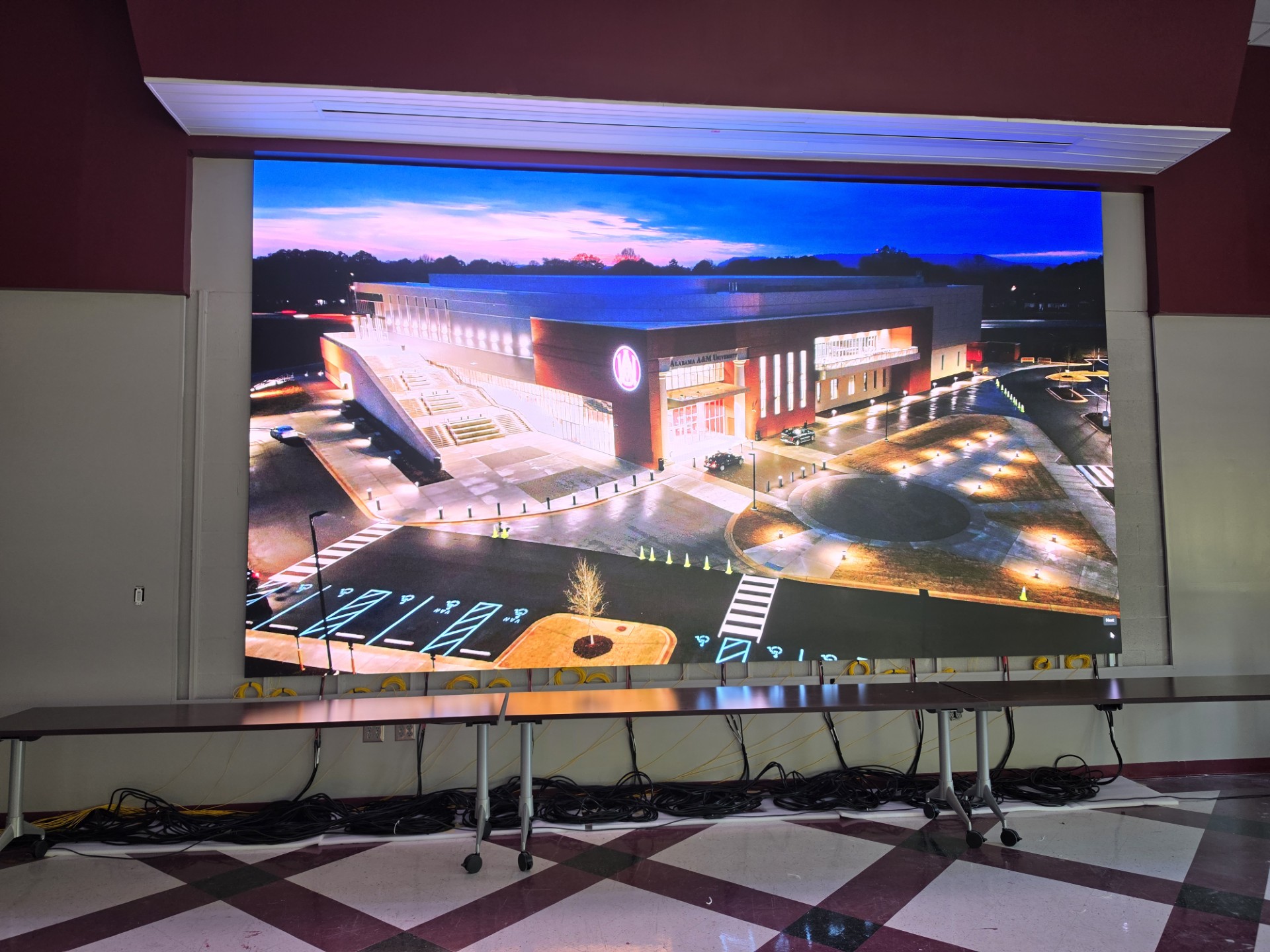
AAMU Unveils Cutting-Edge AI-Enabled Micro-LED Display
Alabama A&M University is marking another first in providing transformative experience in STEM Education, artificial intelligence, and emerging technology with the installation of an ultra-thin, AI-enabled micro-LED display that company representatives say is the first installation of its kind in the United States.
The approximately 10-by-18-foot display, installed in the auditorium of the Bond Engineering Building, represents the latest generation of micro-LED technology and will provide a transformative experience for student success in artificial intelligence, robotics, virtual reality, 3D design, simulations, research, and collaborative learning.
Its arrival comes as AAMU welcomes the inaugural class of Alabama’s first Bachelor of Science in Artificial Intelligence program, pairing the new academic program with advanced technology that students and faculty can use for teaching, research, and innovation.
“This AI-enabled technology exposes STEM majors to an elite display experience and allows stakeholder audiences and the campus community to engage in a completely immersive presentation experience that demonstrates the University’s commitment to cutting-edge research and technology,” said Dr. Torin Malone, director of Title III Grants at Alabama A&M University. “It’s going to strengthen our STEM education process and garner enthusiasm with our students.”
Dr. Zhengtao Deng, dean of the AAMU College of Engineering, Technology, and Physical Science, said the display will bring together robotics, virtual reality, virtual learning, design, and other applications, giving students and faculty a large-scale platform for visualizing complex systems and collaborating on simulations, designs, and research.
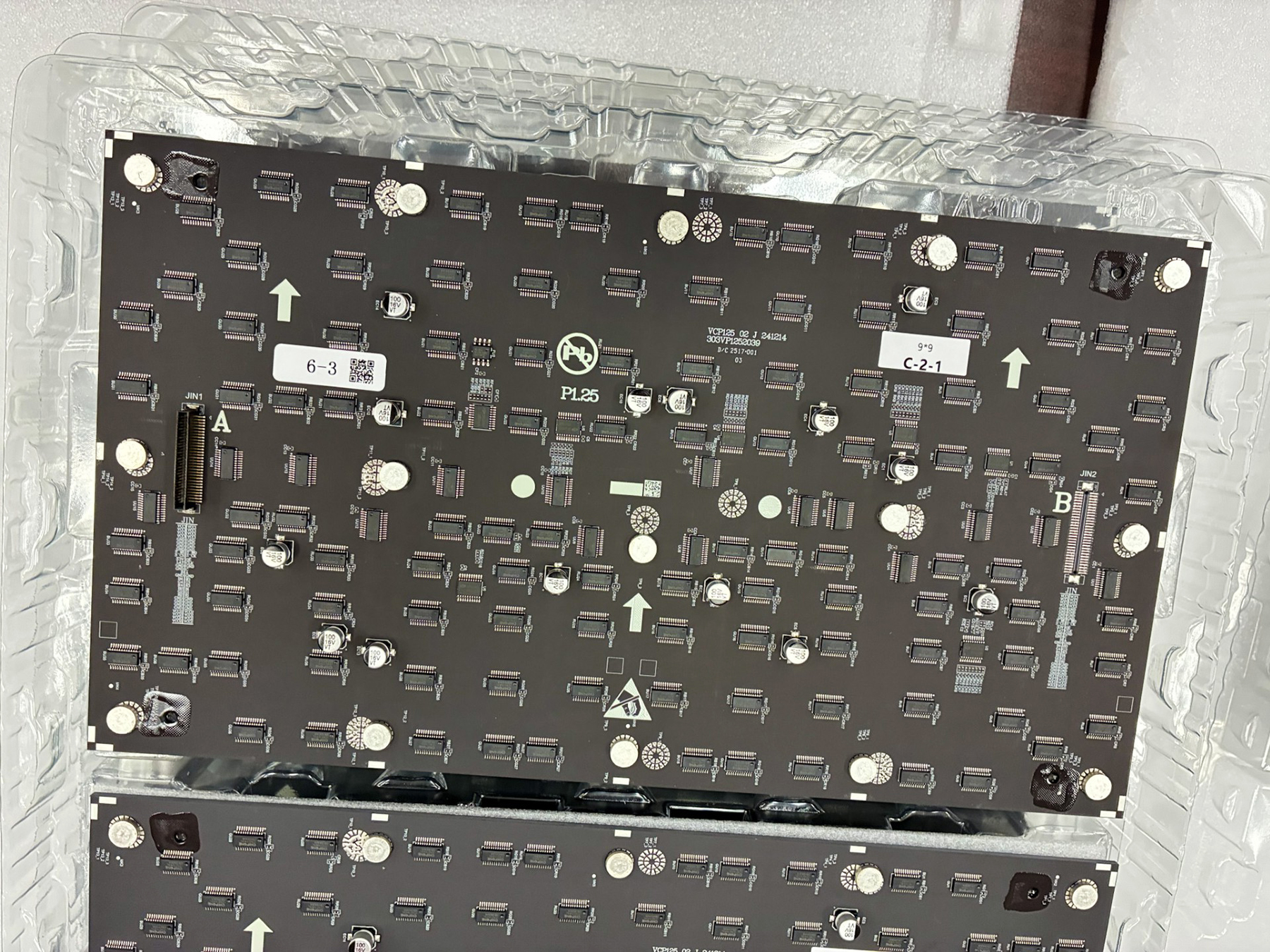
A close-up shows components used in Alabama A&M University’s new micro-LED display.
Paul Chi of Bluefin International, a digital signage company involved in the installation, described the system as an ultra-thin micro-LED “wallpaper” display that combines fiber-optic video transmission with low-voltage power for the LEDs. Chi said it consumes about half the power of traditional LED walls, operates at a lower temperature, and offers twice the refresh rate of conventional chip-on-board (COB) micro-LED displays.
“This was the first one in the United States installed,” Chi said.
The scale of AAMU’s installation also sets it apart.
“This wall is bigger than leading industries’ store-within-a-store walls,” Chi said, referring to displays his company is building for select locations. At 10 by 18 feet, he said, AAMU’s display is approximately twice as large. According to the manufacturer, the display is the largest of its kind.
“Down the road, micro-LEDs are going to replace traditional LCD TVs,” Chi said, noting that he expects adoption to expand as costs decline.
Unlike traditional LCD technology, each tiny LED pixel in the display produces its own light, delivering an ultra-clear image that remains bright and visible even in brightly lit environments and from virtually any viewing angle. The high-definition display also allows students and faculty to zoom in on detailed simulations, designs and other highly visual academic work.
Bringing the technology to The Hill required collaboration among University leadership, the College of Engineering, Technology and Physical Sciences, Title III, and the companies involved in procuring and installing the system.
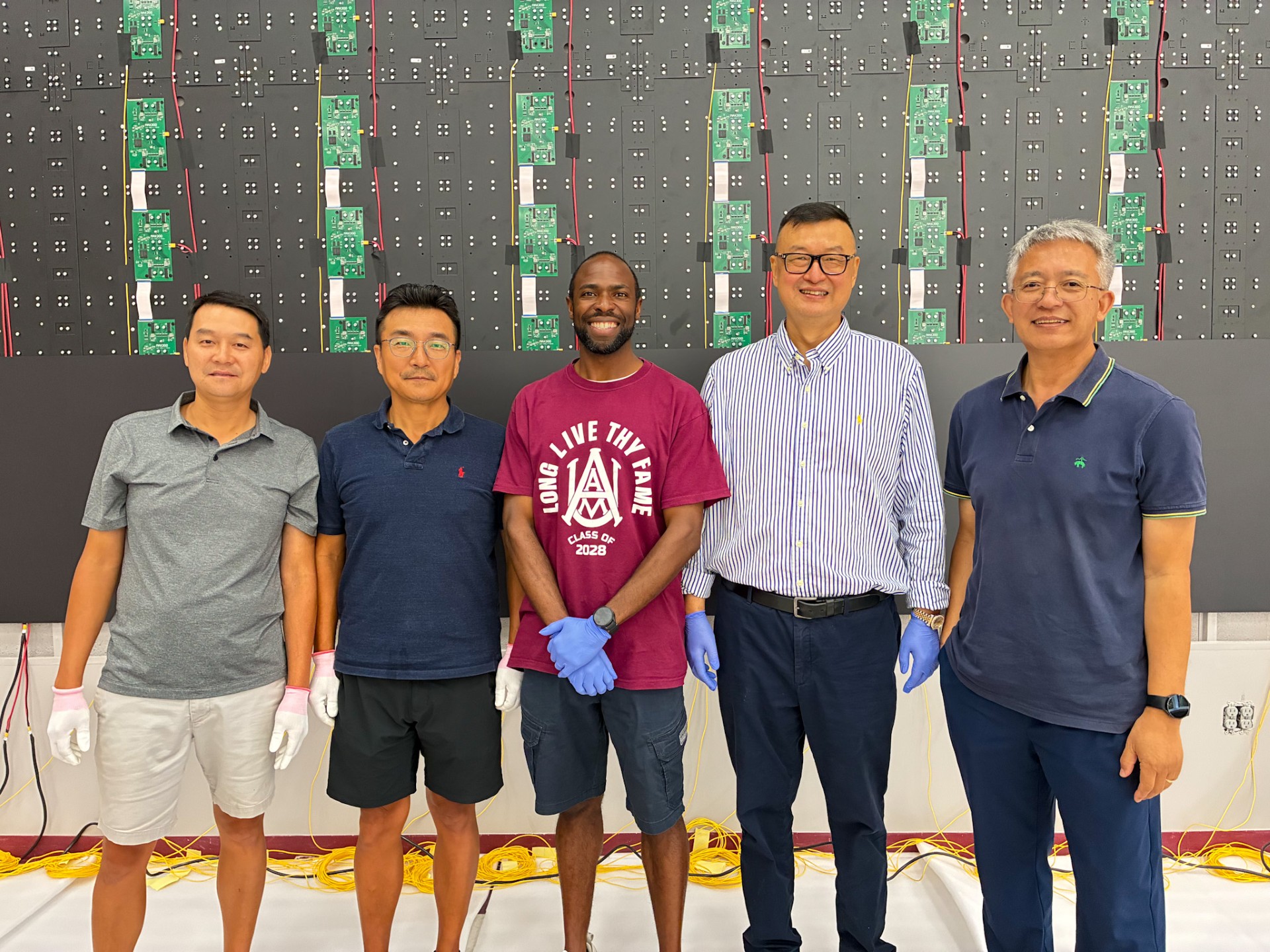
George Men of GNJ International, an AAMU vendor, worked closely with AAMU’s Unified Drone Unit Lead Justin Vaughner and the installation team to bring the project together. Dr. John Jones, provost and vice president of Academic Affairs, said the University began exploring the technology as part of University’s Strategic Priority in broader STEM education improvements.
“This investment directly empowers our students,” Vaughner said. “By working with George Men of GNJ International, students are exposed to newer technology that expands their visual creativity as well as provide a platform for professional presentations.”
Deng credits President Daniel K. Wims’ vision for advancing STEM education and Title III support with helping make the project possible. He said American Honda Motor Co. also supported the University’s STEM improvement efforts in recognition of AAMU’s 150 years of excellence. The project ultimately came together through several funding and institutional components.
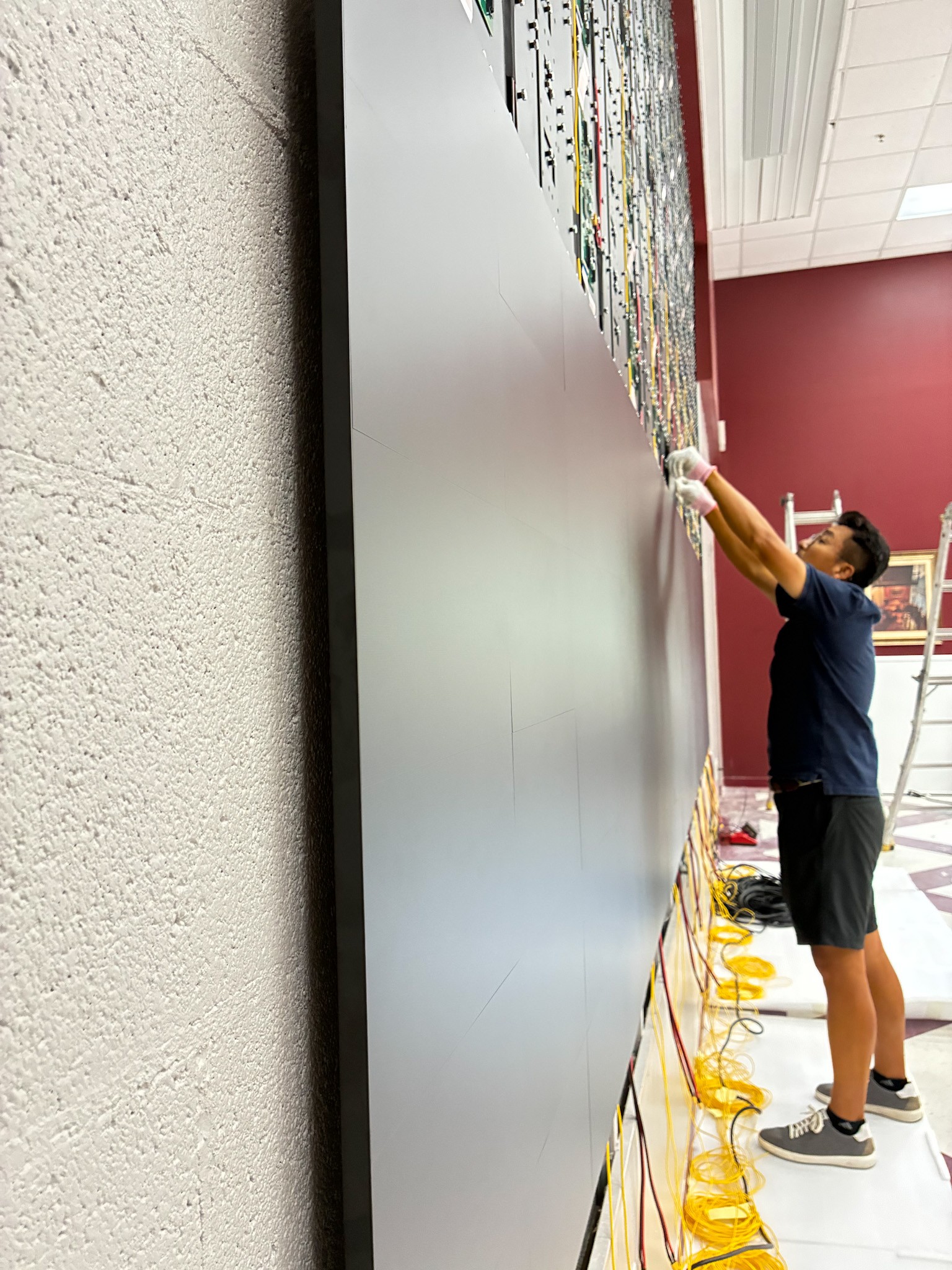
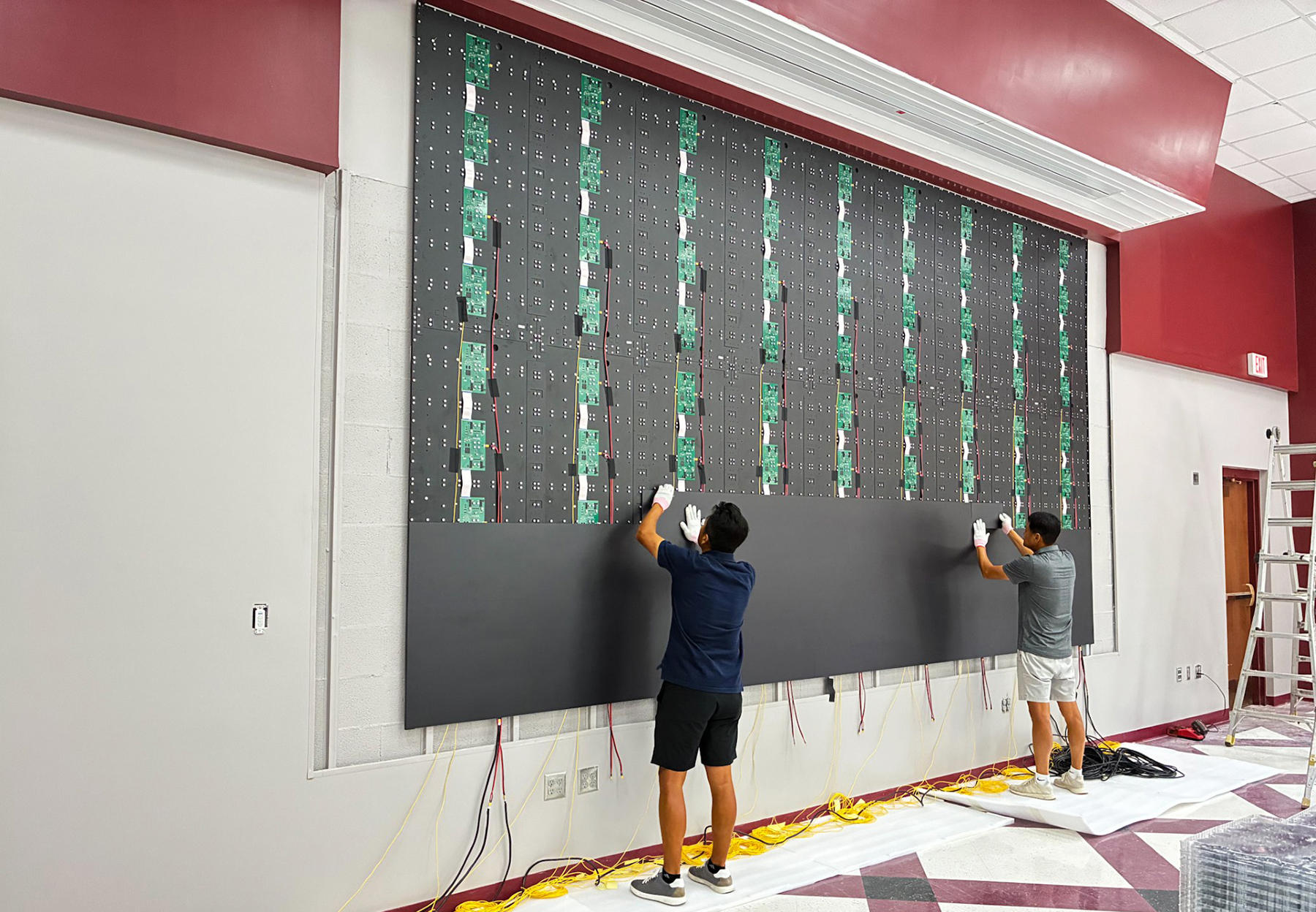
Paul Chi installs a panel on AAMU’s new AI-enabled micro-LED display, showing the display’s ultra-thin profile.
The installation required three days of detailed work, with specialists assembling the display piece by piece and integrating its power, data, controls and processors. Crews worked through the weekend to complete the project without disrupting students and classes.
The installation adds another dimension to AAMU’s growing AI footprint. The University welcomed the inaugural class of its new 125-credit, four-year Bachelor of Science in Artificial Intelligence program this fall. Approved in 2025 by the Alabama A&M University Board of Trustees and the Alabama Commission on Higher Education, the program is designed to prepare graduates for a workforce increasingly shaped by AI and other emerging technologies.
With Alabama’s first bachelor’s degree in artificial intelligence and what company representatives identify as the nation’s first installation of this advanced micro LED display technology, AAMU is pairing academic innovation with the infrastructure needed to put emerging technology directly into the hands of its students.
At Alabama A&M, the future of AI isn’t simply being studied. It is being built on The Hill.