Students Explore Collegiate Licensing, Brand Strategy and the Business Behind Officially Licensed Merchandise
Crew 75 Goes Behind the Brand During Visit to CLC Atlanta
By Adyson Saunders
When Alabama A&M students and supporters purchase a Bulldogs T-shirt, hoodie or other piece of officially licensed merchandise, there is an entire business operation working behind the scenes to make sure that product reaches the consumer. Members of Crew 75, Alabama A&M’s student creative content team, visited the Collegiate Licensing Company (CLC) in Midtown Atlanta Thursday while in the city to cover the MEAC/SWAC Challenge.
The Marketing, Communications and Advancement team toured CLC’s Atlanta headquarters, where students received an overview of the company, its role in collegiate licensing and the ways it works with colleges and universities to build and protect their brands. CLC CEO Cory Moss welcomed the group before John Greeley, CLC’s senior vice president for partnerships, led students through an overview of the company’s work.
CLC is a leader in collegiate trademark licensing and marketing, representing nearly 800 collegiate brands. The company works with universities and other collegiate properties to connect fans with their schools through officially licensed merchandise, retail strategies, marketing and brand experiences.
For Crew 75, the visit provided a different perspective on marketing — one that goes beyond creating advertisements or managing social media.
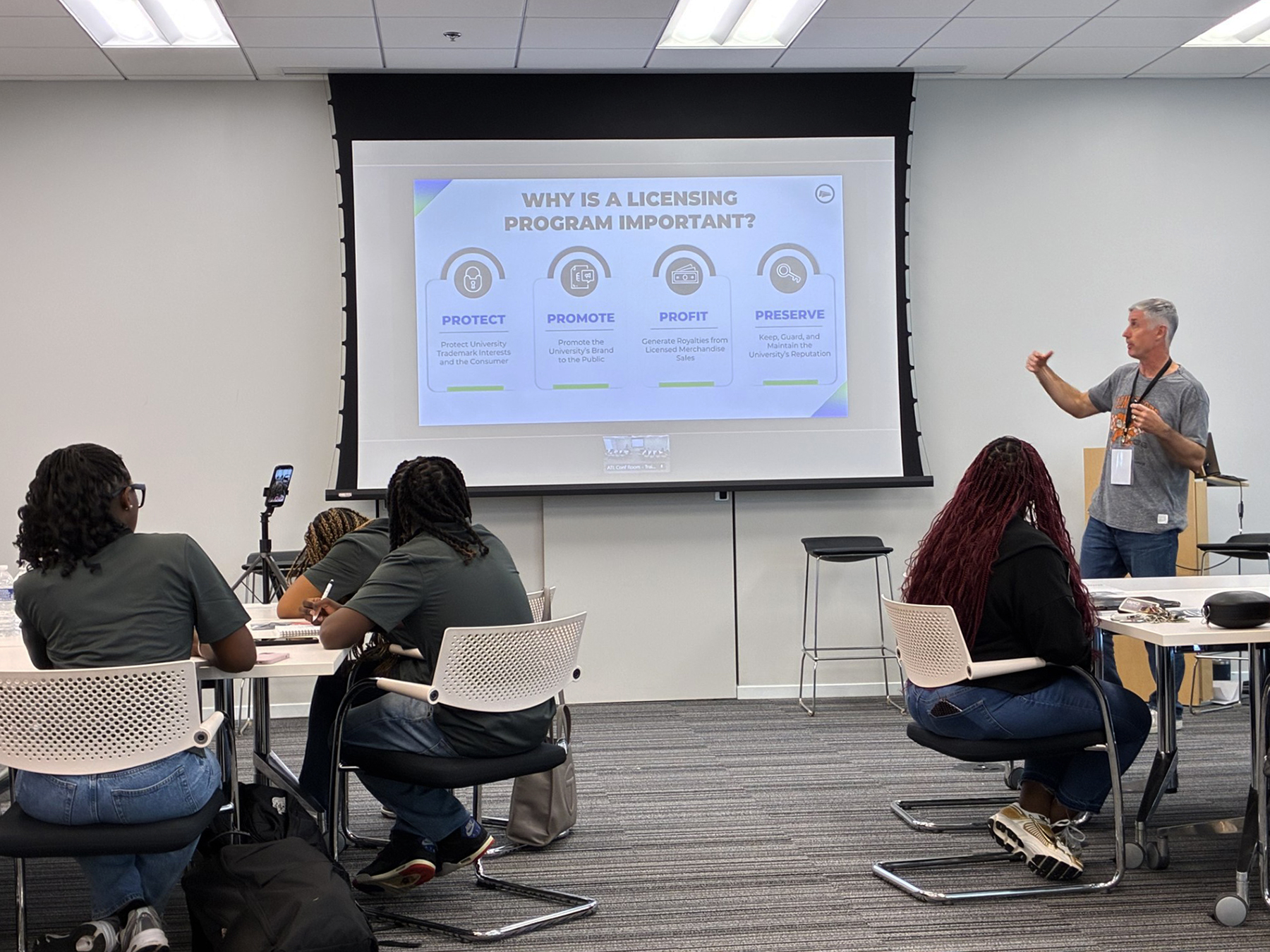
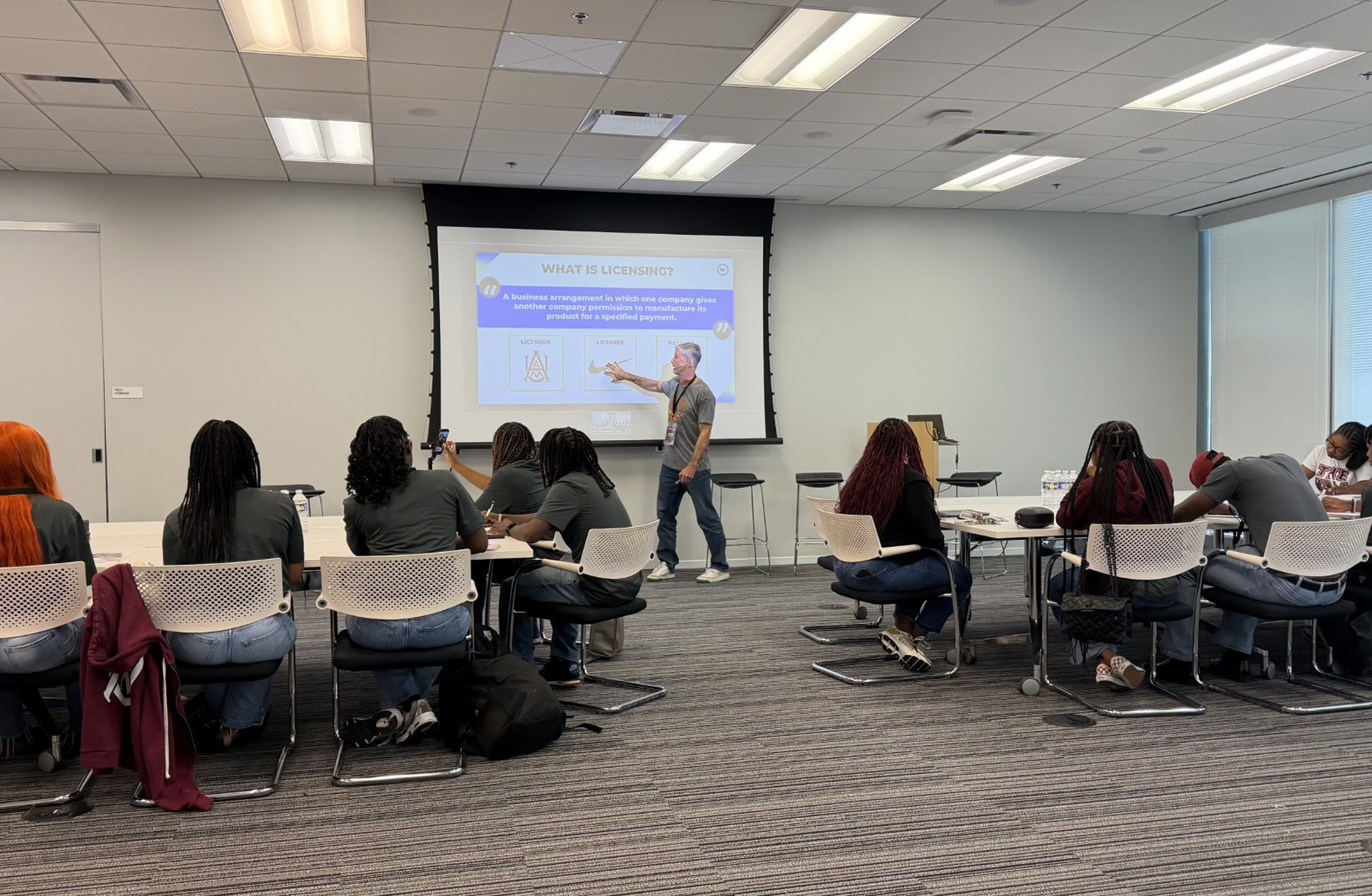
John Greeley, CLC senior vice president for partnerships, discusses collegiate licensing with Crew 75 students during their visit to CLC’s Atlanta headquarters.
Greeley explained that the merchandise students see in stores represents the work of an extensive licensing and approval system.
“The T-shirts just don’t show up in a retailer’s stores without a lot of systems and a lot of efforts that go from our staff to help bring these to life,” Greeley said.
CLC’s licensing process involves manufacturers, retailers and universities. Products must go through an approval process before they can carry a school’s trademarks, with CLC helping manage licensing applications, product approvals and relationships between institutions and licensees.
Greeley also discussed the importance of putting the right products in front of the right audiences.
“What we want to make sure that we have is the right type of licensees making the right products in the right distribution channel that’s hitting the right consumers,” Greeley said.
That idea resonated with the purpose of Crew 75’s visit. As Alabama A&M students preparing for careers in marketing, communications and advertising, members of the organization were able to see how branding decisions made behind the scenes ultimately influence what consumers see and purchase.
The conversation also moved into the financial side of collegiate licensing.
“When you sell hundreds of thousands, or millions of units along those lines, that can add up,” Greeley said. “So that’s kind of the licensing process, ultimately, as it relates to the payment and how the payment reporting of royalties works.”
According to CLC, its licensing relationships involve more than 4,000 licensed manufacturers and more than 100,000 national, regional and local retailers. The visit also placed an emphasis on the role of historically Black colleges and universities in the collegiate licensing landscape.
During the visit, Crew 75 learned that CLC works with a large percentage of colleges nationwide, including approximately 50 HBCUs. The HBCU presence within CLC’s network gave the Alabama A&M students an opportunity to consider how HBCU brands are represented in a national marketplace.
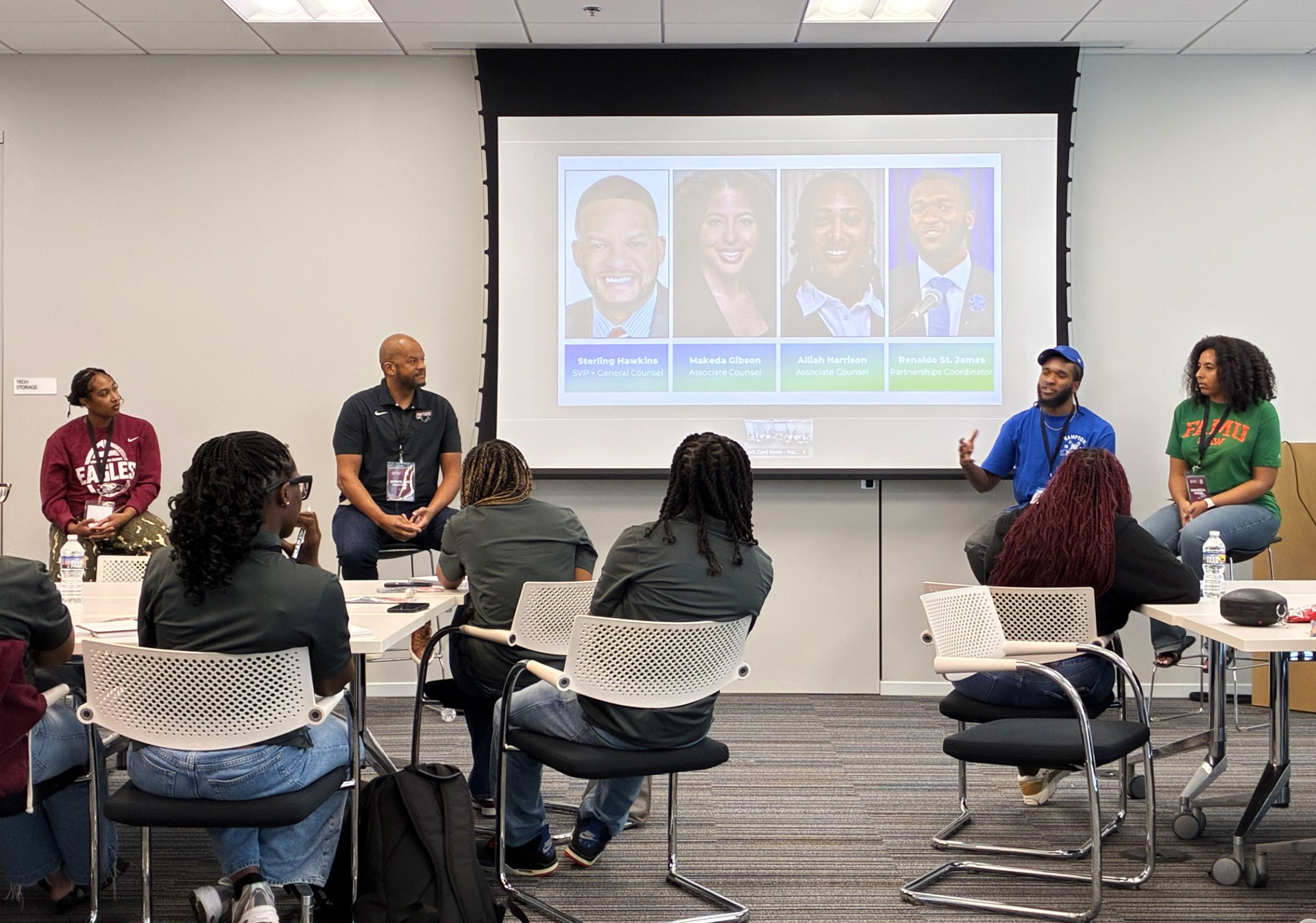
CLC panelists Alliah Harrison, Sterling Hawkins, Renaldo St. James and Makeda Gibson speak with AAMU’s Crew 75 during its visit to CLC’s Atlanta headquarters.
Ariel Smith, CLC’s marketing manager, moderated an HBCU-focused panel featuring four HBCU alumni who now work at CLC. Panelists Alliah Harrison, CLC associate counsel; Sterling Hawkins, senior vice president and general counsel; Renaldo St. James, CLC partnerships coordinator; and Makeda Gibson, CLC associate counsel, shared their paths from college to careers at CLC and reflected on the unique HBCU experience and how attending an HBCU helped prepare them professionally. They also offered career advice and insight into navigating opportunities in the marketing and collegiate licensing industries.
For Alabama A&M students, that portion of the visit was particularly relevant. HBCUs carry distinctive histories, traditions and identities, and their brands can represent much more than athletics or merchandise. Logos, colors and symbols can serve as connections to students, alumni, fans and communities.
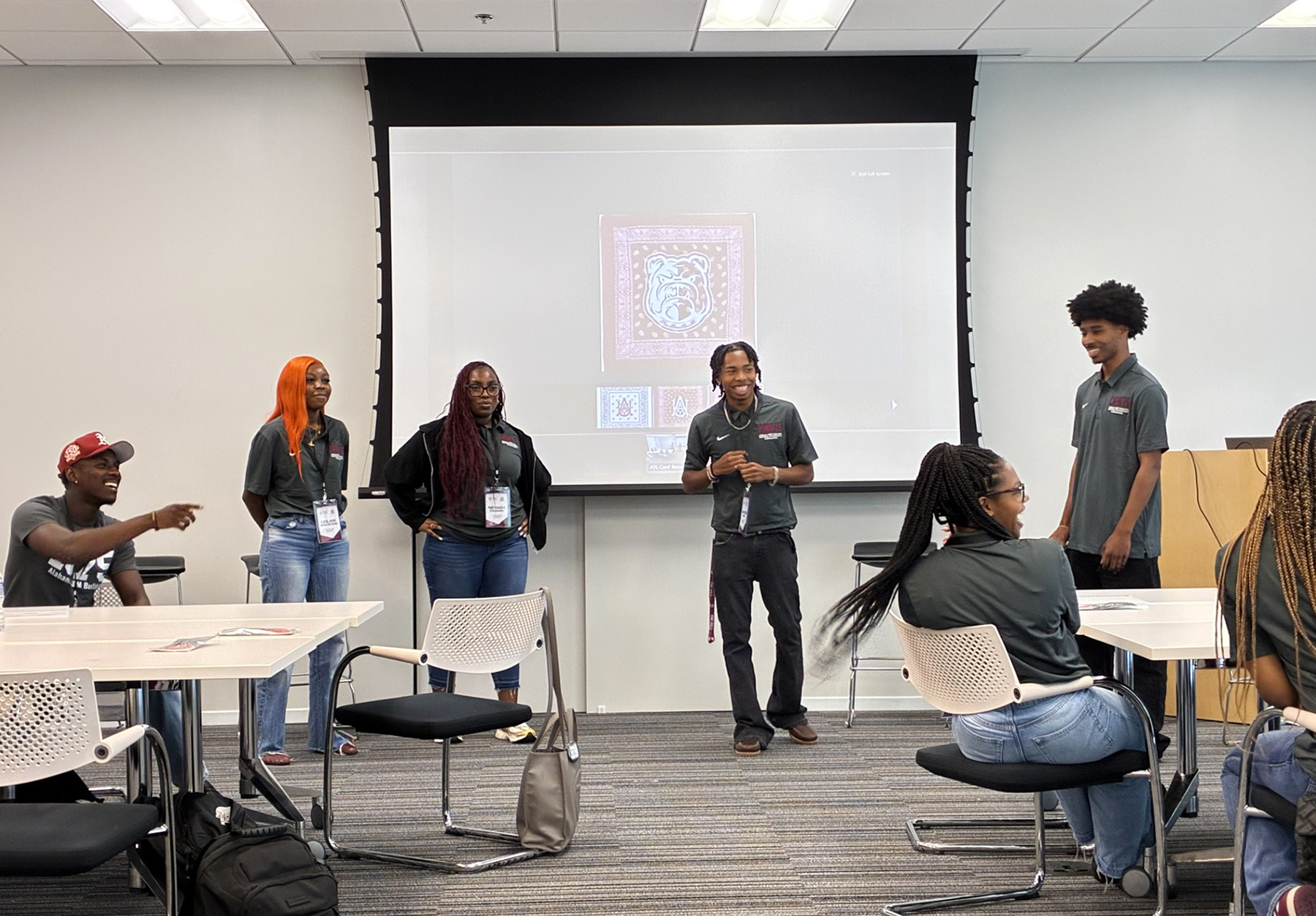
Smith also gave Crew 75 members an opportunity to put those concepts into practice, dividing the students into three teams and challenging each group to develop an Alabama A&M merchandise concept. Teams identified their product and target audience — such as students or alumni — and determined when and where they would launch it and why. Each team then presented its product and marketing strategy to the group.
CLC’s own history also has a connection to Alabama. The company was founded in 1981 after Bill Battle developed a licensing agreement with legendary University of Alabama football coach Paul “Bear” Bryant. The University of Alabama became CLC’s first university client, helping launch what would become the modern collegiate licensing industry.
The connection between Alabama and CLC has continued for decades. In 2024, the University of Alabama and CLC agreed to a 15-year extension of their licensing partnership — the longest contract extension in CLC’s history at the time.
Today, CLC remains focused on helping colleges develop their brands and connect with consumers. A college brand does not simply appear on a shirt. It moves through licensing agreements, product development, approvals, distribution, retail strategy, marketing and consumer demand before it reaches a student walking across campus wearing the finished product.
The experience gave Crew 75 members a firsthand look at the people and systems responsible for turning college identity into a national brand — while giving Alabama A&M students another opportunity to see how the skills they are developing can translate into careers across the marketing and communications industry.
Adyson Saunders is a member of Crew 75, Alabama A&M University’s student creative content team.