Veteran Land-Grant Administrator to Advance Student Success, Research and Agricultural Innovation
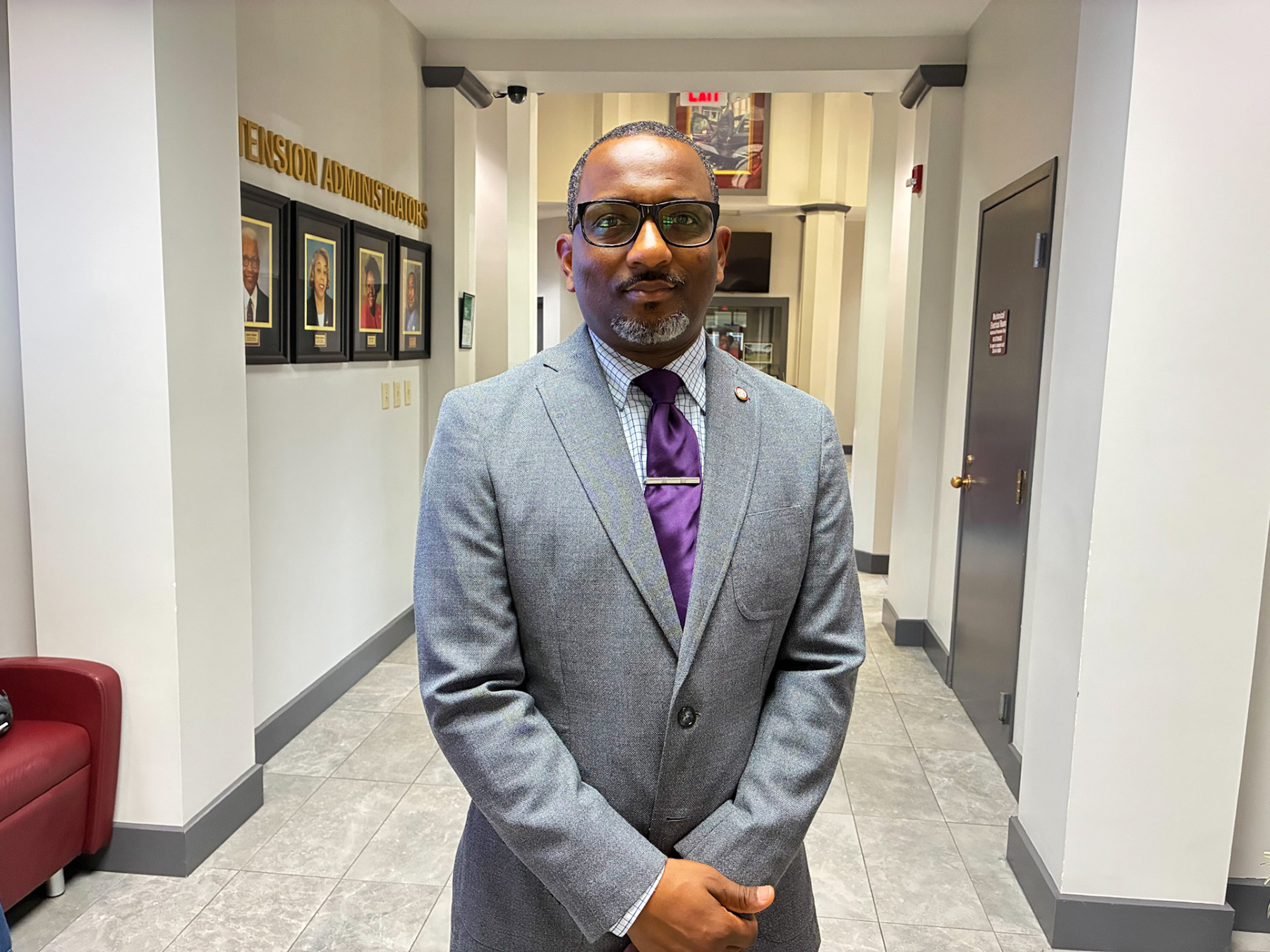
LaVergne Named Dean of AAMU’s College of Agricultural, Life and Natural Sciences
Alabama A&M University has named Dr. Douglas LaVergne dean of the College of Agricultural, Life and Natural Sciences (CALNS) following a national search, reinforcing the University's commitment to advancing its 1890 land-grant mission through excellence in teaching, research and outreach.
LaVergne joined AAMU in March 2025 as associate vice president for Academic Affairs and Undergraduate Studies. In December 2025, he was appointed interim dean of CALNS and 1890 research director. He was named permanent dean on Aug. 17 and will continue serving in both leadership roles.
As dean and 1890 research director, LaVergne provides leadership for academic programs, student success initiatives and the University's agricultural research enterprise. He oversees efforts to strengthen teaching and faculty excellence while ensuring AAMU's agricultural research portfolio aligns with federal priorities established through the U.S. Department of Agriculture (USDA) and the National Institute of Food and Agriculture (NIFA). His work supports innovative solutions to emerging challenges in agriculture, natural resources, and related fields.
“CALNS plays a vital role in Alabama A&M University's land-grant mission,” LaVergne said. “Our responsibility is to prepare students for successful careers, support impactful research and deliver solutions that improve the quality of life for the communities we serve.”
LaVergne said CALNS priorities align closely with Alabama A&M University's strategic plan, including strengthening student success, expanding graduate education, increasing research competitiveness and contributing to the University's continued growth as a leading land-grant institution.
To support those goals, he plans to strengthen research programs funded through Evans-Allen and McIntire-Stennis, increase interdisciplinary collaboration and expand CALNS' capacity in emerging fields such as artificial intelligence, regenerative agriculture and controlled-environment agriculture. He also aims to strengthen partnerships across Alabama's land-grant system to create new opportunities for students and faculty.
“Technology is rapidly transforming agriculture,” LaVergne said. “We are committed to building expertise in areas such as artificial intelligence and precision agriculture so our faculty and students remain at the forefront of innovation.”
LaVergne brings nearly 30 years of higher education experience, including leadership roles at several land-grant institutions. Before joining AAMU, he served at Lincoln University of Missouri as professor, dean and vice president for land-grant engagement in the College of Agriculture, Environmental and Human Sciences. He also held leadership positions at East Texas A&M University and West Virginia University, developing expertise in agricultural education, Extension, academic leadership and strategic planning.
LaVergne earned a bachelor's degree in secondary education with a concentration in agricultural education from Southern University and A&M College, a master's degree in agricultural and extension education from the University of Arkansas, and a doctorate in agricultural education from Texas A&M University. He was named a George Washington Carver Fellow at the University of Arkansas in 2003 and has received numerous teaching and research awards.
His background in the classroom continues to shape his approach to academic leadership. Before entering higher education, LaVergne spent three years as a high school agriculture teacher, an experience that instilled a lasting commitment to student success and the transformative impact of education.
“Student success remains our highest priority,” LaVergne said. “We must ensure students have access to the courses, experiences and opportunities they need to graduate prepared for leadership and service.”