Students Explore AAMU’s Civil Rights Legacy
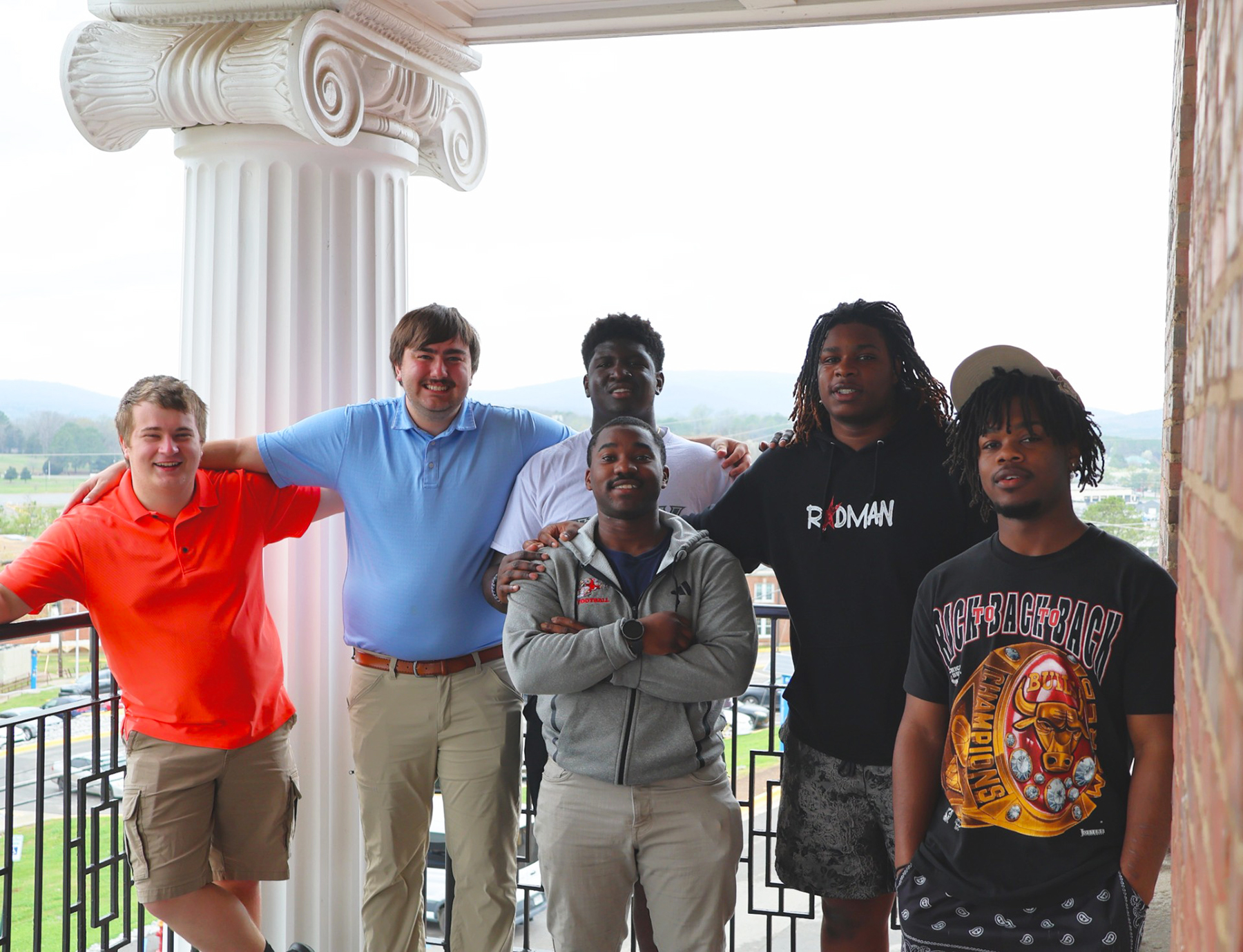
Wabash College Students Visit The Hill During Annual Selma Jubilee
Alabama A&M University recently welcomed students from Wabash College’s Malcolm X Institute of Black Studies as part of the institute’s annual Learning Journey, an educational experience centered on the Selma Bridge Crossing Jubilee and the exploration of significant sites in Black history, civil rights and social justice.
For the second consecutive year, the Indiana students visited The Hill while traveling through Alabama to deepen their understanding of the people, places and institutions that have shaped the nation’s ongoing pursuit of equality and opportunity. Their stop at Alabama A&M provided an opportunity to learn about the University’s rich history, enduring traditions and impact as Alabama’s largest historically Black university.

Wabash College students participate in the annual Selma Jubilee Bridge Crossing in Selma, Alabama.
Founded in 1875 by formerly enslaved educator Dr. William Hooper Councill, Alabama A&M University began as the Huntsville Normal School dedicated to training African American teachers and has grown into a nationally recognized land-grant institution serving students from across the nation and around the world.
During the visit, students toured several of the University’s most recognizable landmarks, including The Block, a historic gathering place at the heart of campus. The area is home to the Dr. William Hooper Councill Eternal Flame Memorial, which honors Alabama A&M’s founder and first president, as well as the historic Bell Tower. Erected in the 1890s, the bell once served as the University’s timekeeper, signaling daily activities for students and faculty. Over time, it became known as the Victory Bell, ringing to celebrate Bulldog athletic victories and serving as a symbol of campus pride, tradition and community.
The group also learned about The Block’s significance in student life and its connection to generations of Bulldogs, including members of the University’s Greek-letter organizations whose contributions and traditions remain an important part of campus culture.
Students visited the historic Carnegie Library, one of Alabama A&M’s most treasured landmarks and the only remaining Carnegie library in Madison County. Originally funded by industrialist Andrew Carnegie in 1904, the library was built by Alabama A&M students. After the original structure was destroyed by fire in 1906, Carnegie provided additional funding to rebuild the facility that stands today. Completed shortly before Councill’s death in 1909, the library remains a lasting testament to the University’s resilience and commitment to education.
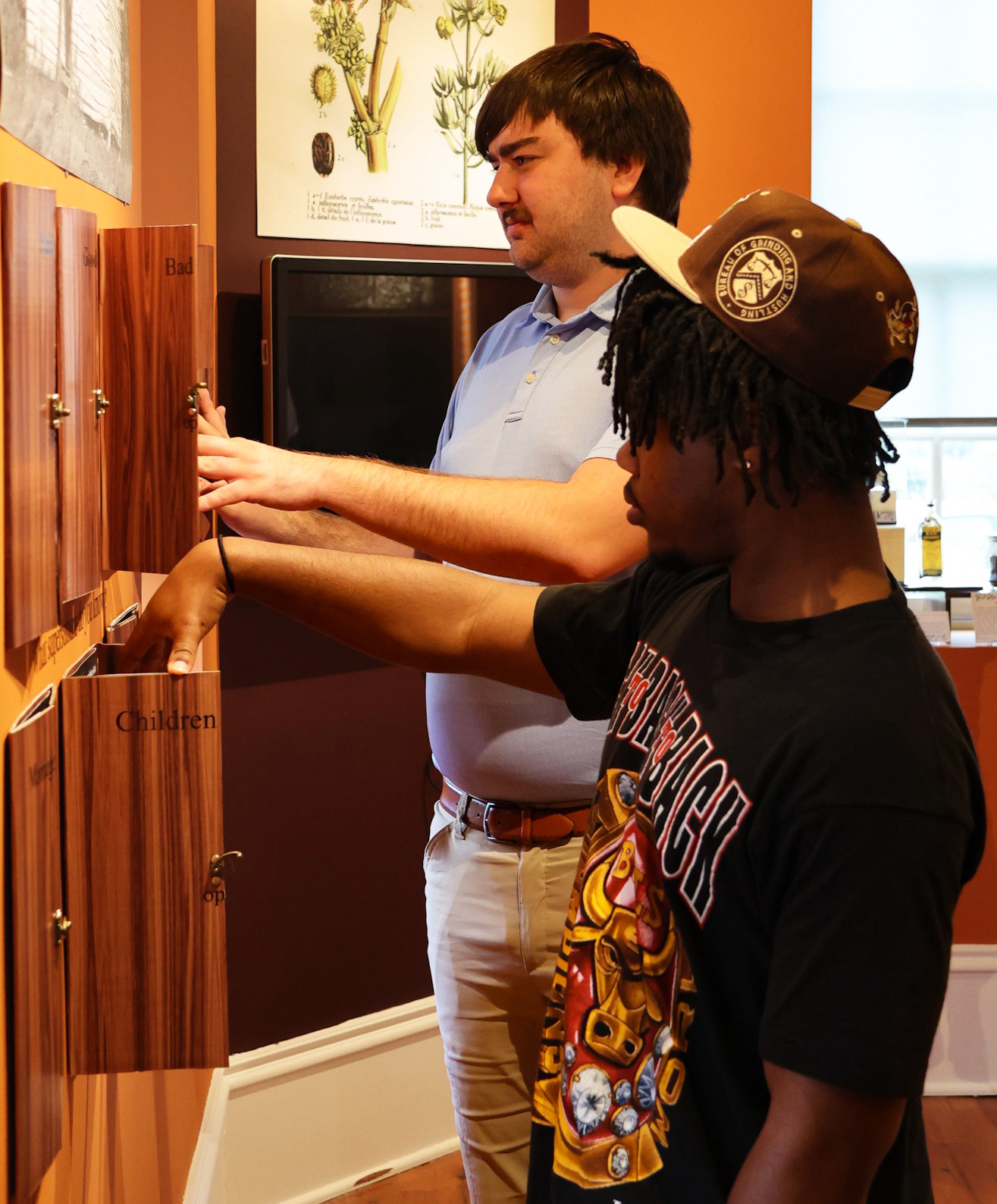
Students view exhibits at the State Black Archives Research Center and Museum.
The tour also included a visit to the recently reopened State Black Archives Research Center and Museum, where students explored exhibits documenting the experiences, achievements and contributions of African Americans throughout Alabama’s history. Located on the top of the Alabama A&M campus, the facility serves as a destination for researchers, students and visitors seeking a deeper understanding of the state's Black heritage.
“HBCUs remain vital to higher education and play a pivotal role in educating our young people, said Steven L. Jones, dean for professional development and director of the Malcolm X Institute of Black Studies. “Alabama A&M’s rich history made this visit especially meaningful, giving our students the opportunity to experience firsthand the University’s tradition of excellence. Like Alabama A&M, Wabash is steeped in tradition, so our students felt at home as they explored the campus.”
Founded in 1970, the Malcolm X Institute of Black Studies provides educational, cultural and leadership development opportunities that promote a deeper understanding of the Black experience. Since launching the Learning Journey initiative in 2020, the institute has taken students to destinations including Selma and Montgomery, Alabama; Ferguson, Missouri; and Omaha, Nebraska, to examine pivotal moments and places in Black history and social justice movements.
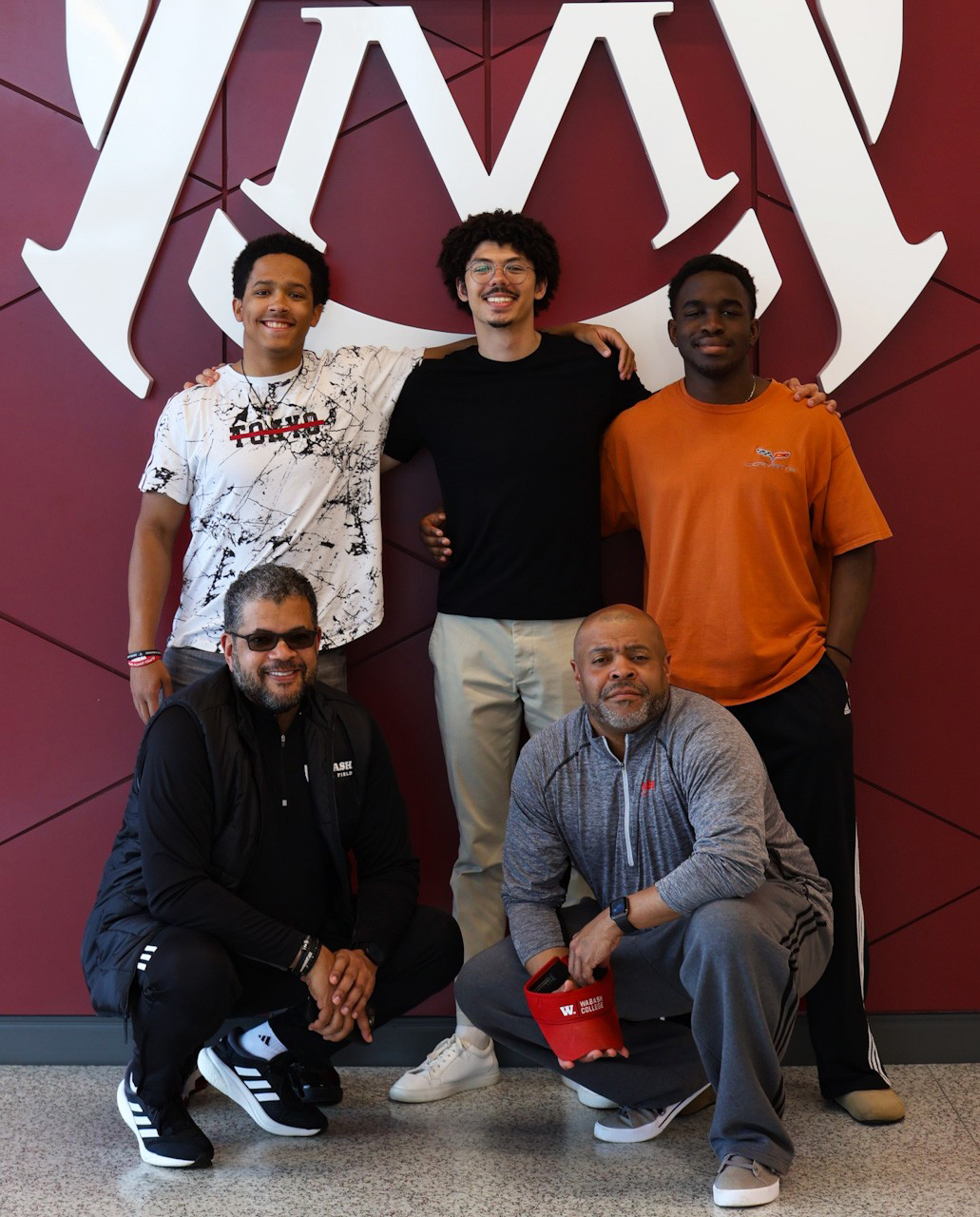
Wabash College students and staff pose for a group photo at the AAMU Event Center during their Alabama A&M visit.
For many participants, the visit to Alabama A&M offers a unique opportunity to engage with an institution whose history is deeply connected to the broader story of educational access, empowerment and advancement for African Americans.
As students reflected on the lessons of Selma and other historic landmarks throughout their journey, their visit to Alabama A&M provided another perspective on the enduring role of education in expanding opportunity, strengthening communities and shaping future generations of leaders.