Clinical Rehabilitation Counseling Specialization Receives National ‘Gold Standard’ Accreditation Through April 2034
Alabama A&M University M.S. in Counseling Program Earns Prestigious CACREP Accreditation
Alabama A&M University’s Master of Science in Counseling program, with a specialization in Clinical Rehabilitation Counseling, has received initial accreditation from the Council for Accreditation of Counseling and Related Educational Programs (CACREP) through April 2034.
CACREP accreditation is widely regarded as the gold standard in counselor education, signifying that a program meets rigorous national standards in curriculum, clinical training and professional preparation.
The accreditation marks a major milestone for the Department of Psychology & Counseling and recognizes the program’s commitment to preparing highly skilled counseling professionals who serve individuals, families and communities.
“This milestone reflects the dedication of our faculty, the strength of our clinical partnerships and our commitment to preparing ethical, culturally responsive and workforce-ready rehabilitation counselors,” said Dr. Tonya Davis, chairperson of the Department of Psychology and Counseling” who also lead the accreditation effort. “National accreditation also ensures our graduates are positioned for licensure, certification and leadership in rehabilitation and behavioral health settings nationwide.”
Dr. Robert Z. Carr, Jr., dean of the College of Education, Humanities and Behavioral Sciences, said the accreditation represents a significant achievement for the college and the University.
“Achieving CACREP accreditation represents an important affirmation of the quality and impact of our counseling program,” said Carr. “This recognition reflects the outstanding work of our faculty and the university’s commitment to preparing highly competent, compassionate counseling professionals who are equipped to serve diverse communities and support individuals with disabilities. At Alabama A&M University, we are proud to prepare graduates who will make meaningful contributions to the behavioral health and rehabilitation counseling workforce across Alabama and the nation.”
The accreditation process included a comprehensive review of the program’s curriculum standards, a detailed self-study and an on-site visit by CACREP evaluators.
Alabama A&M’s M.S. in Counseling program equips students with knowledge and counseling skills to help individuals address challenges in a multicultural and global society. Students develop expertise in areas such as human growth and development, group dynamics, career development, assessment, research and social and cultural issues.
The Clinical Rehabilitation Counseling concentration prepares graduates to work with individuals with disabilities and other populations in need of supportive services. The program prepares students to meet educational requirements for licensure as licensed professional counselors in Alabama while equipping them with the skills to provide prevention services, advocacy, consultation, and both short- and long-term counseling interventions.
The program requires 60 credit hours and includes extensive clinical training, including a supervised practicum and two internship experiences totaling more than 700 hours of field experience, ensuring students gain real-world counseling practice before graduation.
For students, CACREP accreditation provides significant benefits. It confirms that their degree meets the highest national standards in counselor education, strengthens pathways to professional licensure and national certification, and ensures that their clinical training is recognized for excellence across the country.
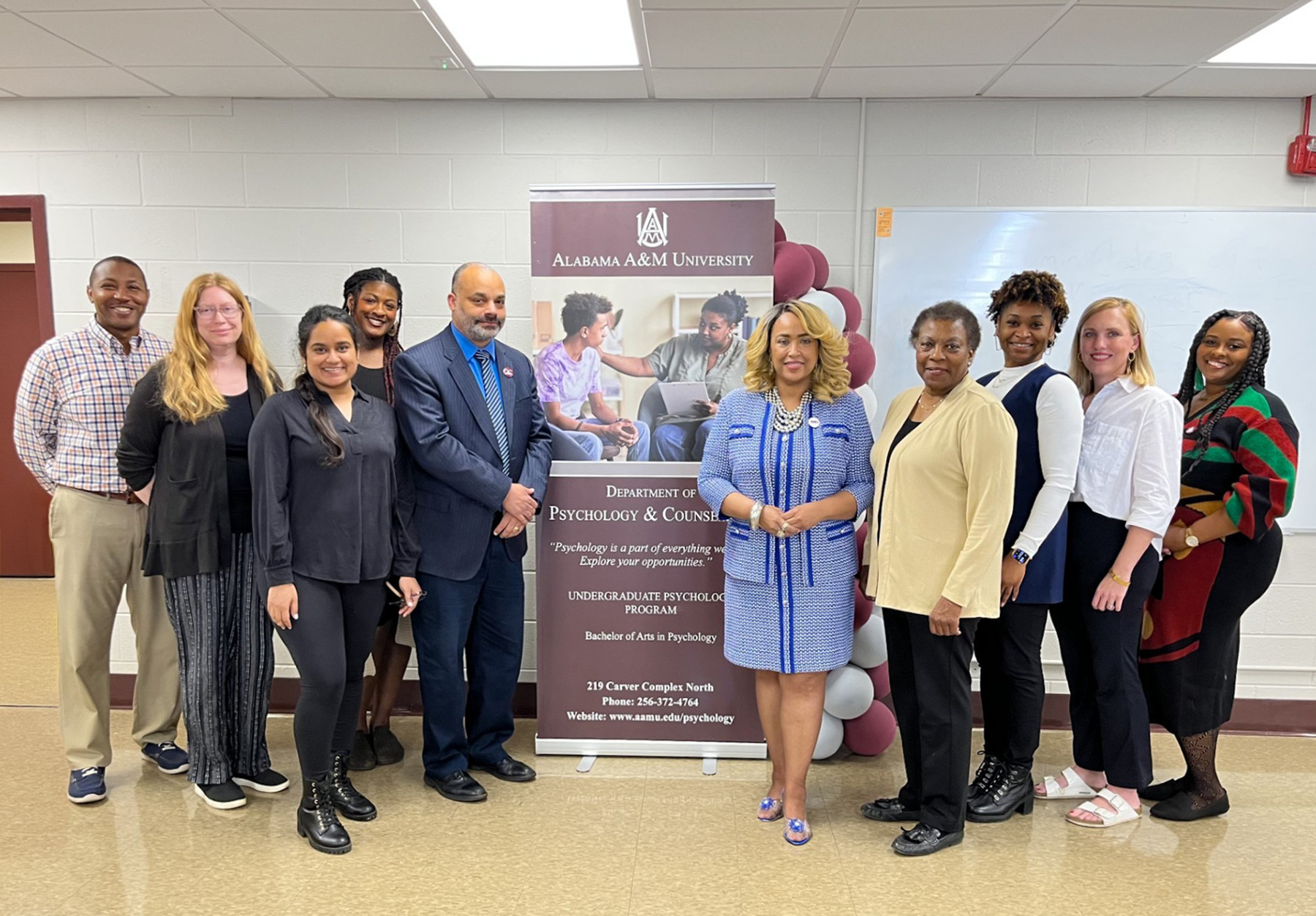
From left, Kenneth Hardin, secretary; Dr. Christina Salnitas, professor; Jasmine Gracie, graduate counseling student; Kalpani Sai, graduate counseling student; Dr. Robert Carr, dean of the College of Education, Humanities and Behavioral Sciences; Dr. Tonya Davis, chair of the Department of Psychology and Counseling; Dr. Leatha Bennett, associate professor; Dr. Lillian Smith, assistant professor; Dr. Jo Lauren Weaver, assistant professor; and Dr. Adrienne Parham, assistant professor.