National Appointment Recognizes AAMU Professor’s Leadership in Social Work Education
Fischle Helps Shape the Future of AI in Social Work
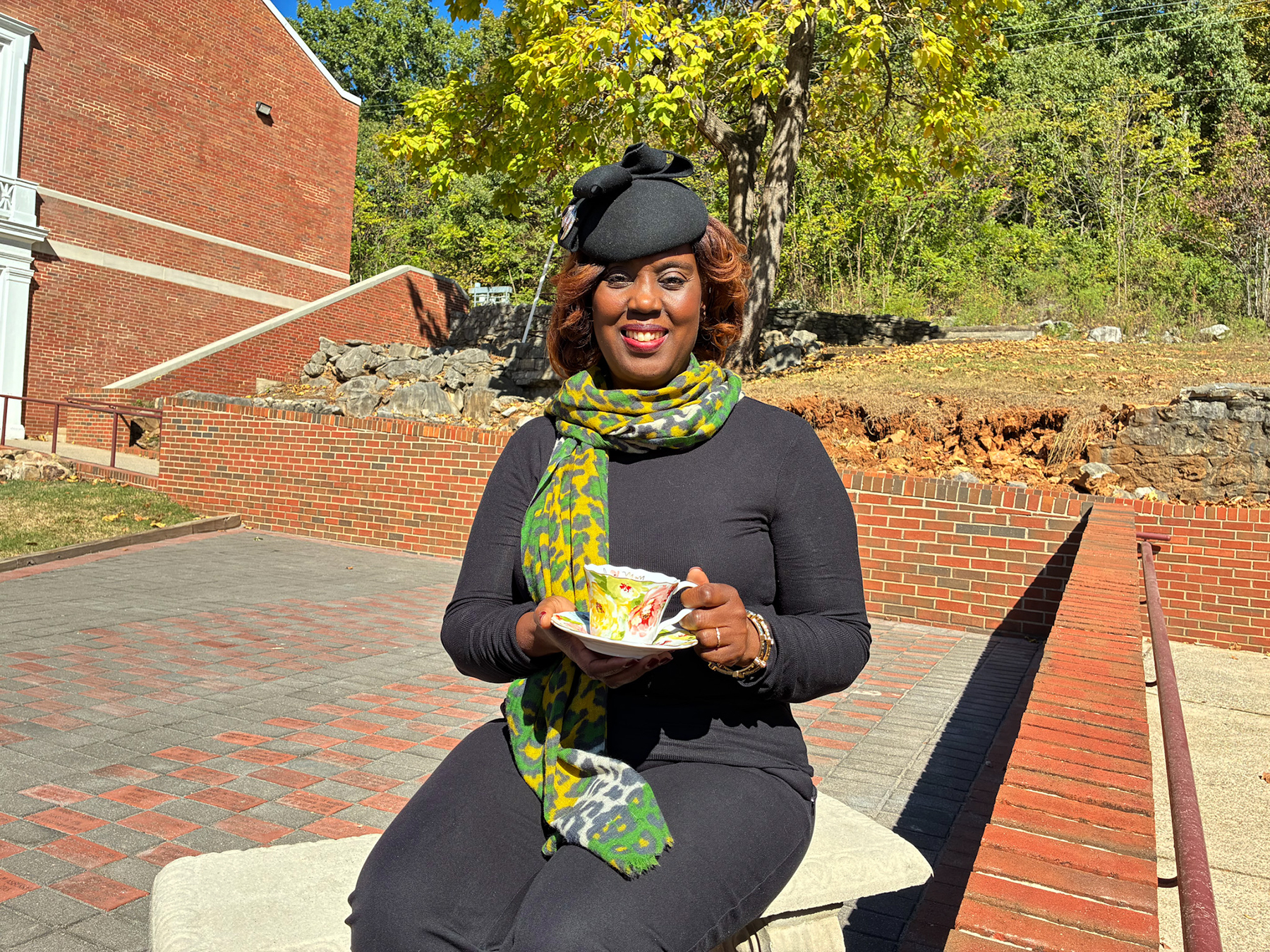
A cup of tea, a decorative fascinator and a distinctly British accent offer a glimpse into the world of Dr. Helen Fischle. But behind her appreciation for English traditions is a journey that stretches from Reading, England, to Alabama A&M University, where she is helping prepare the next generation of social workers for a rapidly changing profession.
Fischle, an assistant professor and coordinator of AAMU’s Bachelor of Social Work program, was recently selected to serve on the Council on Social Work Education’s (CSWE) inaugural Advisory Board on AI and Technology. The national appointment places her among educators helping shape how artificial intelligence and emerging technologies are incorporated into social work education and research.
For Fischle, whose passion for helping others began in a welcoming household in England, the appointment represents another chapter in a journey shaped by service, education and the influence of historically Black colleges and universities.
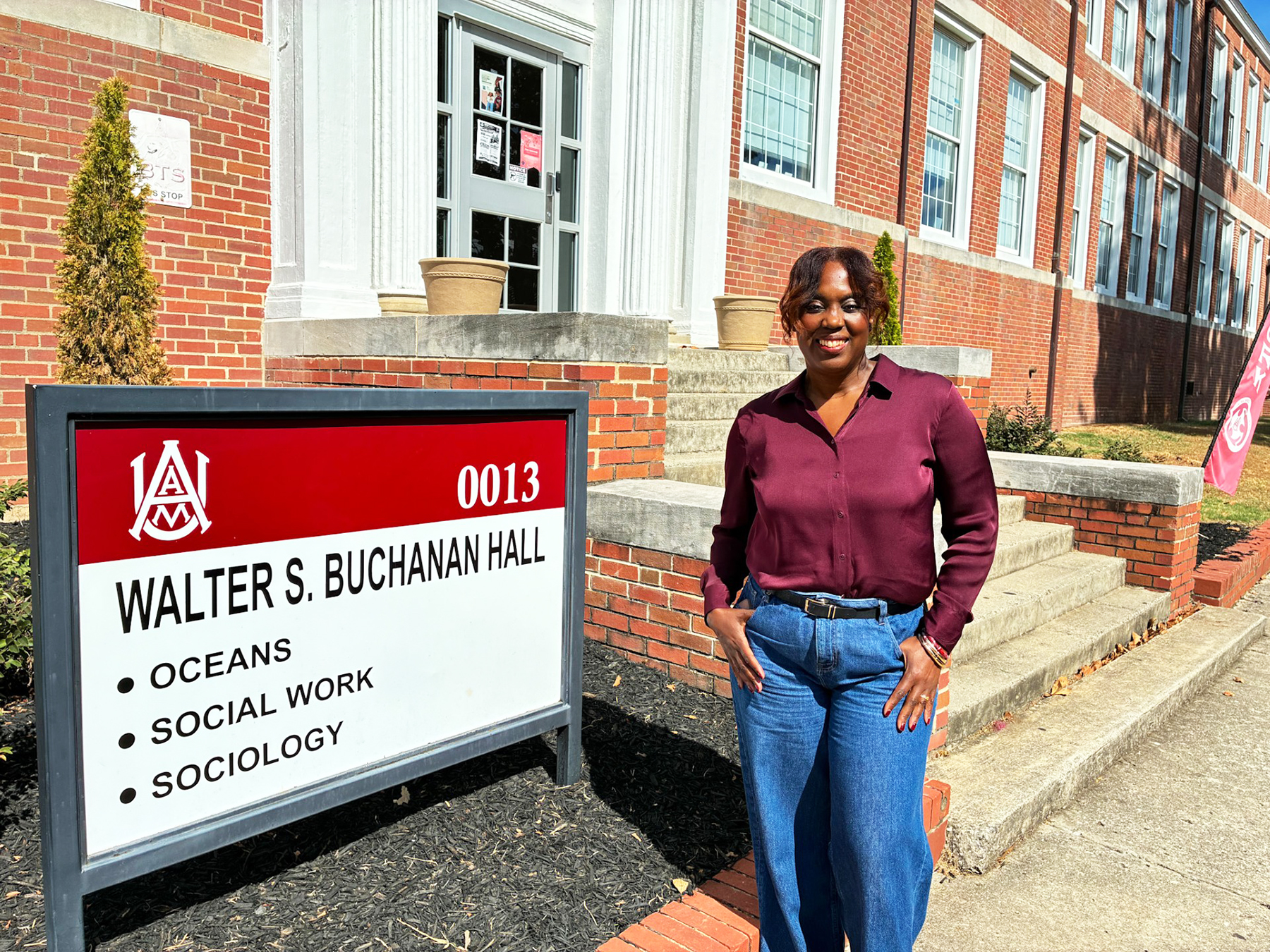
Growing up in Reading, a university town west of London, Fischle was raised in a large family by Jamaican parents who frequently welcomed students and visitors into their home, often inviting people they barely knew to dinner after church.
“We had a very open and engaging household,” Fischle recalled.
That environment helped develop her interest in helping others. After completing secondary school, she pursued health and social services coursework, including practical experiences in a dental office and a school serving students with special needs or behavioral challenges.
Although she initially considered dental hygiene, her interests eventually led her toward social work.
Her journey to the United States, however, began with music.
A singer and songwriter from an early age, Fischle grew up performing in her church choir and a musical group for which she also wrote songs. She studied piano, guitar and voice, developing a love of music that would eventually lead her across the Atlantic.
As a teenager, she attended a London performance by the Aeolians, the renowned choir of Oakwood University, then Oakwood College, under the direction of Alma Blackmon.
Captivated by the talented young Black college students and their performance of Negro spirituals, she remembers telling her mother she wanted to attend the institution someday.
“I was just in awe,” she recalled.
Encouragement from former Oakwood students who returned to England, her voice teacher and an uncle who worked at the institution helped turn that dream into reality. She later joined the Aeolians under the direction of Dr. Ricky Little and became a member of Positive Images, a student recruitment group that toured the United States and the United Kingdom.
In 1990, Fischle traveled to Huntsville to enroll at Oakwood, earning her bachelor’s degree in social work in 1994. After returning to England to work, she later earned a master’s degree in social work from the University of Alabama and completed her doctorate in social work there in 2024.
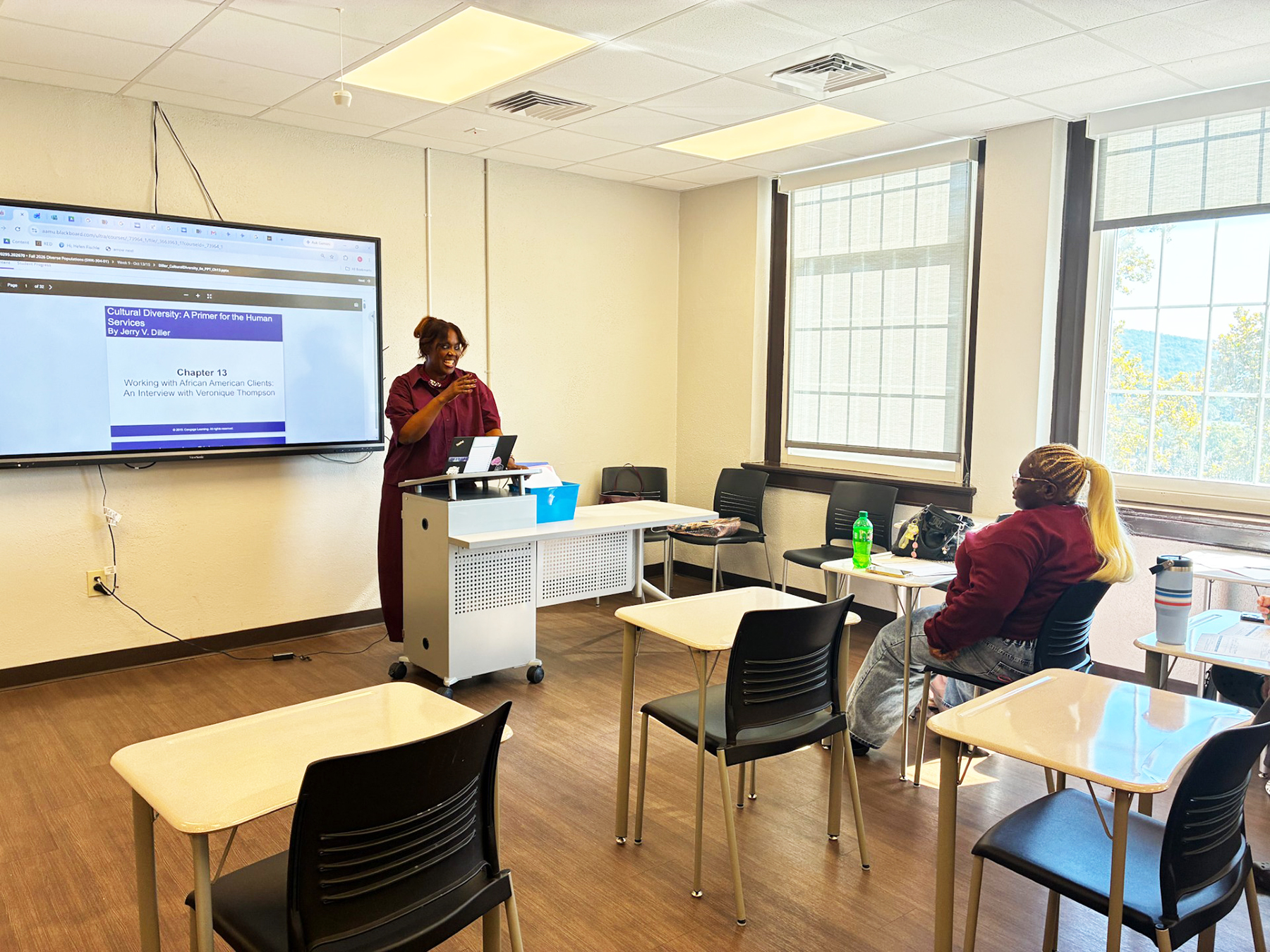
Before joining AAMU in 2017, she also taught at Oakwood, where she spent much of her professional career.
Now in her ninth year at Alabama A&M, Fischle says she values the relationships within the Department of Social Work and the opportunities to prepare students for professional success.
“I love it. I really do,” she said. “It's been a wonderful experience.”
Her experience as an international student also shapes her appreciation for HBCUs.
“One of the things that, for me, is unique about HBCUs is that it provides a space for young Black adults or anybody, right, to have a sense of belonging,” Fischle said.
She credits the mentorship she received at Oakwood with helping shape her own development and sees that same commitment reflected in her work at AAMU.
“In social work, we talk about meeting people where they are, and I think that’s what HBCUs do,” she said. “They will work with you and mentor you and plant that seed and watch it grow.”
That philosophy guides her teaching.
During a recent visit to her Social Work with Diverse Populations class, Fischle discussed the importance of understanding people from different backgrounds and recognizing how personal experiences and biases influence professional interactions.
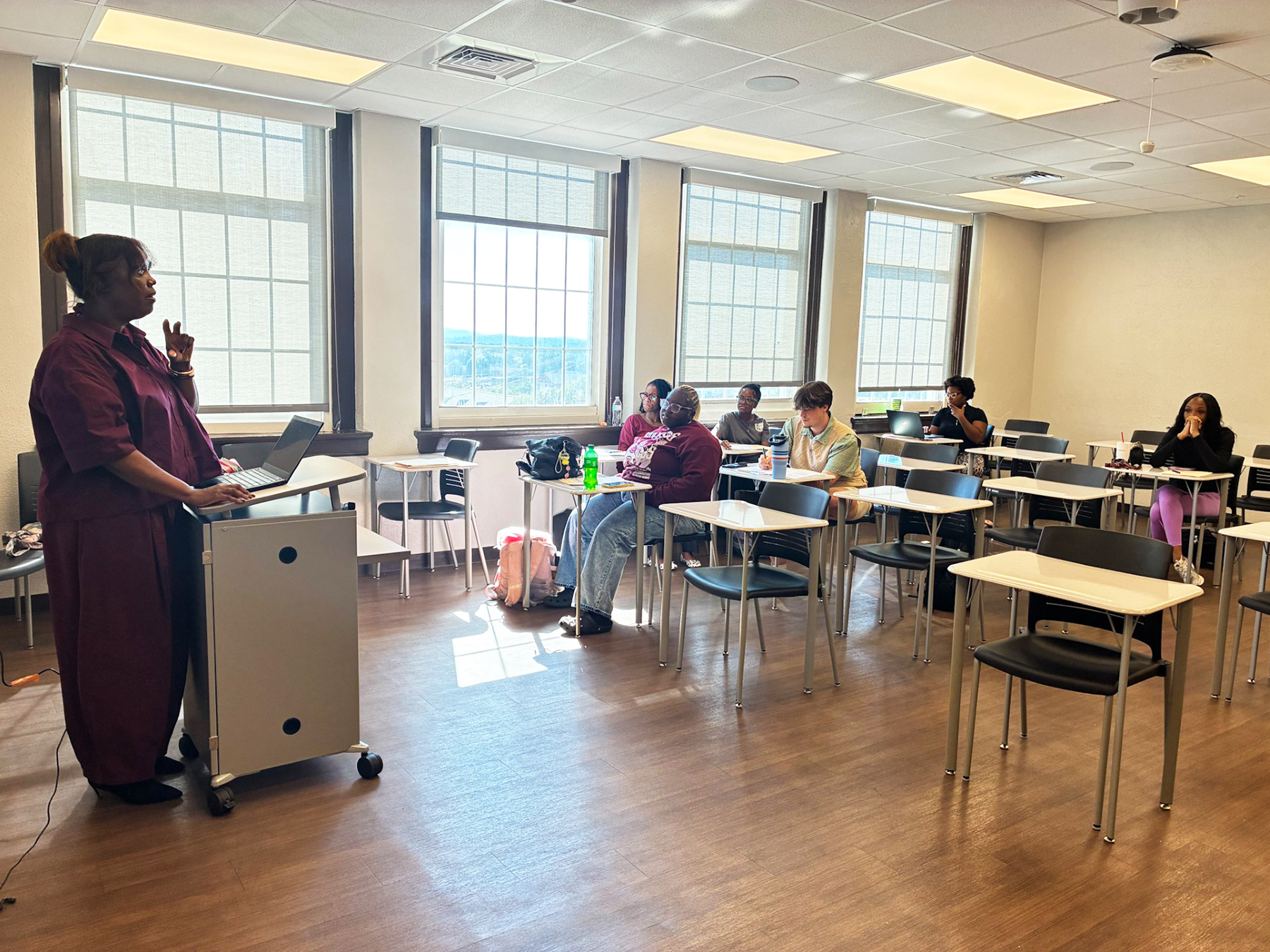
Dr. Helen Fischle engages students during her Social Work with Diverse Populations class at Alabama A&M University, encouraging discussion and participation as students explore cultural awareness and diverse perspectives in social work practice.
The course prepares students to work effectively with individuals, families, groups, communities and organizations. She also teaches undergraduate and graduate courses focused on group work, community engagement and organizational practice.
Beyond traditional instruction, Fischle is helping students explore how emerging technologies can strengthen their professional skills.
As coordinator of Dora’s House Title IV-E Child Welfare Training and Simulation Lab, she incorporates artificial intelligence, virtual reality, mixed reality and other simulations into social work education. These experiences help students develop interviewing, assessment, engagement and decision-making skills in realistic environments.
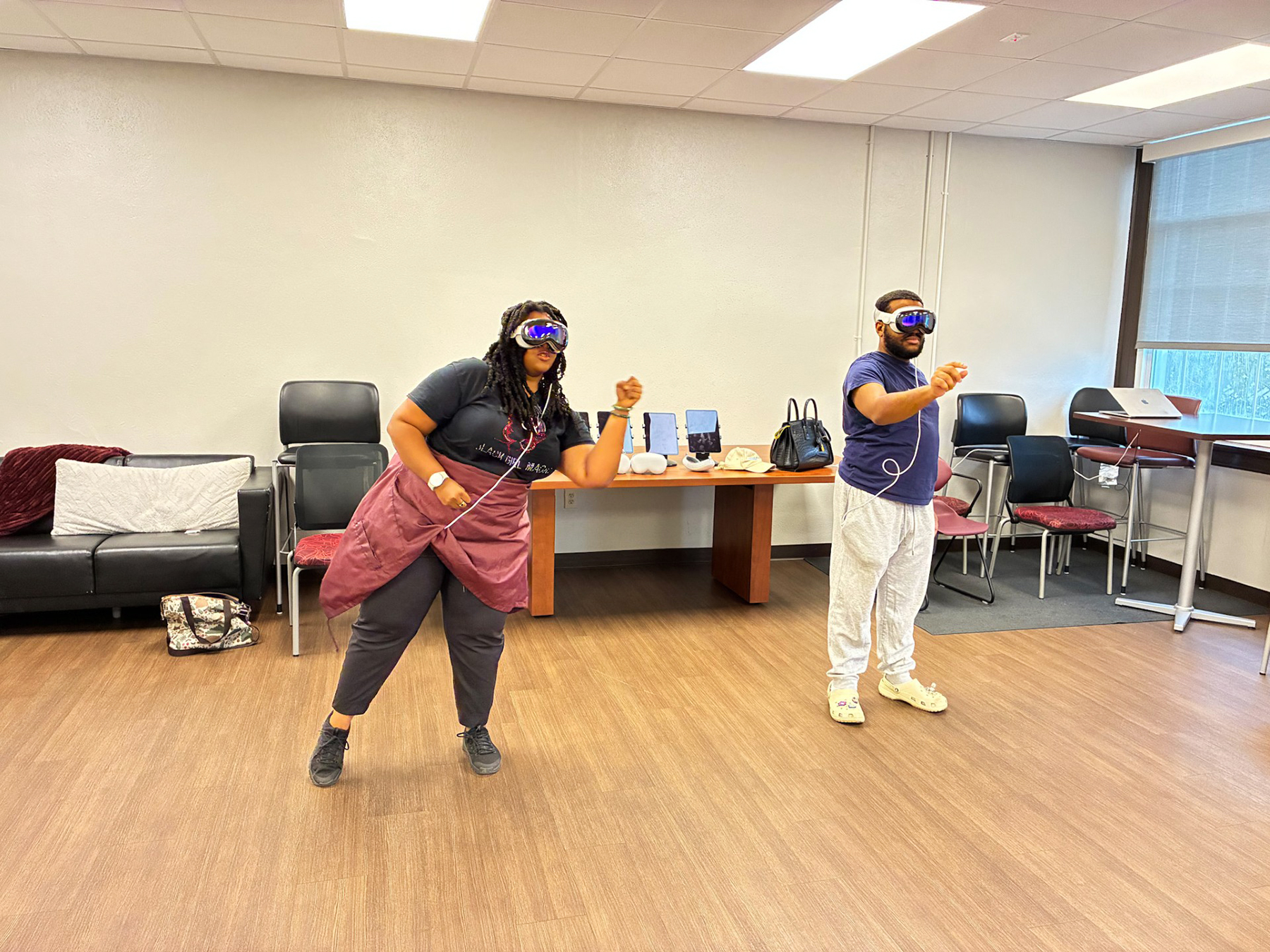
That work was on display during AAMU’s Homecoming Week, when Fischle and social work students hosted a technology showcase on The Block.
Visitors explored Apple Vision Pro headsets and interactive learning tools while students demonstrated how technology can help them better understand challenges facing individuals and families.
Activities included SPENT, an online simulation that challenges participants to make financial decisions while navigating unexpected expenses, and programmable infant simulators used in child welfare education.
The showcase also introduced the department’s new Social Work Tech Ambassadors, a student group designed to explore innovative ways technology can address community needs.
Fischle envisions students partnering with nonprofit organizations to identify challenges and develop technology-based solutions.
“The mission of it is to get students who are interested in AI and virtual reality, who want to create apps, who want to see how they can leverage technology to help their community,” she explained.
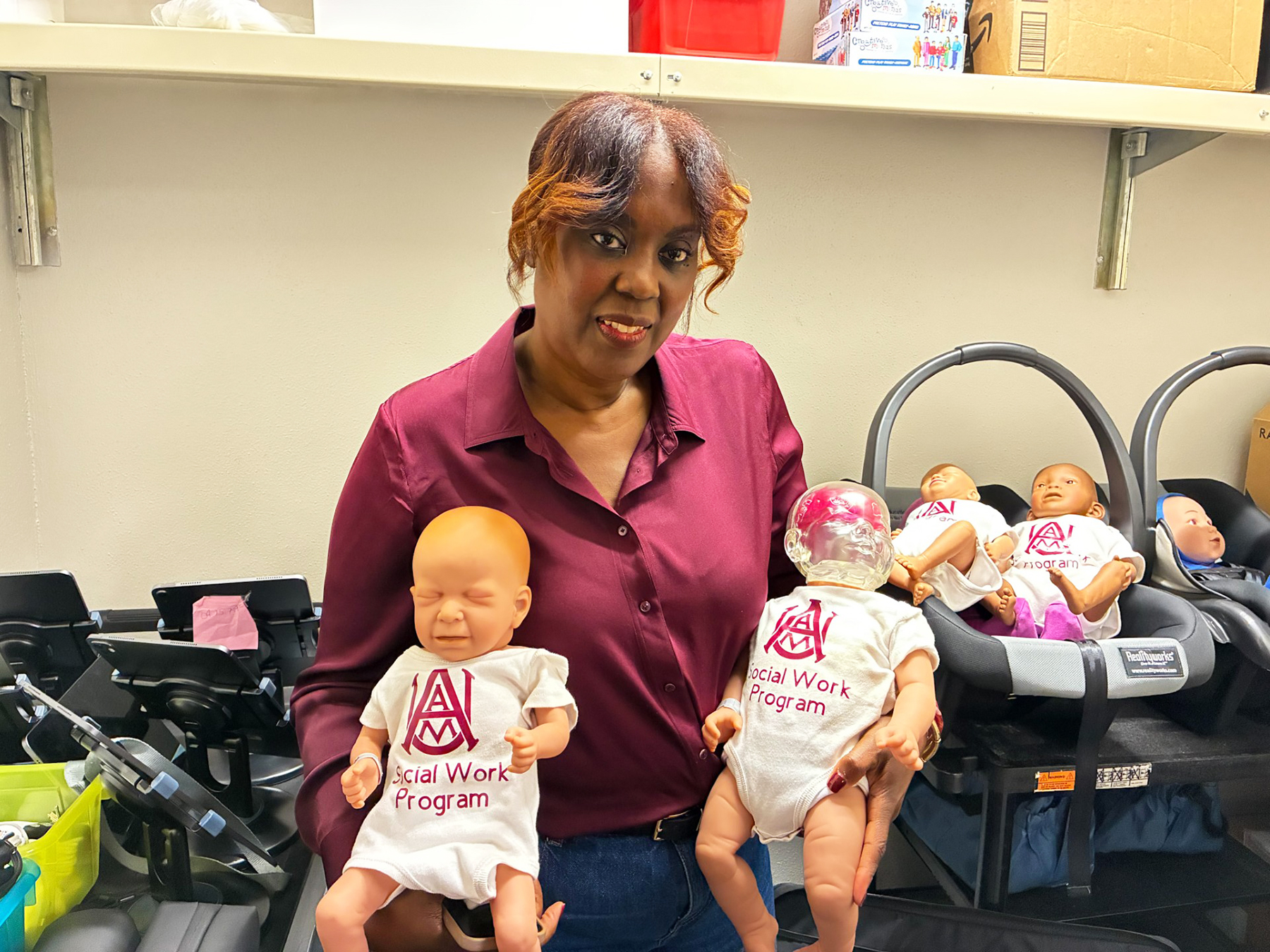
The department’s technology initiatives build on years of immersive training. Since 2017, AAMU Social Work has used technology-based and human-led simulations to support the development of interviewing, assessment and leadership skills among undergraduate and graduate students and newly hired Alabama Department of Human Resources workers.
Fischle also collaborated with Dr. Lasharia Turner to establish the AAMU Title IV-E Technology in Child Welfare Symposium which has occurred over the past two years, and was also part of the planning committee for the AAMU AI Institute for Children, Family and Community Impact. Its inaugural virtual conference this summer attracted more than 400 participants from four countries.
Her national appointment reflects that growing work.
Established as part of CSWE’s 2026-2030 strategic plan, the Advisory Board on AI and Technology will help guide the organization's approach to artificial intelligence and emerging technologies in social work education and research.
Fischle said the board began meeting in September and is exploring ethical considerations, curriculum development and ways to use technology to strengthen social work education and the profession.
Despite her growing involvement in technology, Fischle remains deeply connected to the creative interests and British traditions that have shaped her life.
She enjoys music, painting, floral design and afternoon tea. An enthusiastic collector of teacups, she enjoys hosting tea parties and searching local shops for a good scone that reminds her of home.
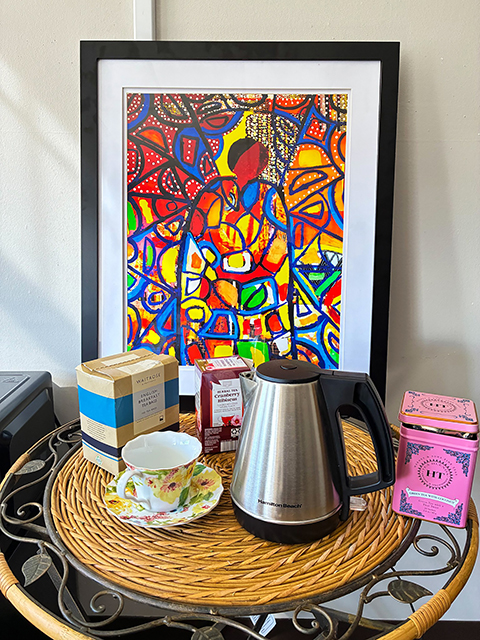
A tea arrangement in Dr. Helen Fischle’s office at Alabama A&M University sits before a colorful painting by colleague Dr. Pamela Plummer, reflecting Fischle’s appreciation for art and British tea traditions.
Her international background also influences her classroom approach. She encourages students to look beyond Alabama and the United States to understand how social workers address challenges in other countries, believing that exposure to different cultures and perspectives is an important part of education.
And although her journey has taken her far from Reading, England, she sees a common thread connecting the hospitality of her childhood home, the mentorship she received at Oakwood and the opportunities she now creates for students at Alabama A&M.
Whether introducing students to new technologies, encouraging them to explore the world or helping shape national conversations about AI, Fischle remains committed to an educational approach grounded in personal connection.
It is also what she believes makes HBCUs special.
“You're not just a face. You're not just a number, but they really pour into you,” Fischle said.
“They hold space for you.”