National Award Expands Student Research Opportunities in Food Biotechnology
AAMU Receives $300,000 USDA Grant to Launch CRISPR Research Program
Alabama A&M University students will soon be editing genes, conducting advanced biotechnology research and collaborating with international scientists thanks to a $300,000 grant from the U.S. Department of Agriculture's National Institute of Food and Agriculture (USDA-NIFA).
The three-year award, titled “Building Capacity in CRISPR/Cas9 Research at AAMU Using the Oleaginous Yeast Yarrowia lipolytica as a Model,” will establish Alabama A&M's first CRISPR-based research and training program. CRISPR, short for Clustered Regularly Interspaced Short Palindromic Repeats, is a gene-editing technology that allows scientists to make precise changes to DNA. The program will give undergraduate and graduate students the opportunity to work alongside faculty on research designed to improve sustainable food production and renewable energy technologies.
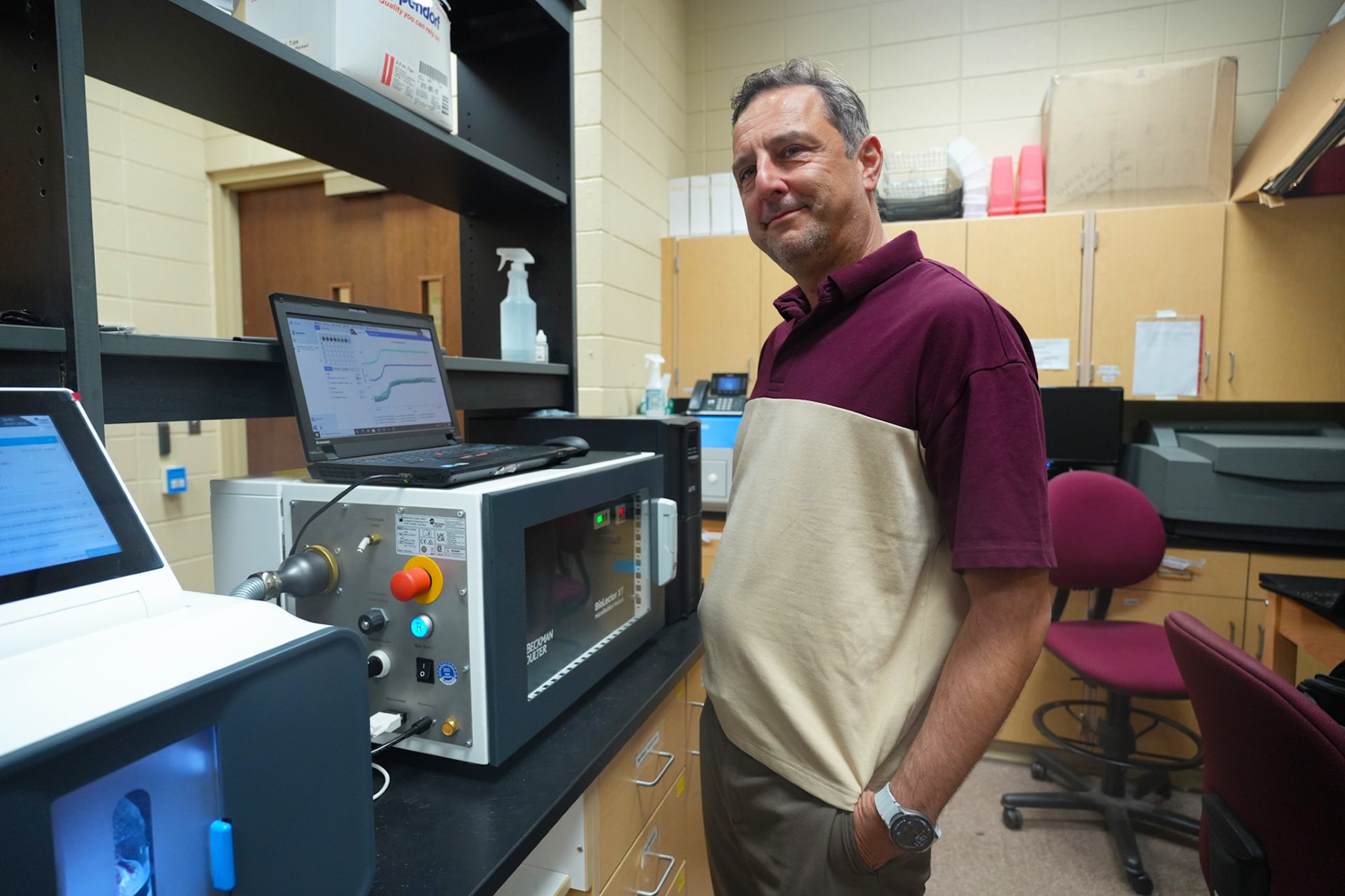
Led by Dr. Stylianos Fakas, associate professor of food biotechnology in the Department of Food and Animal Sciences, the project will strengthen the University's research capacity while preparing students for careers in food science, biotechnology and agricultural research.
“This international, multidisciplinary program brings together expertise in biochemistry, molecular genetics and biotechnology to enhance microorganisms so they can produce oils for food ingredients and renewable fuels,” said Fakas. “Through collaboration with international partners, the program also provides valuable research and training opportunities for students. At the core of this work is CRISPR, a powerful gene-editing technology that functions like precise molecular scissors, allowing scientists to make targeted changes in DNA. In this project, CRISPR will be used to identify and modify key genes involved in lipid production in yeast, ultimately improving lipid yields and advancing our understanding of how cells regulate lipid metabolism.”
At Alabama A&M, students will learn to use CRISPR by conducting research on Yarrowia lipolytica, a naturally occurring yeast capable of producing oils that can be used in food products and renewable fuels. By identifying and modifying genes involved in oil production, researchers hope to better understand how cells regulate lipid metabolism while improving oil production for food and renewable energy applications.
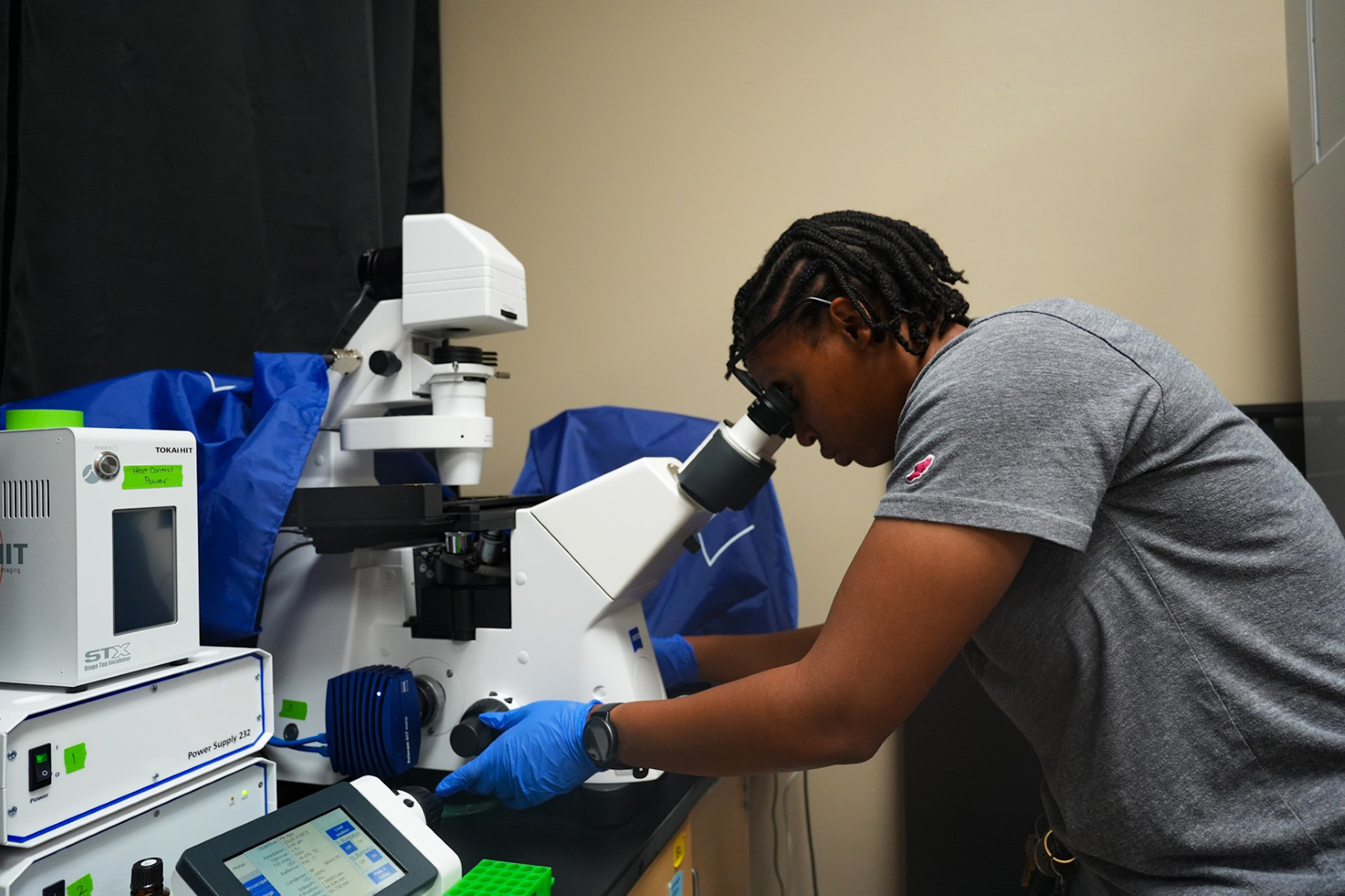
Students will conduct experiments in the Food Biotechnology Laboratory at Alabama A&M's Agricultural Research Center, working alongside faculty while developing laboratory techniques, biotechnology skills and critical-thinking abilities through hands-on research and coursework. The experience is designed to prepare students for graduate study and careers in biotechnology, food science and related scientific fields.
The program also includes an international partnership with Dr. Seraphim Papanikolaou, professor of food biotechnology and bioprocesses at the Agricultural University of Athens, Greece. Students will have the opportunity to participate in a short-term training program abroad, where they will collaborate with faculty, attend seminars and gain insight into global food systems and biotechnology research.
The project is supported through the USDA-NIFA Capacity Building Grant Program, which helps universities expand research programs, provide hands-on student training and build expertise in emerging scientific fields.
Fakas joined Alabama A&M in 2014 after earning bachelor's and doctoral degrees from the Agricultural University of Athens, Greece, a master's degree from the National University of Athens, Greece, and completing postdoctoral training at Rutgers University. His research focuses on lipid biochemistry and biotechnology, and he has authored more than 40 peer-reviewed publications with more than 3,500 citations. Throughout his career, he has secured more than $1.8 million in competitive research funding from USDA-NIFA, the National Science Foundation, the National Institutes of Health and the U.S. Department of Energy.
The project began Jan. 1, 2026, and continues through Dec. 31, 2028. It represents the first effort at Alabama A&M to integrate CRISPR-based genome editing into both research and student training.
For Fakas, the project represents more than a research initiative—it reflects Alabama A&M's broader mission.
“To me, this program is a meaningful step forward in advancing my mission—to uncover the molecular mechanisms that regulate lipid metabolism in Yarrowia lipolytica through genetic, biochemical and multi-omics approaches, and to apply this knowledge to biotechnology,” said Fakas. “It also reflects my equally important commitment to mentoring the next generation of scientists, helping them develop curiosity, independence and critical thinking through hands-on research training. It is a continuation of the journey I have devoted my career to, and a tradition I am proud to nurture at AAMU.”