Nevin Underscores the Role of History, Higher Education and HBCUs in Shaping National Understanding
AAMU Professor Reflects on the Enduring Significance of MLK Day and Black History Month
As Alabama A&M University observes Martin Luther King Jr. Day and Black History Month, the annual moments of reflection arrive amid renewed national conversations about history, memory and identity. At a time when higher education is increasingly asked to examine how history is taught and understood, these observances remain essential opportunities for learning and dialogue.
Dr. Will Nevin, a communications media professor at Alabama A&M University whose academic background spans political science, journalism, and law, emphasized that the way history is remembered and discussed plays a critical role in shaping students’ understanding of the American experience.
“Our received and collected history is the set of narratives that we as institutions and cultures continue to tell ourselves,” said Nevin. “The best public conversations—the ones that need to be had—are the ones that interrogate those narratives to ask if there’s something we’ve overlooked or conveniently forgotten.”
Nevin said that this process of examination is especially important when reflecting on the life and legacy of Dr. King. While King is widely celebrated today, Nevin noted that the complexity and challenge of his work is often diminished in popular memory.
“When it comes to King and his legacy, we so often forget or mischaracterize his status as a revolutionary and his place as a warrior for change,” said Nevin. “We sand down the things that would give many in public life pause today, thus enabling a watered down and corporatized version of the man and what he stood for. We forget that martyrs are put to the sword not because they are beloved by all but because they pose a threat to a select few.”
As a federal holiday commemorates King’s life and leadership, Nevin stressed the importance of remembering the cost of his commitment to justice and equality.
“On the federal holiday celebrating everything he has become, we cannot forget that King was a man savagely murdered for what he believed: namely that life could be better in the United States for Black people and other oppressed minorities,” he said.
Nevin also emphasized that Black history must be understood as central to the broader American narrative, rather than isolated as a separate or secondary subject.
“The true story of American history is one of a country built on ideals that continually fails to live up to those ideals,” said Nevin. “If Black history is cordoned off in isolation, the narrative of a consistently progressing country loses context. Rather Black history—which is also, importantly, American history as well—should be taught alongside the traditional story. Black history deserves to be told—if for no other reason so that we many learn and continue pressing forward as a nation without so many regrettable steps backward.”
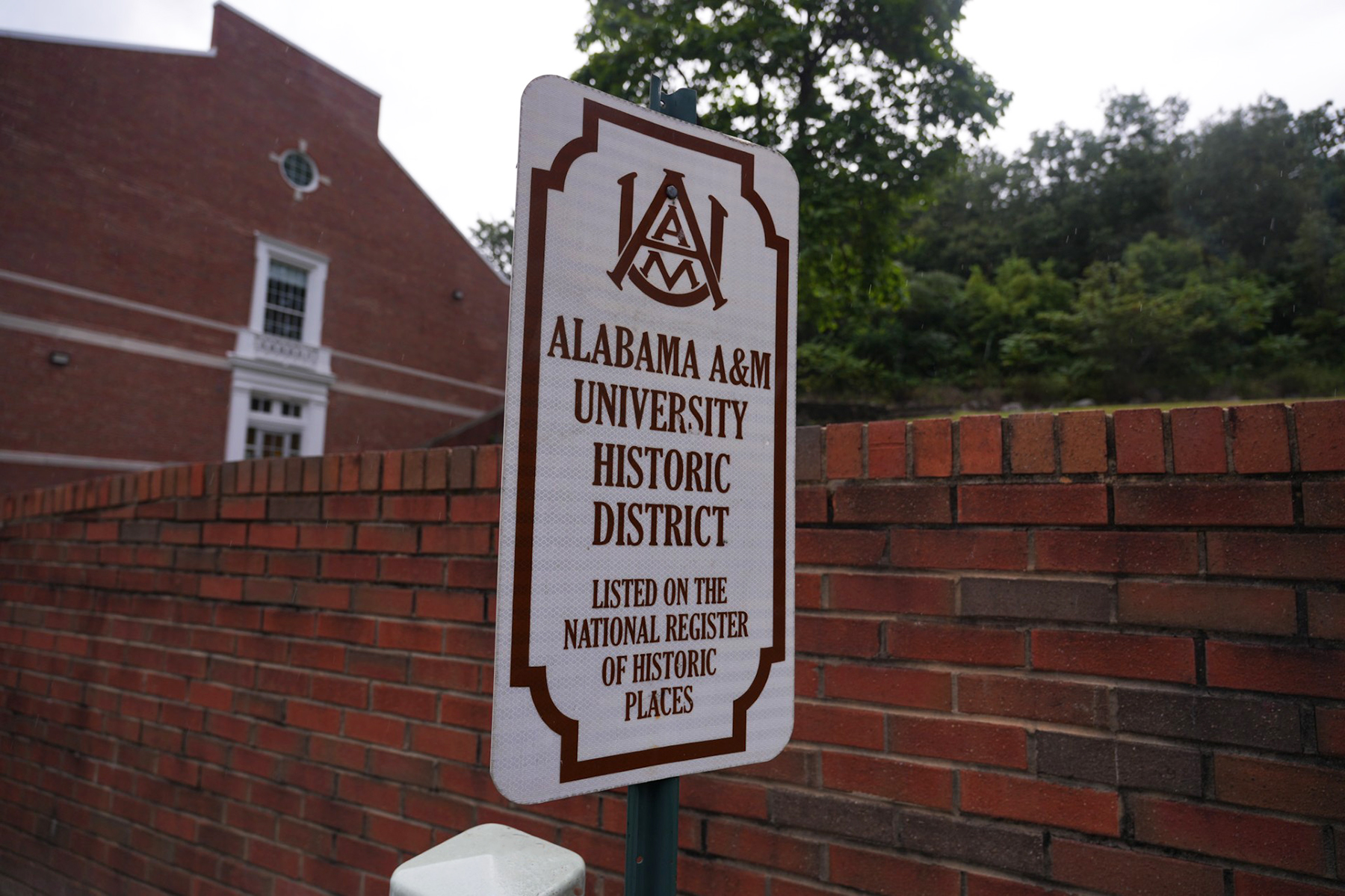
As an HBCU and a historically significant 1890 land-grant institution, Alabama A&M University occupies a unique position in preserving historical knowledge while preparing students to think critically about the present and future. Institutions like AAMU have long served as spaces where history, scholarship and lived experience intersect, helping students engage thoughtfully with the nation’s past and its ongoing challenges.
Nevin said the observance of MLK Day and Black History Month ultimately calls for both celebration and honest reflection, particularly for students preparing to lead in a complex world.
“MLK Day and Black History Month are celebrations and occasions for reflection, to look back on how far we’ve come as a nation and how march farther we still have left to go. Progress is difficult and messy, but we’ll never get anywhere as a society if we can’t admit and face the hard truths of our past—and our present, for that matter. For AAMU students, it means walking into a world not accustomed to hearing the song of Black excellence and being willing to sing it long and loud into a night that still seems dark on occasion. For the rest of the country, it means being willing to listen.”