Nonthesis Graduate Degree Enters Second Year as Food Companies Seek Business Leaders
AAMU’s Online Food Science Business Master’s Program Meets Growing Industry Demand
As demand continues to rise for professionals who understand both the science and business of food, Alabama A&M University’s Master of Science in Food Science Business is gaining momentum as a flexible, fully online graduate degree designed for the evolving food and beverage industry.
Alabama A&M launched the nonthesis program to prepare professionals for leadership roles in food production, research, safety, quality assurance, product development and management. Graduates of Alabama A&M food science programs work at major companies including General Mills, Kellogg’s, Nestlé, Land O’Lakes, Ingredion and Wayne-Sanderson Farms, reflecting the workforce demand the program was created to address.
Known as FSBO, the online Master of Science in Food Science Business is designed for emerging leaders in food-related industries who want to strengthen their technical expertise while developing business, leadership and decision-making skills. Students examine trends shaping the food and beverage industry while learning the scientific principles and business strategies that move food products from concept to consumer.
“Food is a global necessity, and the business of food has never been more dynamic,” said Dr. Martha Verghese, chair of the Department of Food and Animal Sciences. “The future of the food industry belongs to professionals who understand not only the science behind food, but also the business strategies that bring innovative products to consumers. Our online Food Science Business program equips students with the scientific knowledge, entrepreneurial mindset and leadership skills needed to thrive in one of the world’s most essential and rapidly evolving industries.”
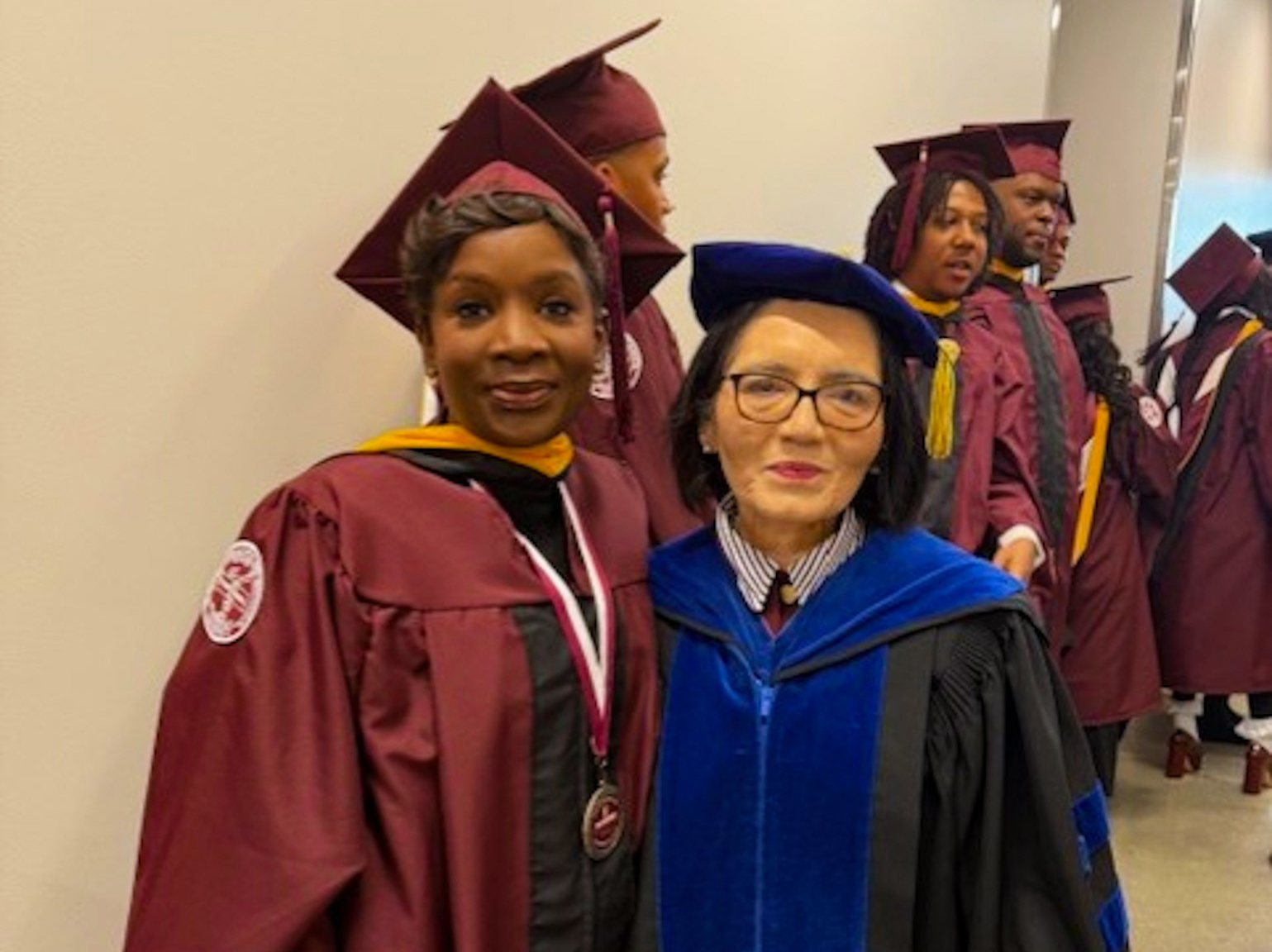
The program welcomed an inaugural cohort of nine students and reached a major milestone in December 2025 when its first three students graduated, including acclaimed whiskey blender and two-time Alabama A&M alumna Eboni Major. Major, who earned her bachelor’s degree in food science from Alabama A&M in 2015, completed the Master of Science in Food Science Business program as part of the inaugural graduating class. Since then, the program has continued to attract professionals from across the food and beverage industry. Faculty advised eight students during the fall 2025 semester, and six students enrolled for spring 2026. Two additional students are expected to graduate in summer 2026, while three new students are projected to enter the program.
Program leaders aim to enroll and retain 10 to 15 new students annually, working toward a sustainable enrollment of 20 to 30 students across multiple cohorts within five years. High-quality instruction, individualized mentoring, proactive advising, experiential learning and industry engagement support the program's goals of maintaining an annual student retention rate of at least 80% and a degree completion rate between 60% and 70%.
Travion Miles-Jones, a production supervisor at Wayne-Sanderson Farms in Decatur, Alabama, and a member of the program's inaugural graduating class in December 2025, said the curriculum successfully blended scientific knowledge with practical business preparation.
“My experience with the program was very positive,” said Miles-Jones. “As a new program, it continued to evolve and improve throughout my time there. I appreciated how the coursework combined food science and business concepts, strengthening my understanding of the food industry while allowing me to apply what I learned directly to my professional experience.”

Travion Miles-Jones, production supervisor at Wayne-Sanderson Farms in Decatur, Alabama, celebrates earning his Master of Science in Food Science Business during Alabama A&M University's December 2025 commencement.
Employment opportunities for food scientists with graduate degrees remain strong nationwide. Alumni pursue careers in research and development, food process design, food safety, analytical sciences, quality assurance and management. Others work with federal agencies, including the U.S. Food and Drug Administration and the U.S. Department of Agriculture, or continue their education through doctoral programs leading to careers in research and higher education.
The curriculum combines food science and business coursework to provide students with a comprehensive understanding of the industry. Students gain insight into the techniques, tools and strategies used throughout food and beverage manufacturing, retail operations and production systems. Coursework emphasizes the scientific foundations of food alongside the business principles that drive marketing, economics, technology and innovation.
Applied learning is a cornerstone of the program. Students explore the full lifecycle of food and beverage development, from product ideation and formulation to packaging, marketing strategy and management decision-making, preparing them to address real-world industry challenges.
The Master of Science in Food Science Business is housed in Alabama A&M University’s Department of Food and Animal Sciences, which offers graduate programs rooted in applied science and interdisciplinary research. The department integrates biological, chemical, physical and behavioral sciences to address food processing, preservation, quality evaluation, nutrition, health and product utilization.
Students benefit from instruction and research in chemistry, microbiology, biotechnology, engineering, toxicology, sensory science, product development, animal health, biochemistry and nutrition.
The department also offers six graduate concentrations within its food science programs: molecular and nutritional biochemistry and toxicology, food chemistry and biochemistry, product development, food safety and processing, molecular food biotechnology, and animal health. Faculty mentorship and applied research opportunities remain central to student success.
The online degree consists of 34 credit hours delivered across four eight-week sessions, allowing students to complete the program in approximately one year. The coursework balances food science and business content, preparing graduates for careers in industry, government and private enterprise.
“Whether you are advancing your career or preparing for new opportunities, this flexible program allows you to earn a high-quality education without putting your life on hold,” said Verghese. “We are preparing graduates to make an impact across the food industry—from concept to consumer.”
Alabama A&M continues to expand its online academic offerings as part of its commitment to educational access and workforce development. In addition to the Master of Science in Food Science Business, the University has introduced graduate programs across its academic colleges to address regional and national workforce needs. Graduates such as Major and Miles-Jones illustrate how the program is helping experienced professionals build on their expertise while preparing for leadership opportunities across the food and beverage industry.
Applications are being accepted through the Alabama A&M University Graduate School. For more information, contact program coordinator Dr. Judith Boateng at judith.boateng@aamu.edu.
Apply online: https://gradapply.aamu.edu/
Acclaimed whiskey blender and Alabama A&M alumna Eboni Major, left, celebrates earning her Master of Science in Food Science Business with Dr. Martha Verghese, chair of the Department of Food and Animal Sciences, during Alabama A&M University’s December 2025 commencement.