Workforce Development Project Explores Agriculture, Technology and Campus Life
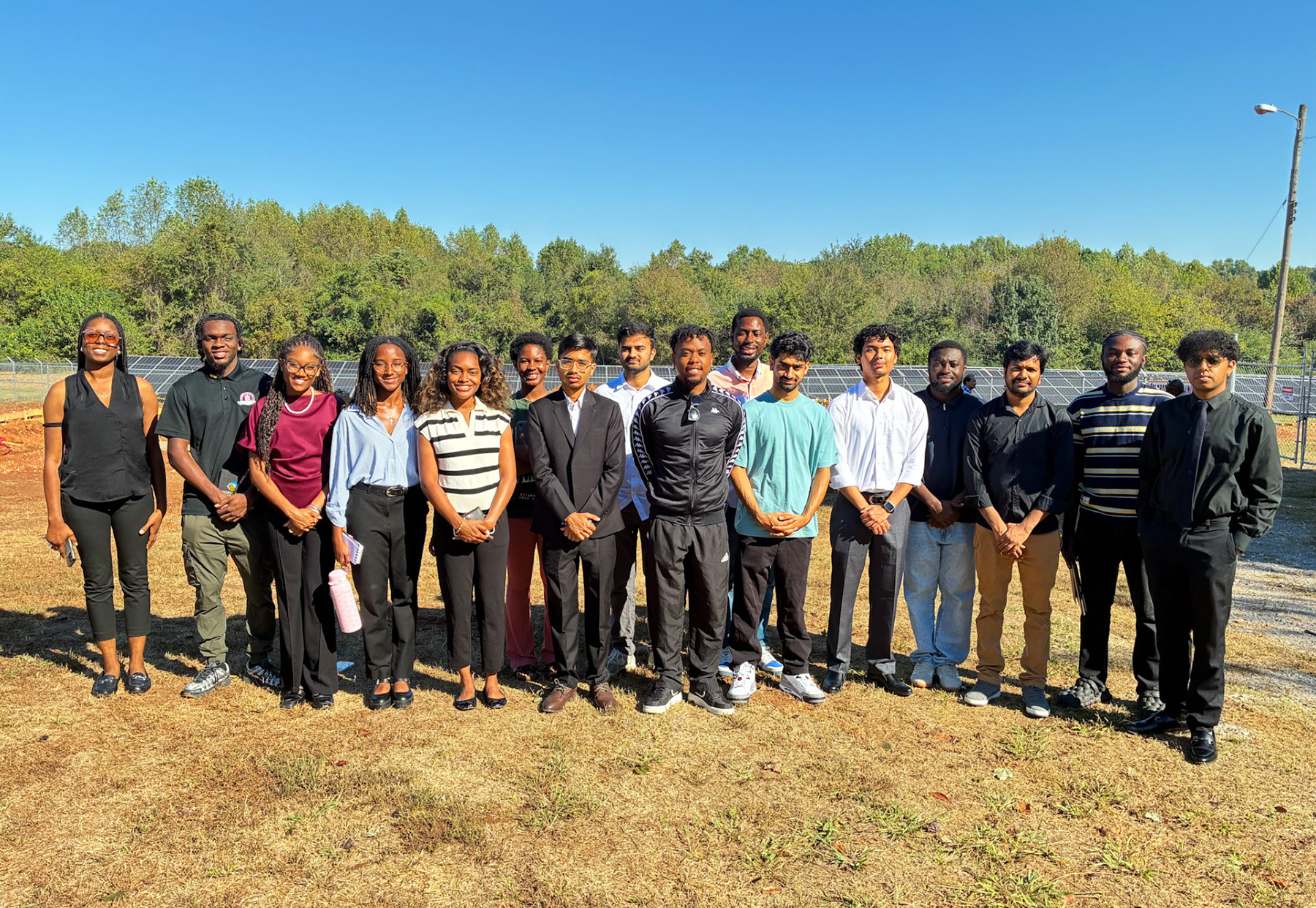
AAMU Students Help Shape Future of Campus Solar Farm
Alabama A&M University students are gaining paid, hands-on experience through an interdisciplinary workforce development project aimed at transforming the land surrounding the University’s solar farm into a space that supports renewable energy, agriculture, research and student life.
The initiative brings together students and faculty in urban planning, electrical engineering, computer science, plant and soil science, and animal science to explore innovative uses for the property while developing practical skills for future careers.
The effort coincides with construction of a nearby battery energy storage system (BESS), which began around September 2026 and is expected to be completed by spring 2027. The system will store solar-generated electricity for the University’s electric bus fleet, allowing greater flexibility for charging buses, including at night.
But faculty and students envision more than an energy facility. They see opportunities to transform the surrounding property into a living laboratory that serves the broader campus community.
“We are interested in how to integrate the whole solar system into real life,” said Dr. Ahmed Ouf, professor of urban design and architecture in the Department of Community and Regional Planning.
Ouf envisions transforming the area surrounding the solar farm into a mixed-use space that combines agriculture, renewable energy, recreation and student learning. The goal is to encourage physical activity, promote healthier lifestyles and improve students’ quality of campus life while giving them a voice in shaping the University’s future development.
“Students need to have a say in their campus development and site design,” Ouf said.
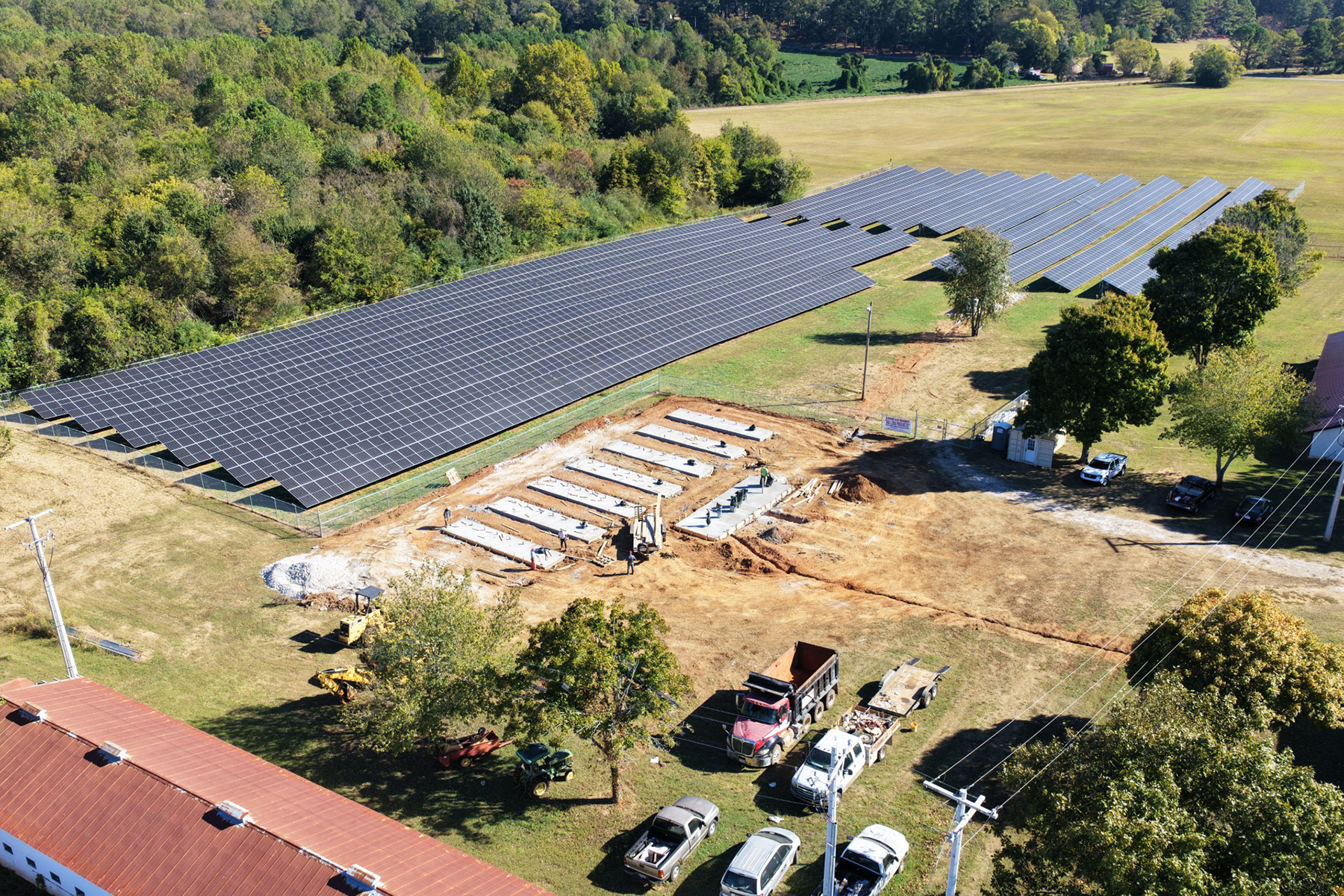
An aerial view shows construction underway on battery energy storage infrastructure adjacent to Alabama A&M University’s solar farm.
Ouf’s urban planning students are exploring outdoor classrooms, recreational areas, walking trails, raised planting beds, a horseback riding trail in collaboration with the Agribition Center, and gathering spaces. Other possibilities include designated charging and storage areas for electric scooters, particularly for students living in nearby Foster Hall who rely on them for campus transportation.
Junior Jordan Lee suggested the site could provide much-needed study and gathering spaces for students living in nearby residence halls.
“Right now, this part of the land is very visibly industrial, so it’s not as appealing to the students on campus,” said Lee.
She also suggested the property could also provide outdoor study and gathering spaces for nearby residents. The proposals remain in the exploratory stage.
Agriculture is another major focus. Ashya Reid, a graduate student in plant and soil science, is exploring agrivoltaics, an approach that combines solar energy production with agricultural uses of the same land, including growing vegetation and supporting livestock beneath or around solar panels.
“My biggest interest is what crops can we grow in this land? What will thrive? What will not?” Reid said.
She plans to examine soil health and test which crops could grow successfully around or between the solar panels. Students and faculty are also considering using sheep to manage vegetation, potentially reducing mowing costs while providing opportunities for animal science research.
Dr. Gamal Eden Abdelrahim, professor in the Department of Food and Animal Sciences and coordinator of the Animal Bio-Health Sciences program, is helping connect the initiative to hands-on training in animal nutrition and health.
Abdelrahim leads a $300,000 project funded by the U.S. Department of Agriculture’s National Institute of Food and Agriculture through its 1890 Institution Capacity Building Grants Program. The project focuses on sustainable animal feed processing, formulation and feeding while expanding experiential learning opportunities for students.
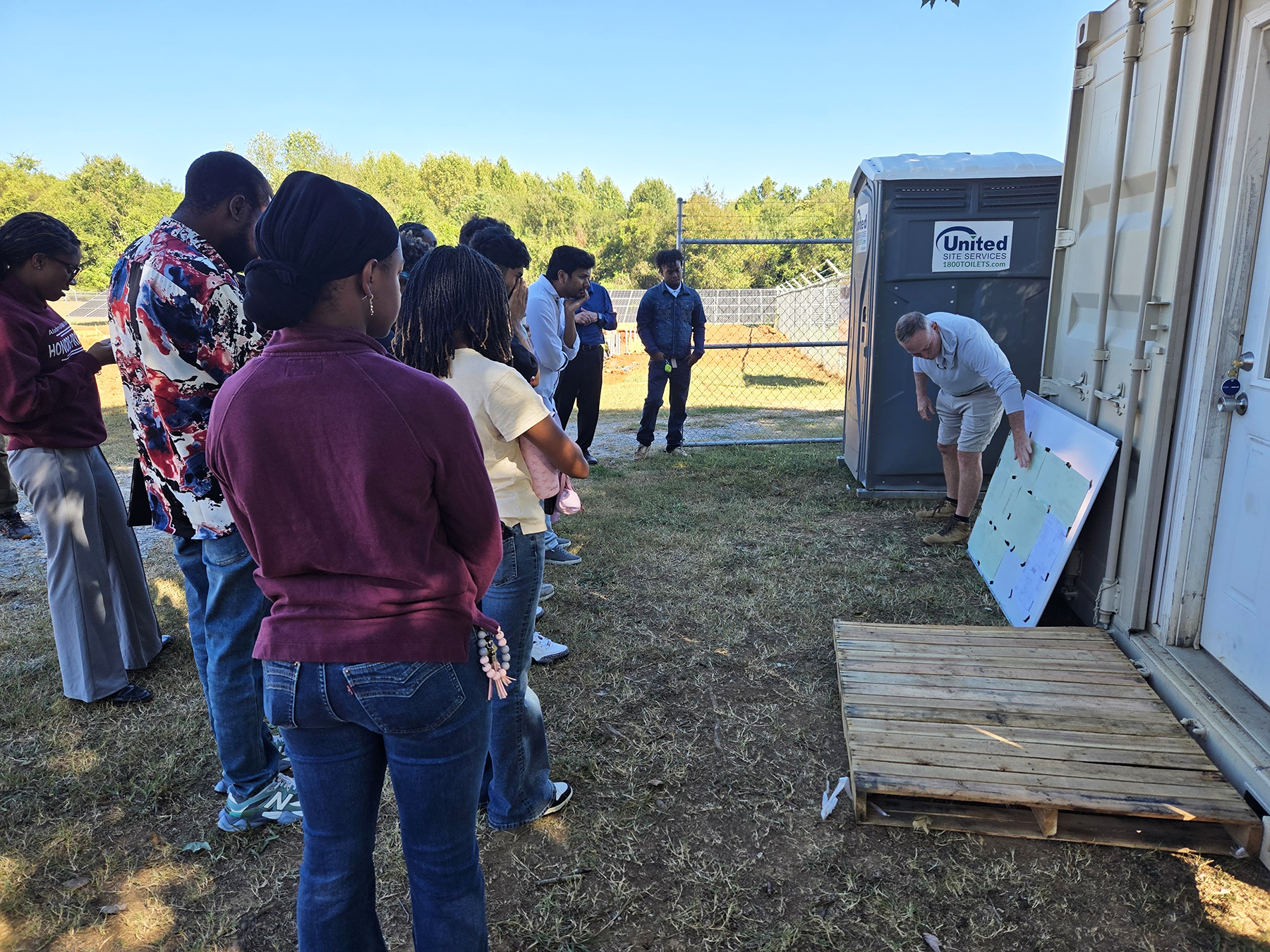
As part of their work at the microgrid workforce development site, animal bio-health sciences students will monitor animal health, feed intake and safety, collect feed samples, and test forage and grain samples. The activities complement the grant’s broader goal of strengthening student training in feed analysis, nutrition and sustainable feeding practices.
“This project gives our students an opportunity to take what they learn in the classroom and apply it to real-world agricultural challenges,” Abdelrahim said. “By studying animal nutrition, evaluating feed quality and monitoring animal health, they are developing practical skills that will prepare them for careers in agriculture while exploring how livestock and renewable energy can work together.”
Technology is also playing a central role in the initiative. Dr. Raziq Yaqub, Professor in the Department of Electrical Engineering and Computer Science, is leading a student research project that combines artificial intelligence (AI), drone technology, and data analytics to improve the reliability and efficiency of solar energy systems.
Yaqub and his students plan to develop an intelligent monitoring system that combines drone images, thermal measurements, and existing solar production data to identify potential equipment problems, track panel performance, and support maintenance decisions.
“Our goal is not simply to fly a drone and take pictures,” Yaqub explained. “We want to turn the collected data into useful information that helps identify problems early, estimate energy losses, and recommend appropriate maintenance actions.”
Five undergraduate students are expected to work on complementary areas: AI-based fault detection, equipment health monitoring, maintenance cost analysis, wireless communications assessment, and battery management system. Each student will gain hands-on experience developing and testing practical solutions.
Computer science major Sudin Pokharel is helping evaluate drone technology equipped with visible-light and thermal cameras as part of an estimated $17,000 equipment budget. His work focuses on combining drone imagery with solar production data to support AI-based fault detection and identify potential causes of performance problems within the solar array.
“I’m especially interested in how we can use AI and multiple types of data together to detect problems early and turn drone inspections into useful maintenance information,” Pokharel said. “Working on a real solar facility gives us the opportunity to apply what we learn in computer science to a practical renewable-energy challenge and develop a system that could eventually be useful beyond AAMU.”
“If successful, this project could help AAMU improve solar energy monitoring, reduce unnecessary maintenance costs, and minimize energy losses,” Yaqub said. “More importantly, our students will gain experience developing technology that could eventually benefit other solar facilities.”
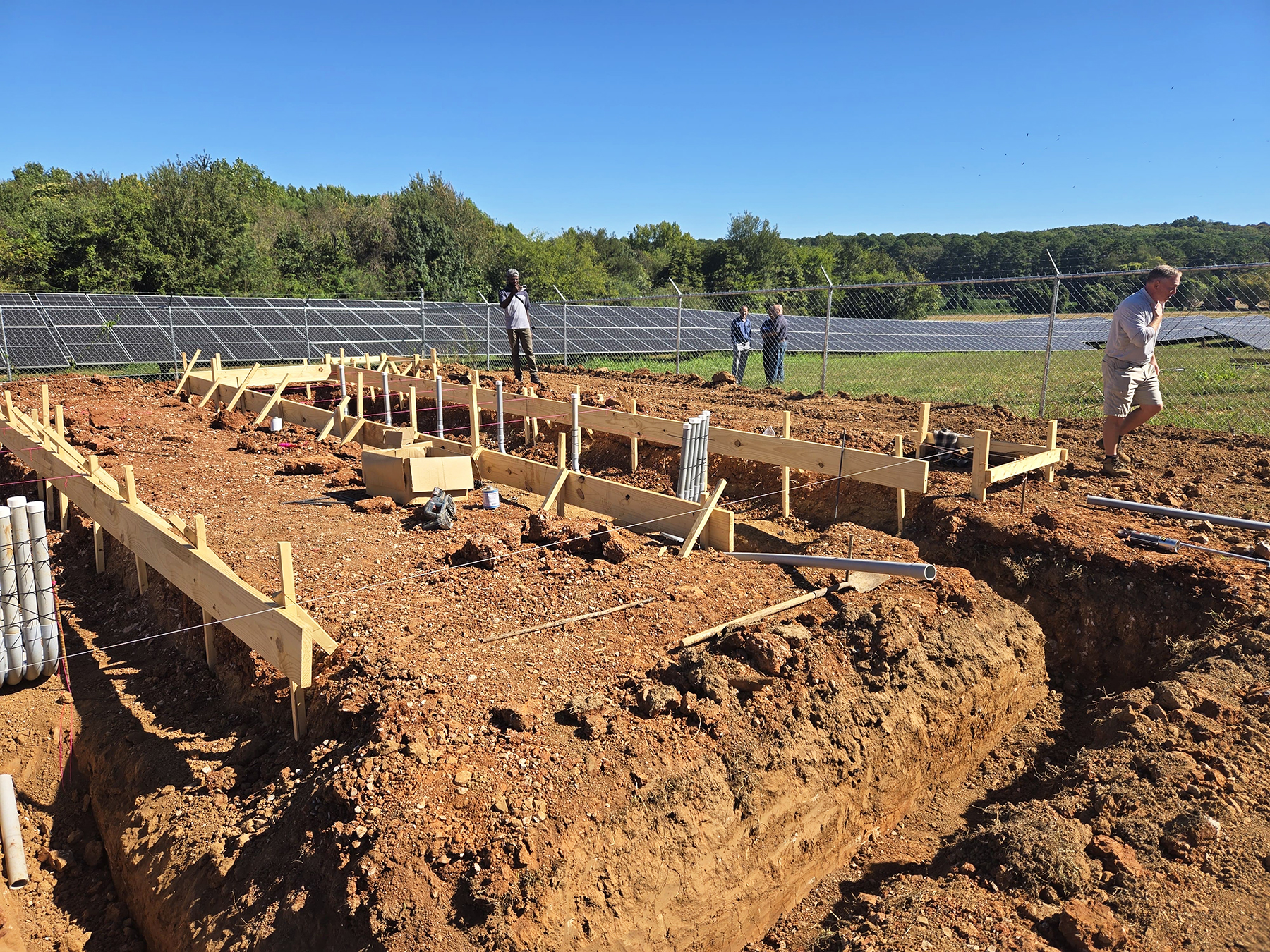
An Alabama A&M University student takes a photo of construction work at the battery energy storage system site adjacent to the campus solar farm as part of an interdisciplinary workforce development project.
The project demonstrates how AAMU students can apply classroom knowledge to real-world energy challenges while preparing for careers in AI, engineering, and renewable energy.
Julian Levitchi, chief technology officer of Huntsville-based Broadcore and a consultant on the battery storage project, explained that the system will allow the University to store electricity generated during daylight hours for use when needed.
Marshall Chimwedzi, director of AAMU’s Bulldog Transit System, is helping coordinate the broader initiative, which connects the University’s investments in sustainable transportation with paid student research and workforce development.
While many of the students’ ideas remain in the planning stages, the project is providing opportunities to develop professional skills, collaborate across disciplines and contribute to campus improvements.
The effort reflects a broader vision for the property — one where renewable energy, agriculture, technology and student life can coexist while preparing students for careers in emerging industries.