AAMU Students Selected Among 200 Students Nationwide
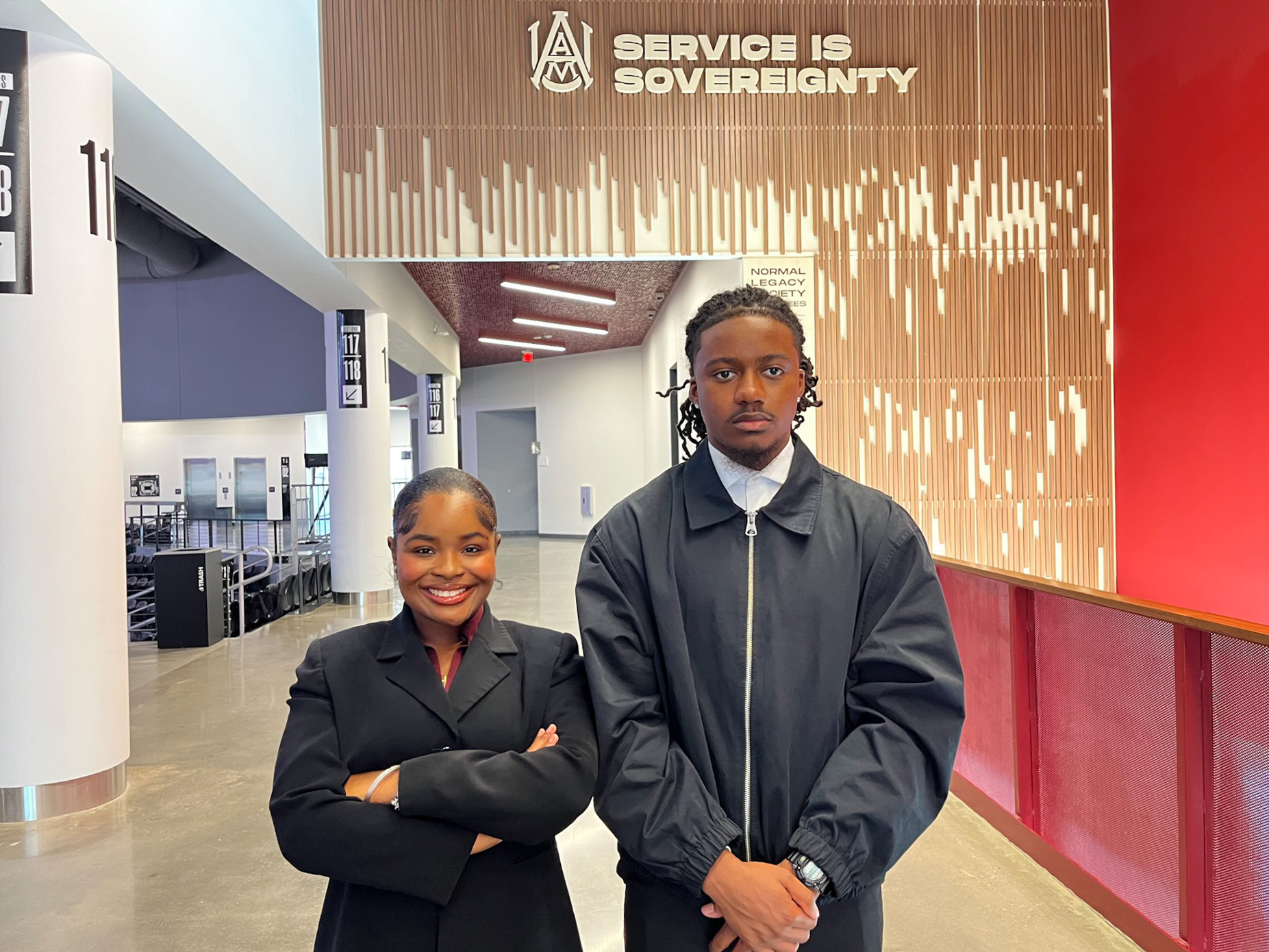
Watkins, Grant Attend National Model USDA Conference in Arizona
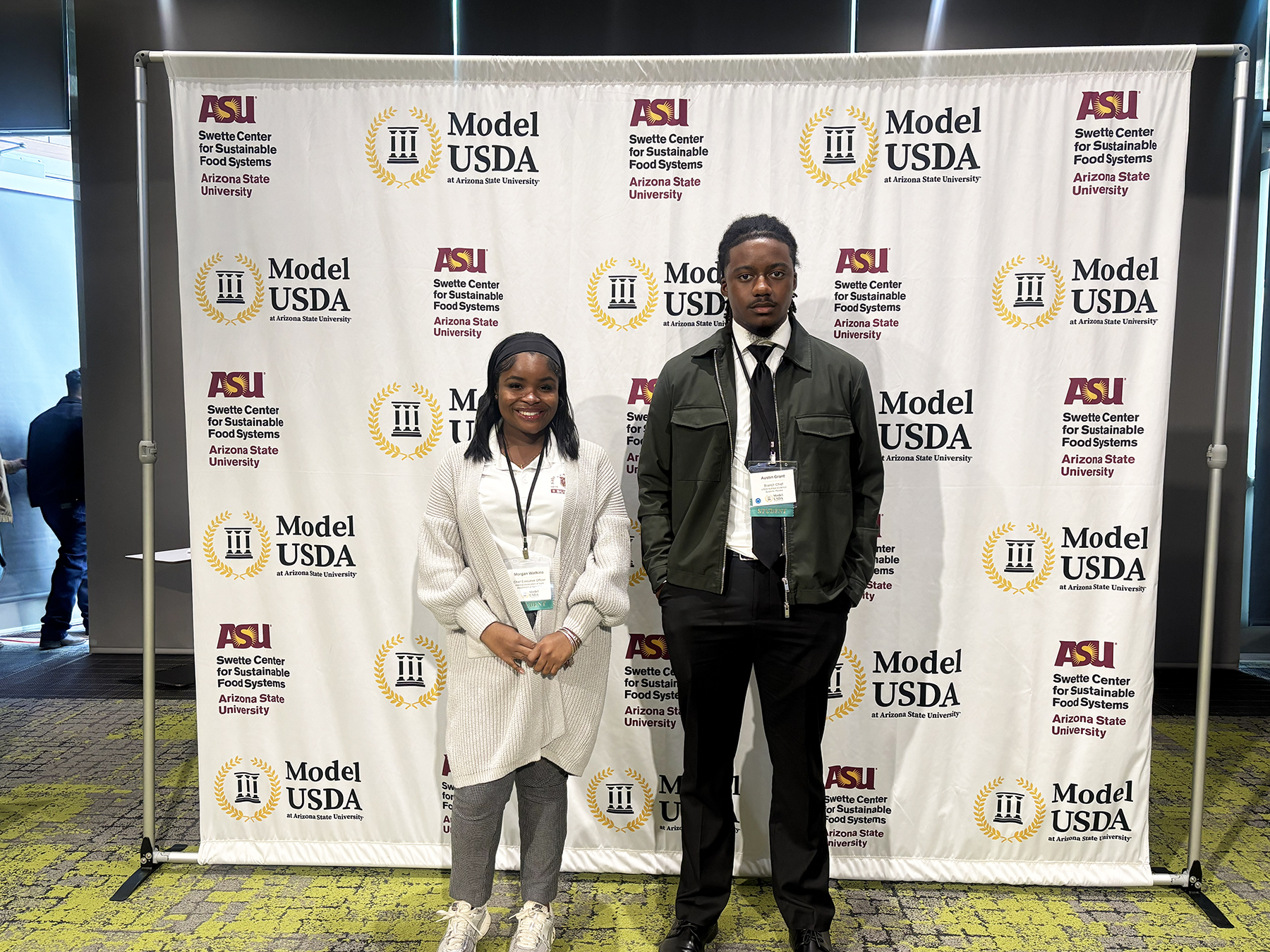
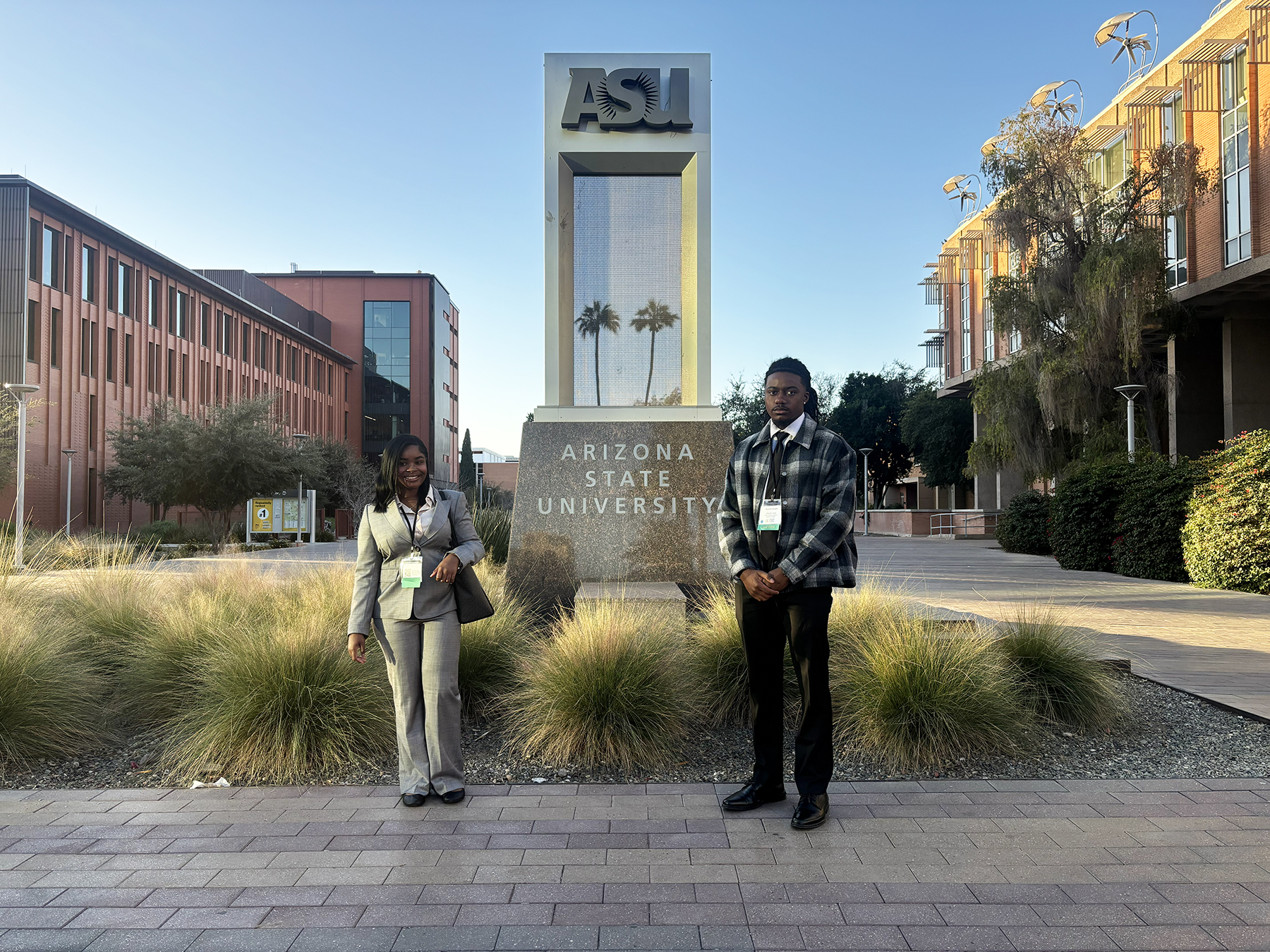
Two Alabama A&M University students recently took their seats at the national policy table, representing Bulldog Nation during the Model USDA Conference at Arizona State University. Morgan Watkins and Austin Grant, both Department of Family and Consumer Sciences majors, were among more than 200 students from 30 universities selected to participate in the multi-day simulation. Students were chosen based on academic performance.
Model USDA allows students to assume the roles of federal food policy makers and stakeholders while addressing pressing issues such as ultra-processed foods, sustainability and urban agriculture. Through structured debates, negotiations and presentations, participants work to reach consensus on complex national food and agriculture policies.
Watkins, a junior with a concentration in human development and family studies from, served as CEO of the National Association of State Departments of Agriculture. In her role, she collaborated with peers portraying officials such as the U.S. secretary of agriculture to find common ground on urban agriculture policy.
“We had to work with students portraying leaders such as the secretary of agriculture to find common ground on urban agriculture policy,” Watkins said. “It showed me that agriculture is connected to nearly everything we do, even when it’s not the main focus.”
Grant, a sophomore concentrating in nutrition and hospitality management, portrayed the branch chief for the USDA Nutrition Evidence Systematic Review. His responsibilities included delivering an introductory address and working through group policy scenarios grounded in research and public health data.
“I learned how important collaboration is at the national level,” Grant said. “USDA decisions impact millions of people, from school nutrition programs to food access initiatives in underserved communities. Being in the room with other leaders and professionals showed me how much research, discussion and compromise go into shaping policies like the Dietary Guidelines for Americans.”
In addition to the simulation, students attended panels featuring former U.S. Secretaries of Agriculture Dan Glickman and Ann Veneman, the first woman to hold the position. Watkins described the opportunity as one of the highlights of the conference.
“I really enjoyed hearing from the former secretaries. They were insightful on agriculture and its impact,” she said.
The conference opportunity was extended to students participating in the USDA NextGen Program. In 2023, Alabama A&M received a $4.3 million, five-year grant from the U.S. Department of Agriculture to establish the Agriculture and Family and Consumer Sciences Academy, known as AgriFCS. The academy provides scholarships, experiential learning opportunities and career exposure designed to reduce barriers for students pursuing careers in food, agriculture, natural resources and human sciences.
Watkins, from Cleveland, is in the Honors Program and is president of the American Association of Family and Consumer Sciences and treasurer of Women of Worth. She said the experience affirmed her academic path. A former psychology major, she found her calling in Family and Consumer Sciences after being introduced to the program by family members who are AAMU alumni.
“With FCS, there are many routes I can go into,” she said. “Human development and family studies gives me psychology, but I also gain tools from nutrition and other areas. It creates a well-rounded student.”
Grant, a native of Atlanta, said he chose AAMU to step outside his comfort zone while pursuing strong programs in nutrition and agriculture within the legacy of an HBCU.
“The best part was the group interactions, when we gathered information and presented our scenarios,” Grant said. “I enjoyed networking with students from universities across the country, including fellow HBCUs. It gave me a deeper appreciation for evidence-based decision-making and the responsibility that comes with influencing public health.”