Food Product Innovation Center Helps Entrepreneurs Develop, Test and Bring Products to Market
From Kitchen Creations to Market Success: Alabama A&M Helps Food Entrepreneurs Bring Ideas to Life
What does it take to turn a family recipe, specialty sauce or innovative beverage into a product ready for store shelves? At Alabama A&M University, the answer may be closer than aspiring entrepreneurs realize.
Through its Food Product Innovation Center (FPIC), Alabama A&M is helping entrepreneurs transform culinary ideas into commercial opportunities by providing access to food scientists, specialized laboratories and product development expertise. From testing a new tea blend to improving the shelf life of a barbecue sauce, the center offers scientific support that can make the difference between a promising recipe and a market-ready product.
Since its launch in 2024, FPIC has assisted 50 organizations, agencies and businesses across Alabama and Tennessee, helping entrepreneurs and established producers address food safety concerns, improve existing products and explore new commercial opportunities.
Located in Caver Complex South within the Department of Food and Animal Sciences, the center serves as a food incubator for the Tennessee Valley, supporting startups, small businesses and established companies seeking to develop, test or improve food products.
Developed through the College of Agricultural, Life and Natural Sciences, FPIC reflects the University’s commitment to applying research and scientific expertise
to challenges facing businesses and communities. The center was established under
the leadership of Dr. Martha Verghese, professor and chair of the Department of Food
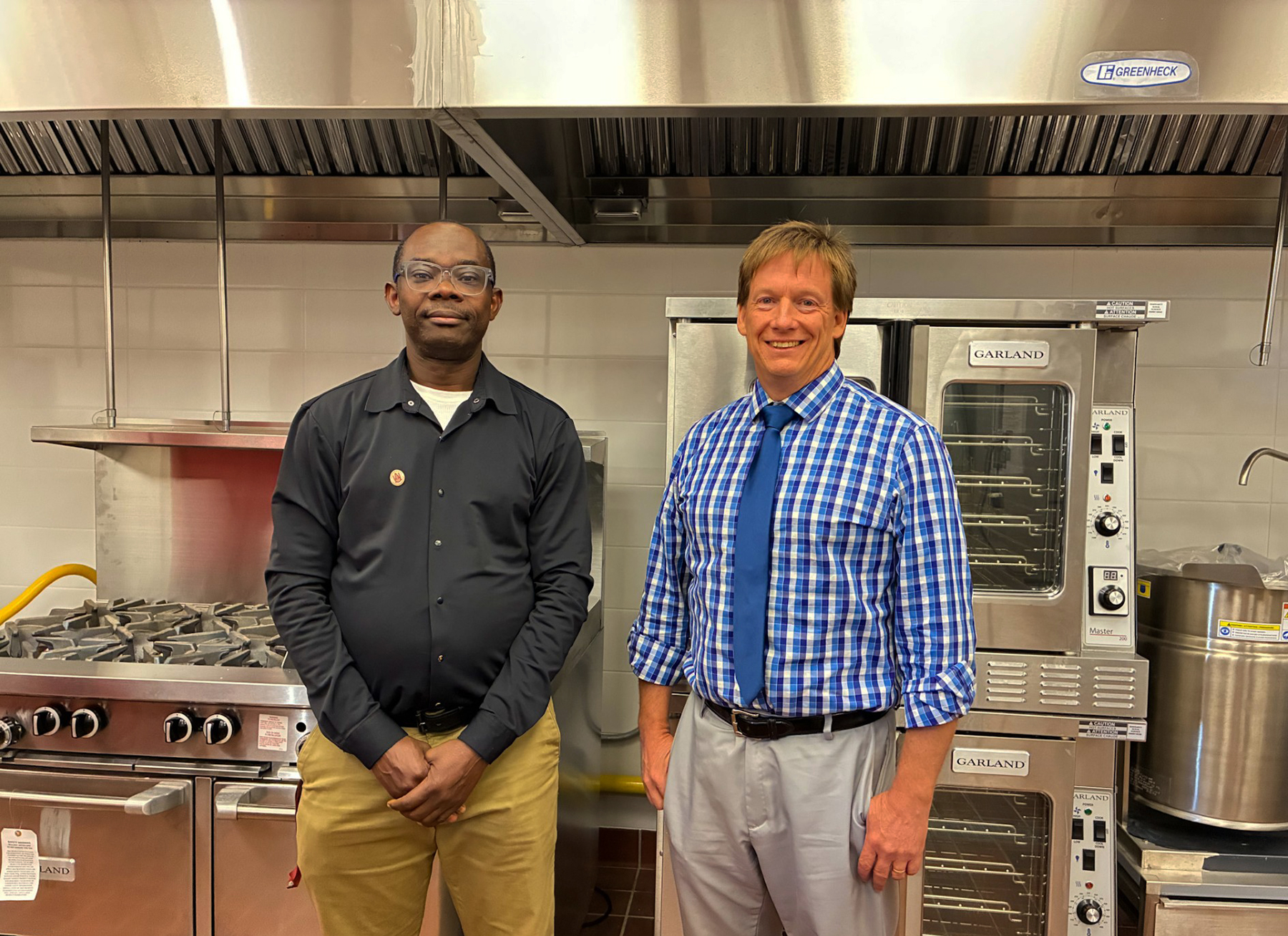
and Animal Sciences, with Drs. Josh Herring, Professor and Elvis Baidoo, research assistant professor and FPIC coordinator, leading its work
with entrepreneurs.
“Our vision for the Food Product Innovation Center is to transform food science research into meaningful solutions that improve lives,” Verghese said. “By integrating innovation, health/nutrition, and sustainability, we aspire to develop healthier food products, empower communities through education and outreach, and support entrepreneurs in bringing innovative, sustainable products from concept to market. Our ultimate goal is to make science-driven food innovation accessible, impactful, and beneficial to the communities we serve while building our brand.”
For entrepreneurs, the center addresses a significant challenge: Developing a food product requires more than an appealing taste or original idea. Products must meet applicable food safety requirements, maintain quality over time and, in many cases, undergo scientific testing before they can be marketed.
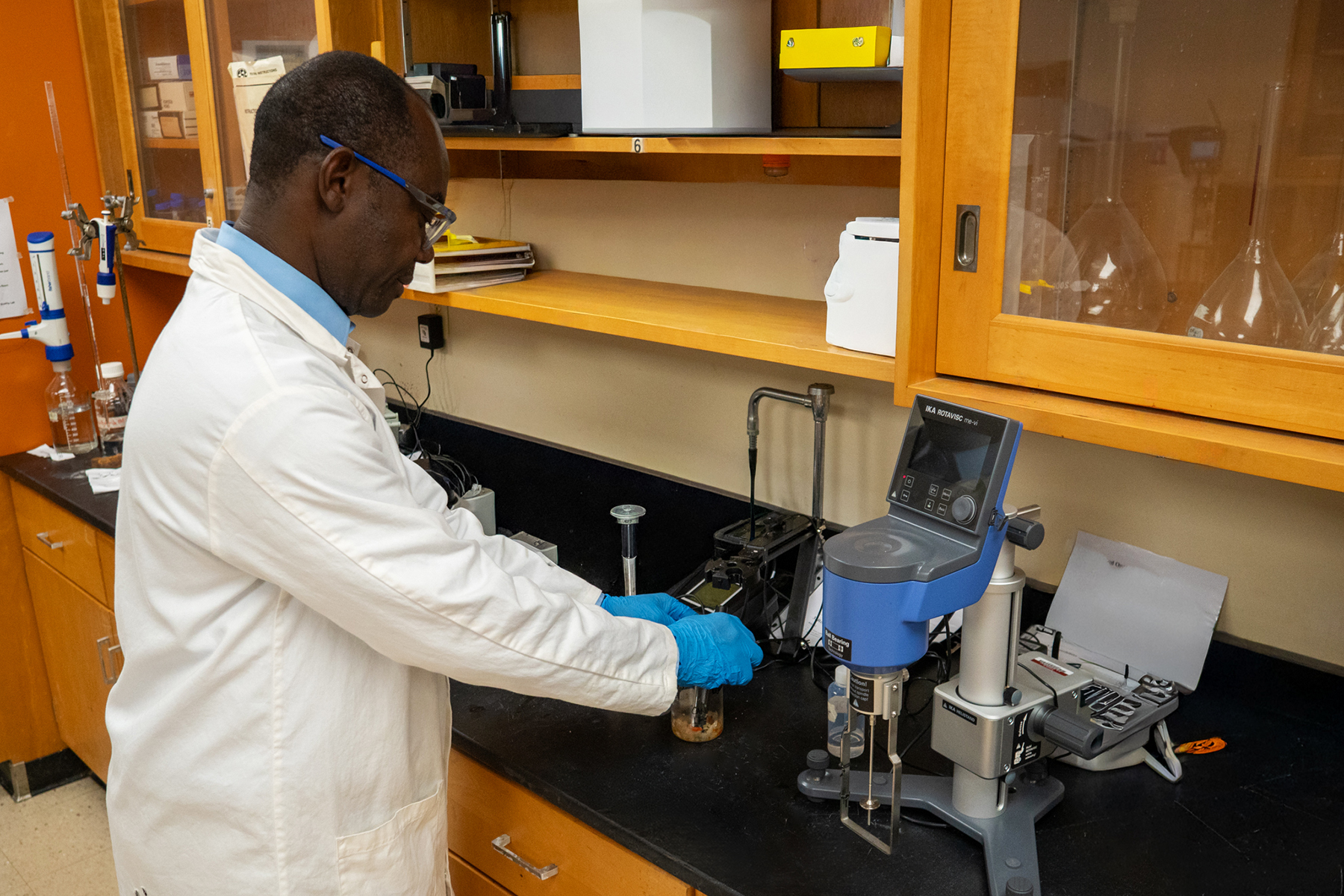
FPIC provides services that include acidity and pH testing, water activity analysis, sugar content measurements, shelf-life studies, nutritional information development and recipe reformulation. These services help entrepreneurs understand how their products perform, identify potential safety concerns and make improvements before entering the marketplace.
The center also offers a valuable local alternative for entrepreneurs who previously had to travel outside north Alabama to access comparable testing and technical assistance.
“Some of the clients were saying that previously they were going to places like Atlanta to find laboratories. But now we have it here in Huntsville,” Baidoo said during an interview on Alabama A&M Extension’s new “Food Defenders” podcast, hosted by Dr. Terence Martin. “All entrepreneurs, starters, businesses, you can come here with your food product for testing.”
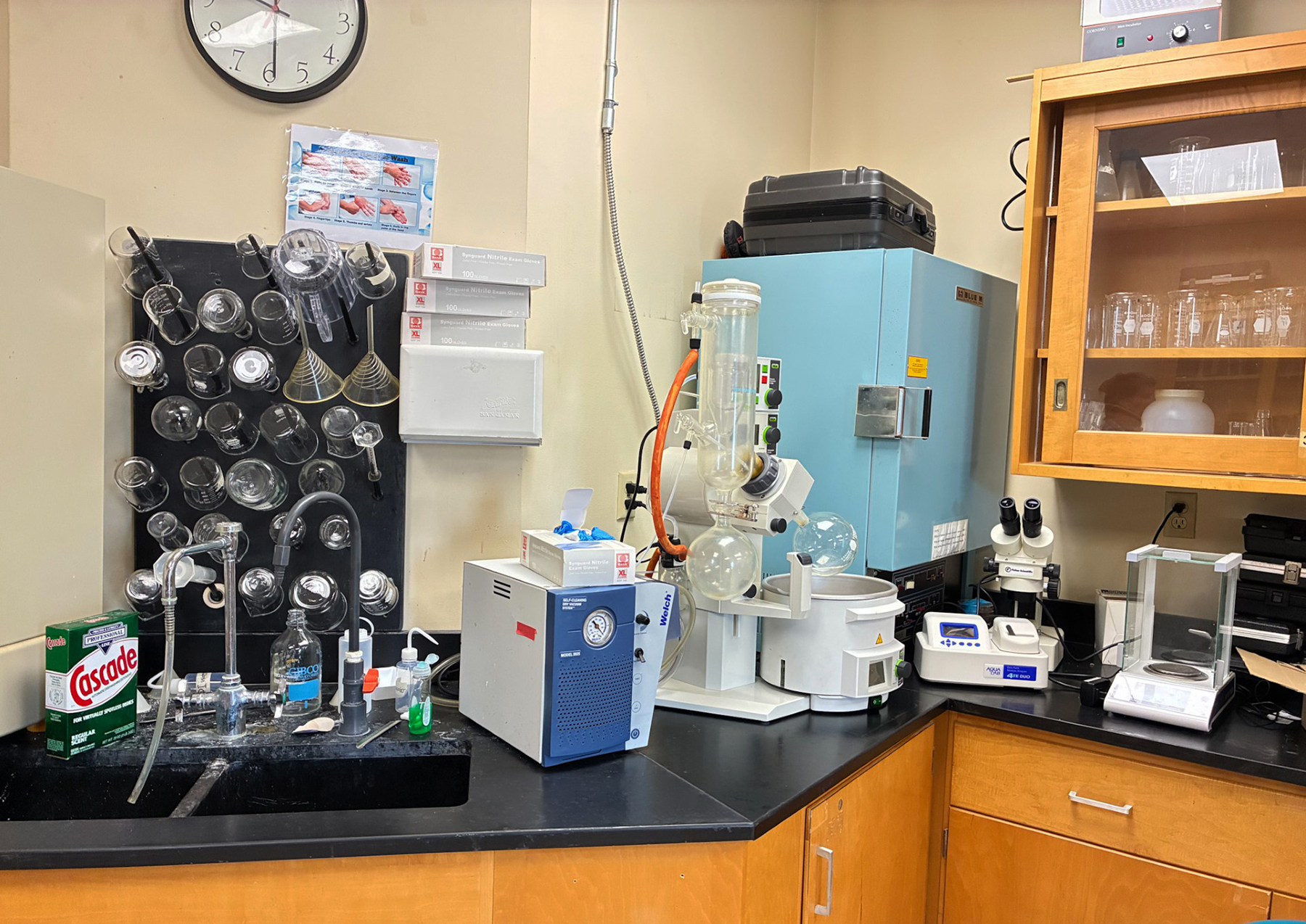
FPIC’s pilot plant includes a product development laboratory, quality assurance laboratory and commercial kitchen, providing facilities where food scientists and students can assist entrepreneurs through various stages of product development.
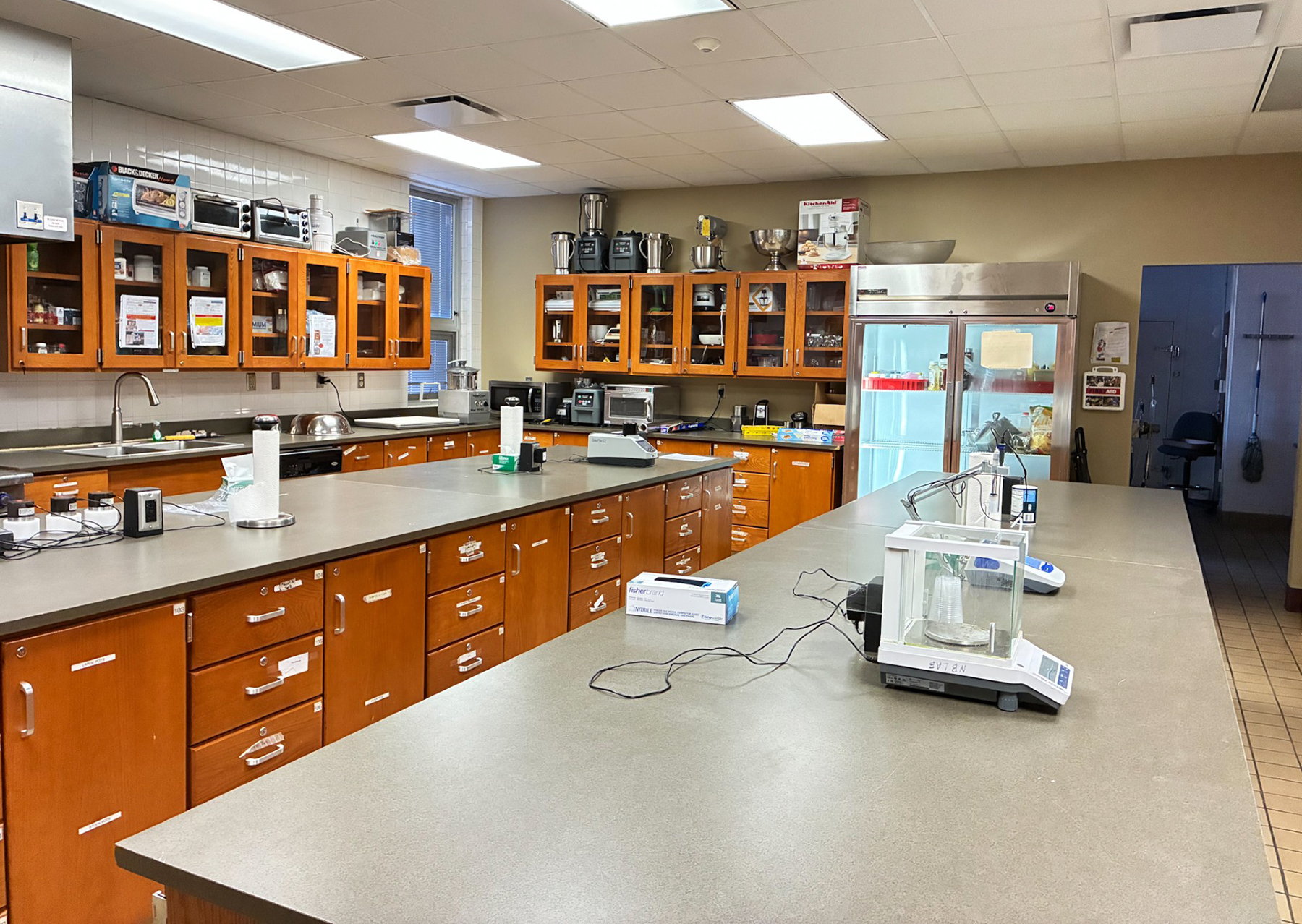
In the product development laboratory, researchers can create and evaluate small batches of food products. Once a concept has been refined, the commercial kitchen and pilot plant provide opportunities to explore larger-scale production.
That transition is particularly important because a recipe that works in a home kitchen may not produce the same results when prepared in greater quantities.
“When you go from a small scale to a larger scale, not everything scales the same,” said Dr. Josh Herring, professor of food biochemistry and undergraduate food science program coordinator at Alabama A&M, who also supports FPIC’s product development and pilot plant operations. “You may have to increase your ingredients because of humidity or because of mixing times, and so that scale up is a lot of times a problem for industry.”
The center helps entrepreneurs navigate those challenges by examining ingredients, preparation methods and production conditions to determine how a product can be consistently reproduced.
Food safety remains central to that process.
“A lot of times, our biggest focus on that testing is to make sure it’s safe,” Herring said.
Whether an entrepreneur is developing a bottled tea, preparing baked goods or introducing a new condiment, FPIC scientists examine factors that can affect product safety and quality. A beverage, for example, may develop unwanted microbial growth during storage, while a baked product may have a shorter safe shelf life than its creator anticipates.
“We certainly don't want somebody to go through and get sick because that tea they allowed it to ferment, and there were other things growing in it than what they really desired,” Herring explained.
Beyond safety, researchers evaluate how a product’s flavor, texture, appearance and consistency may change over time. These factors are important to entrepreneurs hoping to build customer confidence and establish a recognizable product.
Clients have sought expertise for a wide range of products, including barbecue sauces, flavored vinegars, pickles, kimchi, honey products, freeze-dried fruits, candies and beverages. Some have returned for assistance with additional products, demonstrating the value of continued collaboration with the University’s food scientists.
One entrepreneur operating a mobile corn dog business approached the center after experiencing difficulties with the texture of his batter and the time required to prepare orders. Baidoo and his team modified the recipe by incorporating rice and other ingredients and developed a preparation method that allowed the vendor to serve customers more efficiently.
The improvement enabled the entrepreneur to prepare orders for approximately 10 customers more quickly, demonstrating how food science can address everyday business challenges.
In another case, a Birmingham entrepreneur needed nutritional information for a barbecue product. Rather than traveling to Huntsville, she worked with the center remotely, providing ingredient lists and quantities by telephone and email. FPIC developed the nutritional information she needed, and her product subsequently reached store shelves.
Other clients have benefited from the center’s testing capabilities and turnaround times. Five varieties of sauce underwent water activity, pH and viscosity testing in approximately seven working days, while eight freeze-dried products were evaluated for water activity within one week.
The center has also helped entrepreneurs determine whether their products meet necessary standards before being offered for sale.
Baidoo recalled working with an individual developing homemade flavored vinegar. Initial testing revealed that the product did not have the required acidity. After several rounds of testing and adjustments, two of six samples submitted during a later visit met the standard being evaluated.
The experience illustrated FPIC’s dual responsibility to support entrepreneurs while protecting consumers.
“We are helping that client, that entrepreneur. We are also protecting the public,” Baidoo said.
For aspiring business owners, access to these services can be particularly valuable because laboratory testing and specialized consulting often represent significant startup expenses. As of spring 2026, the center was providing testing without charge, although voluntary donations were welcomed.
The center’s work also strengthens Alabama A&M’s academic mission by creating opportunities for students to apply classroom knowledge to real-world challenges.
Graduate students work alongside faculty researchers in testing products, analyzing results and assisting entrepreneurs. Through these experiences, students gain exposure
to industry practices, food safety standards and the scientific considerations involved
in commercial food production.
The facilities also provide opportunities for undergraduate students to explore product development and food processing at different scales, connecting theoretical instruction with practical applications.
Herring emphasized the importance of understanding the entire food production process, from raw ingredients and product development to commercial processing and the use of agricultural byproducts.
That comprehensive approach prepares students to understand the scientific, technical and operational considerations involved in producing food on a commercial scale.
FPIC’s reach is further strengthened through its collaboration with Alabama Extension, which connects entrepreneurs and food producers with University resources.
Martin, a food safety and quality specialist with Alabama Cooperative Extension system (ACES) at Alabama A&M, is helping expand awareness of FPIC’s services through outreach and educational initiatives. His efforts include connecting entrepreneurs with University resources and plans to reach participants in cottage food certification classes across Alabama.
The collaboration also includes plans to connect FPIC with entrepreneurs participating in cottage food certification classes across Alabama, expanding access to scientific expertise and technical assistance.
The partnership reinforces the University’s land-grant mission by extending research-based knowledge beyond campus and into the communities it serves.
The center has also attracted international interest. Agricultural leaders representing African nations visited FPIC through the U.S. Department of State’s International Visitor Leadership Program, learning about food product development, entrepreneurship and technology-driven innovation while exploring opportunities for future collaboration.
As FPIC continues to expand its reach, its mission remains focused on making scientific expertise accessible to entrepreneurs who may otherwise lack the resources needed to develop and commercialize their products.
For Alabama A&M, the center represents more than a collection of laboratories and specialized equipment. It is a connection between academic research, student learning, entrepreneurship and regional economic development.
And for someone with a new tea blend, a family barbecue sauce or an idea for the next specialty food product, it offers something equally important: a place to begin.
Entrepreneurs and businesses interested in food product development, testing or technical assistance can learn more about available services through the Food Product Innovation Center website.